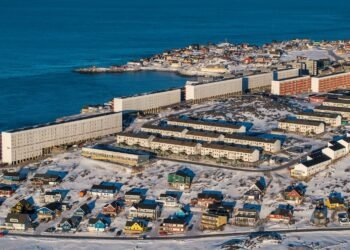

COPENHAGENG, Denmark: The emerging agreement between the United States, Denmark and Greenland may have avoided the most dangerous outcome of the Greenland crisis a direct confrontation over sovereignty, but it has not resolved the deeper strategic question. Instead, it appears to have moved the dispute from who owns Greenland to who controls its security environment.
On September 18, U.S. President Donald Trump announced that Washington, Copenhagen and Nuuk had reached an agreement under which the United States would obtain what he described as “permanent control” over Greenland’s security and other security-related needs. The announcement followed months of diplomatic tension triggered by Trump’s earlier demands for greater American control over the strategically located Arctic territory.
Denmark and Greenland, however, have offered a notably different interpretation. Both have stressed that the proposed arrangement does not transfer sovereignty and must respect the sovereignty and territorial integrity of the Kingdom of Denmark, as well as the Greenlandic people’s right to self-determination. Greenland’s Prime Minister Jens-Frederik Nielsen said the agreement recognizes those principles.
That distinction is central. The immediate political crisis may have been contained, but the strategic transformation underway in the Arctic is only beginning.
The emerging arrangement appears to offer Washington something different from territorial ownership: expanded and potentially long-term military access without a formal transfer of sovereignty. According to information reported by WorldAffairs, the agreement would permit a significant expansion of the U.S. military presence while preventing American adversaries from establishing bases, maintaining military forces or making sensitive investments on Greenland without Washington’s approval. The precise scope of these provisions, however, remains unclear.
That ambiguity matters. The difference between sovereignty and strategic control is not merely semantic. Sovereignty concerns ultimate legal authority over territory and political institutions. Strategic control can operate through military access, infrastructure, intelligence, defence arrangements, investment screening and restrictions on rival powers.
A country can therefore retain formal sovereignty while another power acquires extraordinary influence over the territory’s security environment.
Greenland’s importance is not new. Its geographic position between North America and Europe has long made it significant to transatlantic defence. But climate change, emerging shipping routes, competition over Arctic resources and growing interest from major powers have elevated its strategic importance.
The United States already possesses substantial military rights in Greenland under the 1951 U.S.-Denmark defence framework, including access to military facilities. The new agreement appears designed to strengthen and expand that strategic architecture rather than create American access from scratch.
For Washington, the logic is straightforward: Greenland sits at a critical point between North America, the North Atlantic and the Arctic. Greater American military capacity there can contribute to surveillance, missile warning, maritime security and broader deterrence.
For Denmark and Europe, the calculation is more complicated. A stronger American presence could reinforce NATO’s northern flank at a moment when European governments are increasingly concerned about Arctic and North Atlantic security. NATO has welcomed the agreement as potentially strengthening security, stability and cooperation in the region.
Yet the same arrangement raises an uncomfortable question: How much strategic authority can be delegated without altering the political meaning of sovereignty?
The most important participant in this equation may ultimately be Greenland itself.
Greenland is self-governing but remains part of the Kingdom of Denmark. Its political leadership has repeatedly emphasized the Greenlandic people’s right to determine their own future, including their long-standing aspirations for greater autonomy and eventual independence. That makes the new agreement particularly sensitive.
If Greenland’s future relationship with Denmark changes, the question of whether existing American security arrangements automatically continue could become politically significant. The implications of stronger U.S. control for Greenland’s aspirations for independence will remain an important subject of political and legal debate.
For Greenlanders, therefore, this is not simply a matter of military infrastructure or Arctic deterrence. It is also a question of political agency.
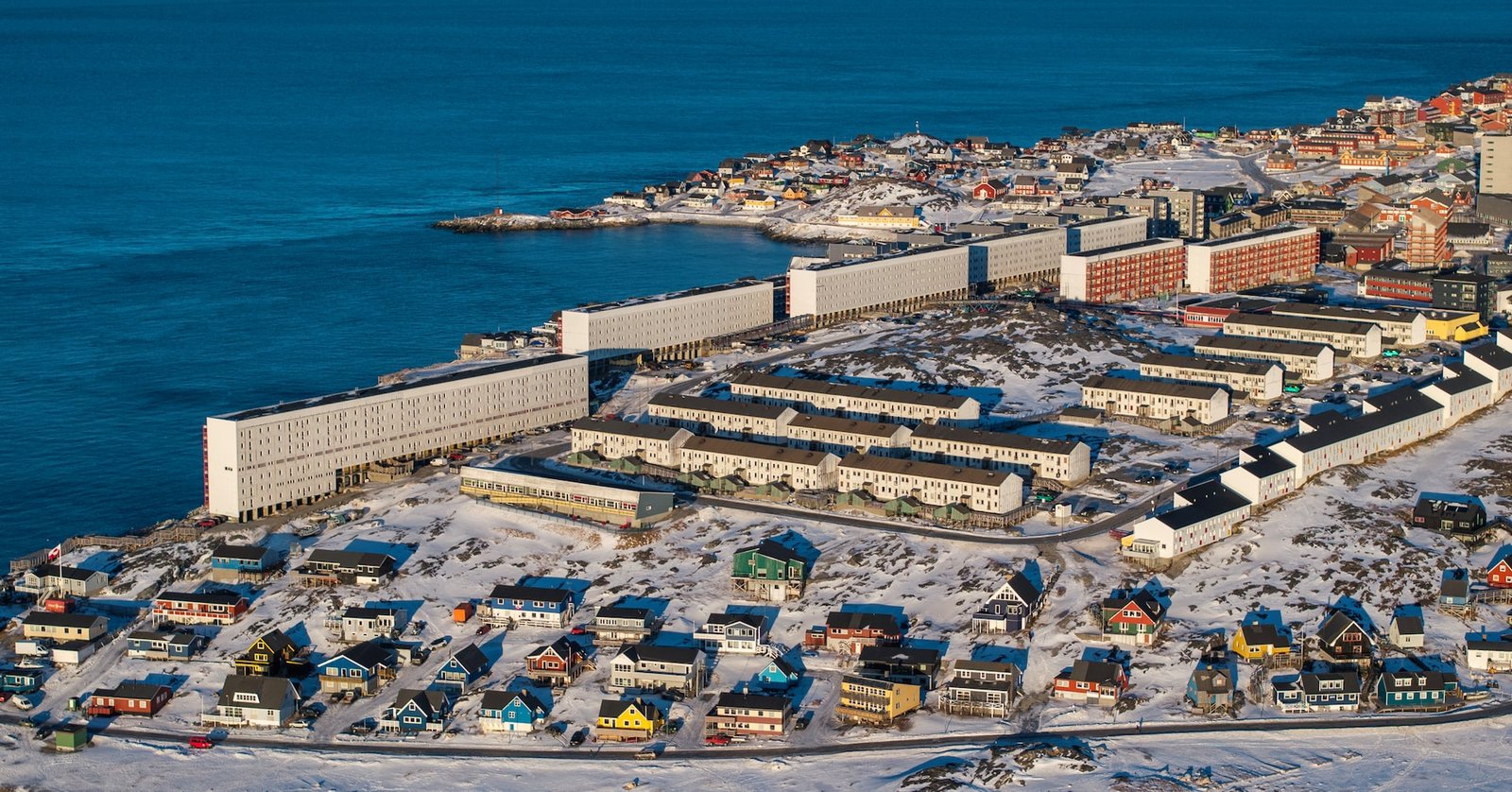
Some residents of Nuuk have already expressed concern about deeper American involvement, preferring cooperation through NATO rather than arrangements perceived as placing Greenland directly under U.S. strategic influence. Their concerns illustrate why the final text of the agreement will matter more than the political language surrounding its announcement.
At present, many of the most consequential questions remain unanswered.
How large will the expanded U.S. military presence become? What facilities could be developed? What authority would Washington have over security decisions? How would sensitive investment restrictions operate? Would the agreement affect Greenland’s foreign-policy autonomy or control over natural resources?
These questions cannot be answered conclusively until the full agreement is made public and the necessary political and parliamentary procedures are completed.
That uncertainty also explains the contrasting language from Washington and Copenhagen.
Trump has described the agreement in expansive terms, portraying it as giving the United States permanent authority over Greenland’s security. Denmark and Greenland have emphasized sovereignty, territorial integrity and self-determination. Both descriptions cannot simply be treated as interchangeable. The eventual legal text will determine where the boundaries actually lie.
The emerging Greenland agreement can therefore be understood less as the conclusion of the crisis than as its transformation.
Trump’s original ambitions centred on American control of Greenland itself. The emerging arrangement instead appears to establish a framework for deeper American security access while formally preserving Danish sovereignty and Greenlandic self-determination.
That may provide the diplomatic space necessary for Washington, Copenhagen and Nuuk to move forward without reopening the question of territorial ownership.
But it also creates a new test.
If the agreement genuinely strengthens Arctic and North Atlantic security while preserving Greenland’s political autonomy, it could become an important model for cooperation in an increasingly contested Arctic. If, however, military access evolves into political leverage over Greenland’s foreign policy, resources or future constitutional status, the sovereignty question that the agreement seeks to settle could return in another form.
The Arctic is becoming one of the world’s most consequential geopolitical frontiers. Greenland sits at its centre. The immediate dispute may no longer be about whether Greenland belongs to Denmark or the United States. The more consequential question now is whether strategic control can expand without eventually reshaping political sovereignty.
That answer will depend not on presidential declarations, but on the precise agreement, Greenland’s consent and the institutions that govern its implementation.
-Tom Jacobsen
READ THE FULL E-MAGAZINE | WorldAffairs: For Decision-Makers Who Need More Than Headlines