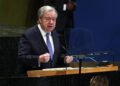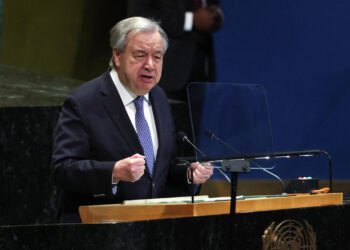


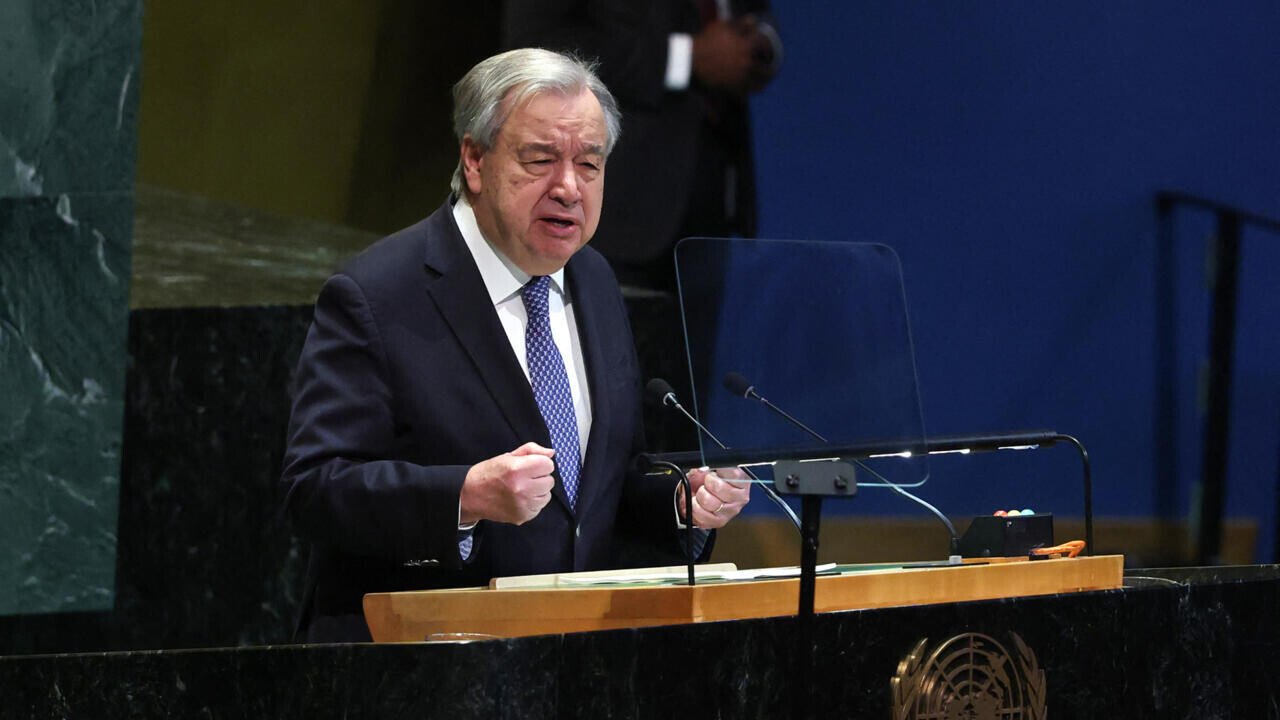
NEW YORK, USA: New York has once again become the meeting point of a world struggling to find common ground. As presidents, prime ministers and foreign ministers gather at United Nations Headquarters for the 81st General Assembly, the atmosphere surrounding High-Level Week is being shaped less by the familiar choreography of annual diplomacy and more by an urgent search for predictability in an international system under extraordinary pressure. The General Debate began on September 22 and will continue through September 28, with nearly 130 heads of state and government attending in person. The session is being held under the theme “Restoring trust, managing transformation: a United Nations that delivers for all,” a formulation that captures the central dilemma of 2026: international cooperation is becoming more necessary precisely as geopolitical competition, regional conflicts, economic fragmentation and strategic mistrust make cooperation more difficult.
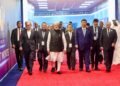
The most important diplomacy of UNGA 81, however, is not necessarily taking place at the General Assembly podium. Much of it is unfolding in the dense schedule of bilateral and plurilateral meetings surrounding the formal debate, where governments are attempting to protect relationships, build new partnerships and keep communication channels open across increasingly complicated geopolitical divides. The United Nations itself acknowledges that hundreds of bilateral and multilateral meetings take place around High-Level Week, making New York one of the few moments each year when allies, partners and strategic competitors can meet within a concentrated diplomatic space. The meetings involving Saudi Arabia, Türkiye, Egypt and Pakistan are part of this wider diplomatic activity, but so too is India’s unusually active engagement with European and other partners as External Affairs Minister Dr. S. Jaishankar conducts a series of meetings around UNGA 81.
Jaishankar’s diplomacy in New York is particularly revealing because it spans several different geographical and strategic theatres at once. Ahead of and at the opening of High-Level Week, he met French Foreign Minister Jean-Noël Barrot, with the two sides discussing the Ukraine and Gulf crises as well as reform of the UN Security Council. Jaishankar described the India-France relationship as a Special Global Strategic Partnership whose momentum is sustained through regular meetings and consultations. He also met Ecuadorian Foreign Minister Roberto Kury, with discussions focused on strengthening economic relations, including energy and pharmaceuticals, mobility, training of personnel, development partnership and cooperation in multilateral forums, including the United Nations. These engagements illustrate how India is using UNGA not simply as a forum for political statements but as a concentrated diplomatic platform linking strategic, economic and multilateral priorities.
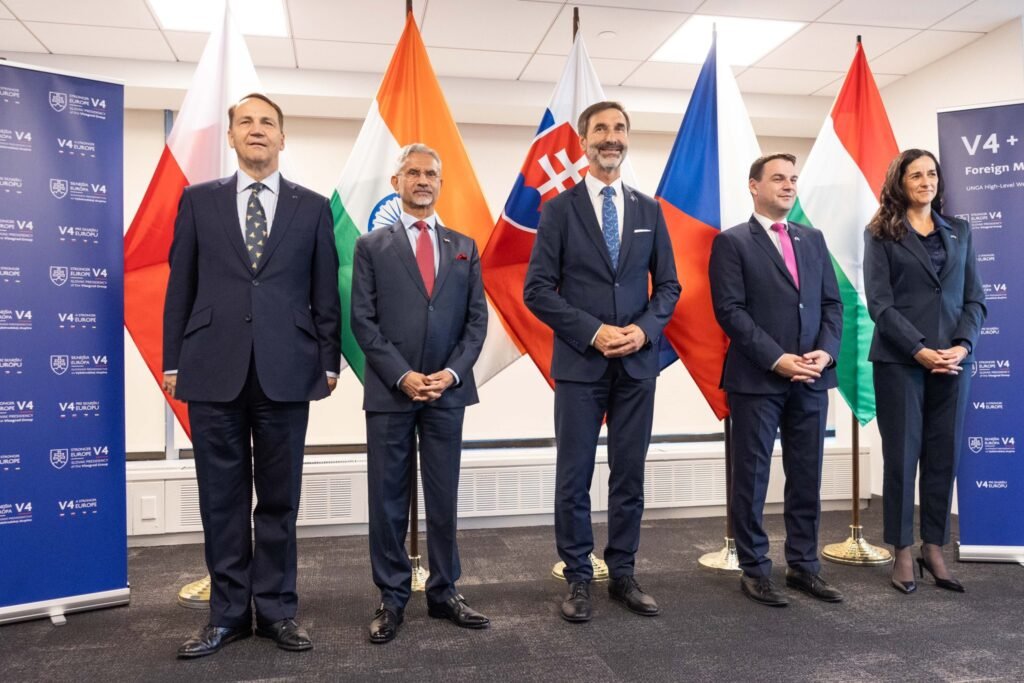
The European dimension of Jaishankar’s UNGA diplomacy has been particularly striking. On September 21, India held the first Visegrád Group–India Foreign Ministers’ Meeting in New York, bringing together the foreign ministers of Poland, Hungary, Slovakia and the Czech Republic with Jaishankar. The five countries agreed to develop closer political cooperation, including annual foreign-minister meetings, deepen economic engagement through an annual business forum, strengthen technology, innovation, research and education partnerships, reinvigorate defence cooperation and expand cultural and people-to-people relations. Discussions also covered the Ukraine conflict, developments in the Gulf, space, connectivity and multilateral cooperation.
The V4 meeting also brought the question of UN reform directly into India’s UNGA diplomacy. Slovak Foreign Minister Juraj Blanár said the four Visegrád countries support India’s permanent membership of the Security Council, arguing that India should have a permanent place at the table. The statement adds another group of European voices to the broader international debate over Security Council reform. The significance lies less in any immediate institutional change, which would require a much wider political and legal process and more in the widening diplomatic coalition discussing whether the current structure adequately reflects contemporary global realities.
Jaishankar’s European outreach has extended beyond the V4. His meeting with Swiss Foreign Minister Ignazio Cassis focused on India’s strengthening economic relationship with Switzerland following the entry into force of the India-EFTA Trade and Economic Partnership Agreement, alongside discussions on global issues and closer multilateral cooperation. India and Switzerland’s economic relationship is therefore being placed within the broader diplomatic agenda of UNGA 81, demonstrating how trade architecture and geopolitical diplomacy are increasingly interconnected. Jaishankar also held what he described as a first meeting with Hungary’s Deputy Prime Minister and Foreign Minister Anita Örbán, with both sides agreeing to work toward deeper bilateral ties and advancement of the strategic partnership.
The Ukraine and Moldova engagements add another dimension to this European diplomatic push. Jaishankar met Ukrainian Foreign Minister Andrii Sybiha on the sidelines of UNGA 81, with discussions covering peace efforts, bilateral cooperation and international developments. Sybiha said the two sides discussed the Black Sea situation and its implications for markets, stressing that restoring freedom of navigation is important for global food security. The discussions are significant because the Black Sea is no longer merely a regional security theatre: disruption of maritime routes affects agricultural commodities, shipping, insurance and global markets. Jaishankar also met Moldova’s Foreign Minister Mihai Popșoi, with the two sides reviewing India-Moldova relations, including political, economic and educational cooperation, as well as developments related to the Ukraine conflict.
The pattern is unmistakable. India’s diplomacy around UNGA 81 is connecting Europe, the Gulf, the Indo-Pacific, the Global South and the multilateral system through parallel conversations rather than through a single geopolitical framework. France represents a major strategic relationship within Europe; the V4 format creates a new Central European platform; Switzerland brings trade and economic diplomacy; Ukraine and Moldova connect India to the evolving European security environment; Ecuador expands the conversation into Latin America; and the United Nations provides the common institutional setting. The result is a diplomatic network in which India is engaging different regions according to different interests without reducing those relationships to a single bloc-based framework.
That approach mirrors the wider transformation taking place around the General Assembly. The international system is becoming increasingly defined by overlapping partnerships rather than fixed alliances. Governments are simultaneously pursuing security cooperation, economic diversification, technology partnerships, energy security and diplomatic autonomy. The result is a world in which states can cooperate with one another in one arena while maintaining different positions in another. The emerging order is therefore not simply a contest between established blocs. It is a more fluid system in which countries are attempting to maximize strategic flexibility while avoiding unnecessary confrontation.
The meetings among Saudi Arabia, Türkiye, Egypt and Pakistan in New York fit within this wider pattern of networked diplomacy. The four countries bring together Gulf, Arab, Turkish and South Asian perspectives at a time when the Middle East is confronting overlapping security, energy and maritime challenges. Their consultations are important because they represent an effort by regional powers to maintain direct channels of coordination as conflicts and strategic rivalries become increasingly interconnected. The format does not automatically constitute a formal new alliance, but it does demonstrate the growing importance of regional diplomatic mechanisms operating alongside the United Nations.
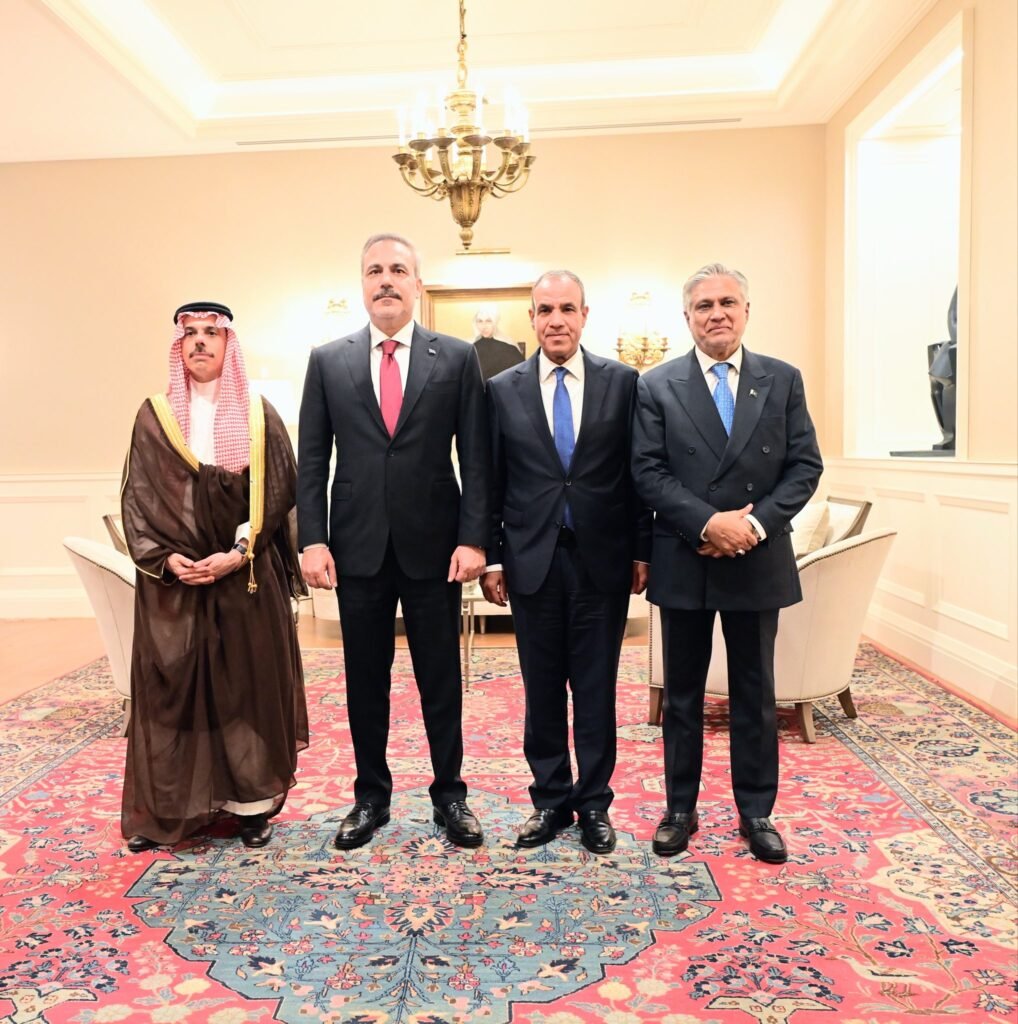
Saudi Arabia’s wider UNGA diplomacy reinforces this trend. Riyadh is simultaneously a Gulf security actor, a major energy producer, an investor and an increasingly active diplomatic participant in regional affairs. Its engagement with Türkiye, Egypt and Pakistan reflects the wider effort among regional powers to develop channels through which security concerns can be discussed directly. Pakistan adds a South Asian dimension, Türkiye connects the region to Europe and Eurasia, while Egypt remains central to Arab diplomacy and the security of the eastern Mediterranean, Red Sea and Suez corridor. Their interaction therefore reflects the increasing geographical overlap of Middle Eastern, South Asian and global security calculations.
The Saudi-Pakistan relationship has also acquired a new security dimension following the signing of the Makkah Joint Defence Agreement involving Saudi Arabia, Pakistan and Türkiye. The subsequent meeting between Saudi Foreign Minister Prince Faisal bin Farhan and Pakistan’s Deputy Prime Minister and Foreign Minister Ishaq Dar in New York further demonstrates how bilateral and trilateral security relationships are being discussed alongside wider multilateral diplomacy. The two sides discussed the defence agreement and regional security, illustrating how the Gulf and South Asian security environments are becoming more closely connected.
Yet the larger story of UNGA 81 extends well beyond these regional arrangements. The world arriving in New York is confronting wars in Europe and the Middle East, disruption to maritime trade, uncertainty over energy supplies, intensified strategic competition, technological transformation and growing pressure on institutions created in a very different geopolitical era. The UN’s agenda reflects this breadth: alongside the General Debate, High-Level Week includes discussions on development, climate action, sea-level rise, pandemic preparedness, racism and nuclear disarmament.
This convergence of crises is changing the meaning of international security. Energy supplies, shipping corridors, critical minerals, semiconductor production, data infrastructure, food systems and artificial intelligence are increasingly treated as strategic assets. A conflict can therefore move rapidly from a military theatre into an economic crisis. A disruption in a maritime chokepoint can affect energy prices and supply chains. An attack on commercial shipping can influence food security. Technological competition can reshape economic power. Climate shocks can intensify humanitarian pressures and migration. The traditional separation between foreign policy, economic policy and security policy is consequently becoming increasingly difficult to sustain.
That is why the search for predictability may be more important than the search for complete consensus. Major powers and regional states will continue to disagree. Their national interests will not suddenly converge because they are meeting in New York. But predictable diplomatic channels can prevent disagreements from automatically becoming confrontations. Regular ministerial consultations, bilateral dialogue, regional groupings and multilateral institutions can provide mechanisms for governments to communicate even when broader relations are strained.
Jaishankar’s meetings demonstrate this logic particularly clearly. His discussions with European ministers have combined Ukraine, the Gulf and UN reform with trade, technology, education, defence and mobility. His meeting with Ecuador focused heavily on economic and development cooperation. The V4 engagement combined defence and technology with multilateralism. Switzerland brought trade and global issues together. Ukraine brought Black Sea navigation and food security into the diplomatic conversation. Moldova connected bilateral relations with the wider European security environment. Each meeting has its own agenda, but collectively they demonstrate how contemporary diplomacy increasingly operates through multiple, overlapping channels.
Jaishankar has also used the opening of UNGA 81 to argue for stronger multilateralism amid what he described as a global order under stress from intense competition, geopolitical tensions and actual conflicts. At the inaugural Partners for Multilateralism Summit, co-chaired with European Council President António Costa, he called for countries with shared objectives to work together against threats to strategic chokepoints and disruptions, while advocating de-risking, diversification and greater confidence among like-minded countries. His remarks reflect one of the defining economic-security debates of the present moment: how countries can reduce excessive vulnerability to disruptions without fragmenting the global economy entirely.
This is also where the theme of UNGA 81 becomes more than diplomatic language. “Restoring trust, managing transformation” describes two challenges that are deeply connected. Transformation without trust can generate strategic competition. Trust without institutional adaptation can leave international organizations unable to respond to new realities. The task is therefore to reform institutions while preserving enough common ground for governments to continue working through them. The UN General Assembly remains uniquely placed in this regard because all 193 member states have an equal vote and the institution provides the world’s broadest diplomatic forum.
But the United Nations cannot resolve every conflict by itself. Its effectiveness depends ultimately on the willingness of member states to negotiate, compromise and implement agreements. This is why the diplomacy taking place outside the General Assembly Hall matters so much. The formal speeches define national positions; the meetings around them explore where those positions might overlap.
The world entering UNGA 81 is therefore not simply divided. It is being reorganized.
Regional powers are becoming more active. Middle powers are seeking greater strategic flexibility. European states are strengthening relationships beyond traditional channels. Gulf countries are expanding their diplomatic networks. Asian powers are deepening partnerships across Europe, the Middle East, Africa and Latin America. Economic relationships are increasingly being designed with resilience and security in mind. And countries are seeking institutional reforms that they believe better reflect today’s distribution of political and economic influence.
India’s diplomatic activity in New York offers a useful illustration of this broader transformation. Within a short period, Jaishankar has moved between conversations on Ukraine, the Gulf, UN reform, European cooperation, trade, energy, pharmaceuticals, technology, defence, mobility and development. These are not separate worlds anymore. They are increasingly parts of the same geopolitical equation.
The significance of New York this week, therefore, is not that the world’s governments have suddenly found common ground. They have not. The significance is that they continue to search for it, through the UN, through regional groupings, through bilateral diplomacy and through new combinations of countries whose interests overlap without necessarily being identical.That may be the most important story of UNGA 81. The international order is changing, but its destination remains uncertain. The old structures remain important, while new diplomatic networks are emerging around them. The challenge is not to eliminate geopolitical competition, something no international institution can realistically achieve, but to create enough diplomatic space for competition to remain manageable.
As leaders speak from the General Assembly podium, the more consequential story may continue to unfold in the rooms outside it: between India and Europe, between Gulf and Asian powers, between regional partners and global institutions, and between governments searching for ways to protect their interests without allowing strategic competition to become permanent confrontation.
In a world defined by shifting alliances, disrupted trade routes, contested institutions and interconnected crises, predictability has become a strategic asset. The diplomatic test of UNGA 81 is whether the international community can restore enough trust to manage transformation — before transformation itself becomes the source of a still deeper global instability.
– Dr. M Shahid Siddiqui, From UN Headquarters, New York
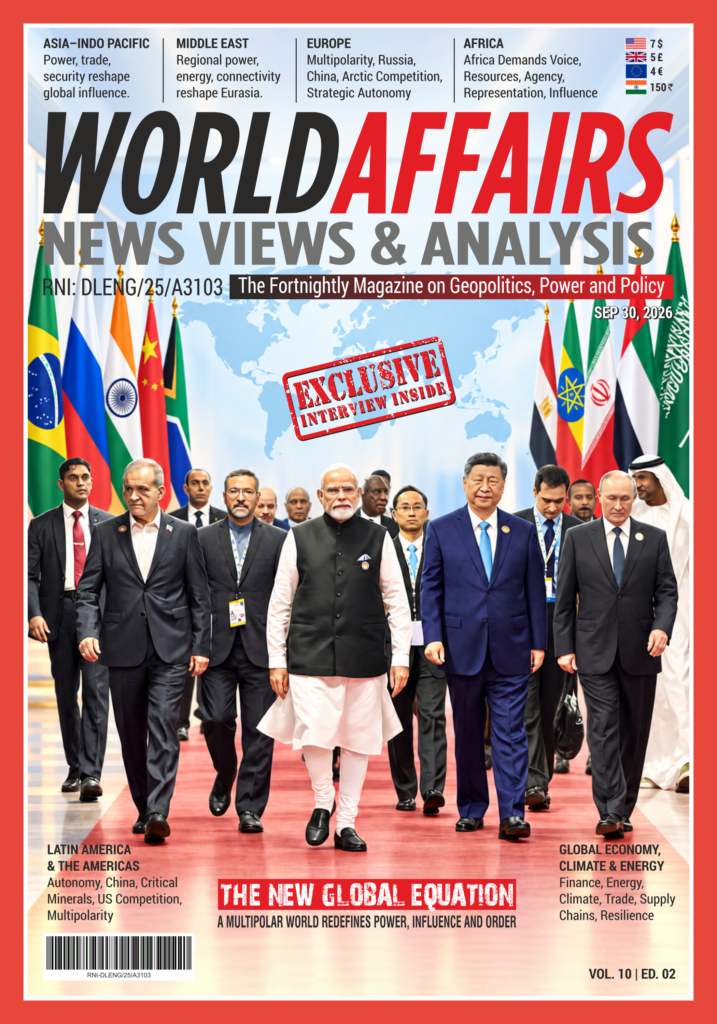
READ THE FULL E-MAGAZINE | WorldAffairs: For Decision-Makers Who Need More Than Headlines