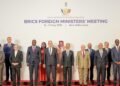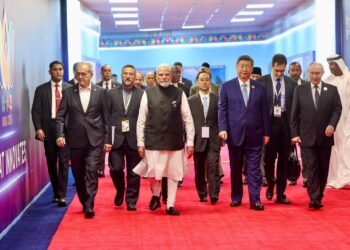




NEW DELHI, India: The 18th BRICS Summit in New Delhi has moved the grouping beyond the familiar question of whether BRICS can challenge the West and towards a far more consequential geopolitical proposition: whether the Global South can collectively accumulate enough institutional, financial, technological, industrial and political weight to influence the rules by which the international system operates. The central message emerging from New Delhi is not that BRICS intends to replace the Western-led order overnight, but that the era in which emerging economies were expected to remain rule-takers is becoming increasingly untenable. Prime Minister Narendra Modi captured the contradiction at the heart of the existing system when he said the Global South is “in the front row of global crises, but in the back row of decision-making.” His call to transform a “pyramid of privilege” into a “platform of partnership” is therefore more than diplomatic rhetoric. It is a statement of strategic intent.
India’s BRICS presidency has deliberately pushed the grouping towards implementation rather than symbolism. The New Delhi Declaration, adopted by leaders on September 12, places global governance reform, economic resilience, technology, critical minerals, artificial intelligence, development finance and sustainable growth within a single strategic framework. Modi’s emphasis on turning “rule-takers into rule-shapers” reflects a deeper transformation in Global South diplomacy: influence is no longer being measured only by political declarations but by the ability to build alternative capabilities. The proposed BRICS continuity and implementation mechanism, supported by a digital system to track commitments, is significant precisely because BRICS has often faced criticism for producing ambitious communiqués without sufficient institutional follow-through. If New Delhi’s proposals survive beyond the summit and become operational mechanisms, BRICS could begin evolving from a political coalition into a more consequential architecture of cooperation.
The most important battlefield may be global governance itself. Modi’s demand that reform of the United Nations Security Council “can no longer be delayed” directly challenges an institutional structure designed for a very different world. The economic and demographic weight of Asia, Africa and Latin America has expanded dramatically, while permanent representation in the Security Council remains concentrated among five states. South African President Cyril Ramaphosa sharpened the African argument, noting that Africa represents 54 UN member states and nearly one-fifth of humanity while remaining without permanent representation on the Council. The question is no longer simply whether the Global South deserves a larger voice; it is whether institutions that claim universal legitimacy can retain credibility while excluding major centres of population, economic growth and geopolitical relevance from their highest decision-making structures.
This is where Africa becomes central to the future of BRICS rather than peripheral to it. Africa possesses enormous reserves of the minerals required for the energy transition, advanced manufacturing, batteries, electric vehicles and digital infrastructure, yet much of the continent continues to export raw materials while importing higher-value finished products. The strategic contest over critical minerals has therefore created an opportunity—and a danger. BRICS can help African economies move from extraction to processing, manufacturing and value addition, or it can reproduce the old commodity relationship under a different geopolitical label. The real test will be whether partnerships create industrial capacity, jobs, technology transfer and local value chains. The African Continental Free Trade Area, connecting 54 economies and a market of roughly 1.5 billion people, makes this possibility even more significant. A BRICS strategy linked to African industrialisation could connect minerals, manufacturing, infrastructure, energy and markets into a new Global South production ecosystem.
That challenge is becoming urgent because critical minerals are rapidly becoming instruments of geopolitical power. Lithium, cobalt, graphite, nickel, copper and rare earths are now as strategically important to the emerging technological economy as oil was to the industrial economy of the twentieth century. Concentration in mining, refining and processing has created new vulnerabilities across global supply chains. Modi’s warning against the weaponisation of technology and critical minerals therefore goes to the heart of contemporary economic security. India’s proposal for a BRICS Logistics Supply Chain Cooperation Framework recognises that resilience cannot be achieved simply by diversifying suppliers; it requires reliable logistics, alternative routes, digital infrastructure, predictable trade arrangements and greater cooperation among producing and consuming economies.
The same logic lies behind India’s push for a BRICS Startup Innovation Fund, a BRICS Incubator Network and a Digital Agriculture Network. These proposals may appear technical, but geopolitically they represent an attempt to move BRICS cooperation from government-to-government diplomacy into innovation ecosystems. Digital agriculture, artificial intelligence, geospatial technologies and digital public infrastructure can become instruments of development for economies where millions of farmers remain outside sophisticated financial and technological systems. The strategic objective is not technological sovereignty in isolation but broader technological inclusion. If BRICS countries can combine India’s digital public infrastructure experience with China’s industrial scale, Russia’s scientific capabilities, Brazil’s agricultural strength, Gulf capital and Africa’s emerging markets and resources, the result could be a development model with considerable influence across the Global South.
Artificial intelligence is likely to become the next major test. The New Delhi Declaration places emphasis on safe, inclusive, trustworthy and accessible AI, while Chinese President Xi Jinping has called for BRICS to use AI to drive a new phase of industrialisation. Xi’s description of BRICS entering a third “golden decade” reflects Beijing’s belief that the grouping can become a major platform for emerging economies at precisely the moment when technological power is being concentrated among a relatively small number of companies and countries. Yet AI cooperation will inevitably raise questions about data, computing capacity, semiconductor access, digital standards and technological dependence. BRICS will gain strategic credibility only if it can expand access to these capabilities rather than simply issue declarations about them.
Financial reform represents another pillar of this emerging architecture. BRICS has not created a common currency, nor does the New Delhi agenda suggest an immediate attempt to do so. Instead, the more practical objective is to develop payment interoperability, cross-border settlement mechanisms and greater use of local currencies. The BRICS Payment Task Force reflects an understanding that financial power rests not merely in currencies but in payment infrastructure, messaging systems, liquidity and settlement networks. The New Development Bank offers another instrument through which BRICS can increase development financing and expand local-currency lending. If these mechanisms become more efficient and accessible, they could gradually reduce the vulnerability of developing economies to external financial shocks without attempting to dismantle the existing international monetary system overnight.
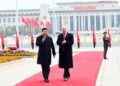
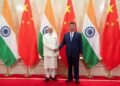
The Xi–Modi meeting adds another layer to this transformation. The two largest Asian powers are not becoming allies, but their decision to manage competition while rebuilding practical engagement is strategically important. China and India remain competitors over borders, trade, technology and regional influence, while their bilateral trade imbalance remains substantial. Yet the resumption of direct flights, easing of people-to-people exchanges and renewed dialogue over border management indicate that both sides recognise the cost of permanent confrontation. Xi’s formulation that China and India should be “partners rather than rivals” does not eliminate strategic competition; it establishes a framework for containing it. For India, this is consistent with strategic autonomy: cooperation where interests converge, competition where they diverge, and no automatic alignment with either Washington or Beijing.
This balance is crucial because BRICS itself is too diverse to become a conventional alliance. Its members differ profoundly over security interests, political systems, regional rivalries and relationships with the United States and Europe. That diversity is simultaneously its weakness and its strategic strength. BRICS does not need unanimity on every geopolitical question to become influential. It needs sufficient convergence on trade, development, technology, finance, energy, supply chains and institutional reform. Its strength will ultimately depend less on whether its members agree on everything than on whether they can build practical institutions despite disagreement.
That is why the New Delhi Summit matters. BRICS is not replacing the West, creating a unified anti-Western bloc or announcing the end of the dollar system. Its more consequential ambition is incremental: building enough alternative institutional density that the Global South has greater room to manoeuvre within an increasingly fragmented international system. From critical minerals to AI, from payment systems to supply chains, from African industrialisation to UN reform, the objective is to convert economic weight into strategic agency.
The next test will be implementation. China assumes the BRICS chair in 2027, and the credibility of New Delhi’s agenda will depend on whether its proposals survive the transition from summit language to functioning institutions. If they do, BRICS will have moved another step away from being merely a forum for emerging powers and closer to becoming one of the principal platforms through which the Global South negotiates the future of world order. New Delhi’s message is ultimately simple but profound: if the Global South is expected to carry a growing share of the world’s economic, demographic and geopolitical burden, it will increasingly demand a corresponding share in shaping the rules of the system.
-Dr. M Shahid Siddiqui with Kristine Scott in New Delhi