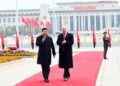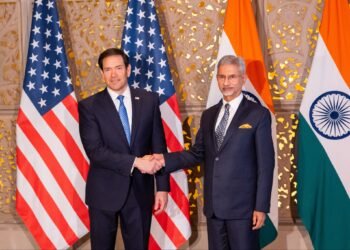




NEW DELHI, India: The most important question surrounding Chinese President Xi Jinping’s expected visit to New Delhi is not whether India and China are finally “resetting” their relationship. That formulation is too simplistic for a relationship that has moved from strategic cooperation to military confrontation and now, cautiously, toward managed engagement. The real question is whether Beijing and New Delhi have discovered a sustainable way to compete without repeatedly stumbling into confrontation. The sequence of events from the Shanghai Cooperation Organisation summit in Bishkek to the latest India-China boundary negotiations and the forthcoming BRICS summit in New Delhi, suggests that both sides are attempting precisely that. But there is a crucial difference between stabilising a rivalry and resolving it. India and China may be talking more, travelling more and rebuilding selected channels of economic and diplomatic engagement, but the underlying contest over territory, influence, technology, trade, connectivity and the future balance of power in Asia remains firmly in place.
The symbolism of Xi’s expected return to India is nevertheless difficult to ignore. His last visit was in 2019, when the Modi-Xi relationship was still defined by the informal summitry of Wuhan and Mamallapuram and by the assumption that political engagement could help contain strategic differences. The Galwan Valley clash of 2020 fundamentally destroyed that assumption. India subsequently reinforced its military posture along the Line of Actual Control, tightened scrutiny of Chinese investment and technology, and made clear that the broader relationship could not return to normal while peace and tranquillity along the border remained unsettled. China, meanwhile, continued expanding its military and infrastructure capabilities across the Himalayan theatre while maintaining that the boundary issue should not prevent cooperation in other areas. The fact that the two governments are now again investing political capital in high-level dialogue is therefore significant, but it should be understood as a consequence of strategic necessity rather than renewed trust.
The August 25 meeting between National Security Adviser Ajit Doval and Chinese Foreign Minister Wang Yi was perhaps the clearest indication of this new approach. Meeting as Special Representatives on the boundary question, the two sides reached an eight-point consensus that included a commitment to advance negotiations towards a framework for resolving the boundary question, pursue an “early and substantial harvest” in boundary delimitation and management, strengthen military communication, establish additional border-defence hotlines, continue discussions on trans-boundary rivers and hold the next Special Representatives meeting in India in 2027. The language is important, but its limits are equally important. Nothing in the agreement represents a comprehensive settlement of the boundary. It does not erase the competing territorial claims, nor does it mean that the Line of Actual Control has suddenly become mutually accepted. What it does is attempt to create mechanisms through which the dispute can be contained while the larger disagreement remains unresolved. In other words, the two sides appear to be moving from confrontation management through military deployment alone towards confrontation management through diplomacy, communications and incremental negotiations.
That may sound less dramatic than a “reset”, but it is probably more realistic. A genuine India-China reconciliation would require much deeper changes in strategic perceptions than either government currently appears ready to make. India continues to regard China as its principal continental security challenge, while Beijing sees India as an increasingly consequential regional power whose relationships with the United States, Japan, Australia and Europe could affect the wider balance against China. Neither side has abandoned its core strategic objectives. What has changed is the cost-benefit calculation surrounding permanent confrontation. China has its own priorities: competition with Washington, technological restrictions, trade tensions, supply-chain restructuring, Taiwan, the South China Sea and its wider effort to consolidate influence across Asia and the Global South. India, for its part, needs a stable northern frontier if it is to concentrate on economic growth, manufacturing, defence modernisation, maritime power and its expanding role in the Indo-Pacific. A permanently hostile border is expensive for both countries. Managed rivalry is therefore not an expression of friendship. It is an expression of strategic realism.
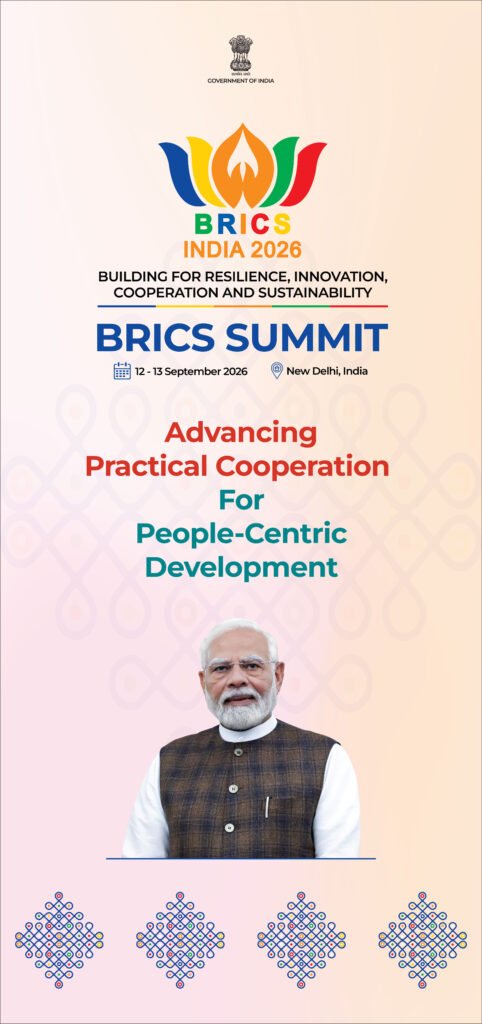
This is precisely why the BRICS summit in New Delhi carries greater significance than the ceremonial importance normally attached to such gatherings. Xi’s expected presence places the India-China relationship inside a much larger geopolitical contest over the shape of the international system. BRICS is no longer simply the original grouping of Brazil, Russia, India, China and South Africa. Its expansion has brought additional major economies and strategically important states into the framework, giving it a broader representation of the Global South and a considerably greater geopolitical footprint.
For China, BRICS offers an institutional platform through which Beijing can challenge aspects of the Western-led international order without creating a conventional alliance against the West. For India, BRICS offers something different: a means of strengthening the voice of emerging economies, pushing for reform of international institutions and expanding strategic autonomy without formally aligning with any rival great-power bloc.
The distinction is fundamental. India wants a multipolar world, but it does not necessarily want a Chinese-led multipolar world. That is the tension New Delhi must manage. China is likely to promote a vision of global governance in which Western dominance is reduced and institutions representing emerging economies acquire greater authority. India agrees with much of the diagnosis. The international financial system remains disproportionately shaped by institutions created in an earlier era; developing countries continue to demand greater representation; unilateral economic coercion has become a growing concern; and the Global South has legitimate grievances about the distribution of global power. But India does not share Beijing’s strategic objectives across the board. New Delhi has its own interests in the Indo-Pacific, its own concerns about Chinese military expansion, its own objections to the Belt and Road Initiative and its own strategic partnerships with the United States, Japan, Australia and Europe.
This is where Indian diplomacy faces its most delicate test. Strategic autonomy has traditionally been one of New Delhi’s greatest diplomatic assets because it prevents India from becoming dependent upon a single external power. But strategic autonomy is not the same thing as permanent ambiguity. It cannot mean that India must maintain equal political distance from countries that pose very different opportunities and threats. Nor can multi-alignment become an excuse for avoiding clear positions on questions that directly affect Indian interests. India’s relationship with Washington is fundamentally different from its relationship with Beijing; its relationship with Moscow serves different purposes again. The objective is not to keep every relationship at the same distance. The objective is to ensure that no external power acquires enough leverage over India to dictate its choices.
China understands this better than almost anyone. Beijing does not need India to become an ally. It needs India to remain independent enough from Washington that the Indo-Pacific does not consolidate into an unambiguous anti-China coalition. That makes India’s strategic autonomy itself a geopolitical variable in the US-China competition. The more deeply India integrates into American-led technology, defence and supply-chain networks, the more valuable India becomes to Washington’s Indo-Pacific strategy. Conversely, the more India maintains economic and diplomatic channels with China and participates actively in BRICS and the SCO, the more difficult it becomes to construct a simple two-bloc confrontation in Asia. Beijing therefore has an interest in stabilising relations with New Delhi even without resolving the fundamental strategic rivalry. A stable India-China relationship reduces one potential source of pressure on Beijing and gives China greater room to concentrate on its competition with the United States.
For India, however, that opportunity comes with a danger. Engagement with China can reduce border tensions and open economic possibilities, but excessive dependence can create vulnerabilities of its own. The scale of bilateral trade illustrates the contradiction. India-China merchandise trade reached about $151.1 billion in FY2025-26, according to Indian official figures, while Indian imports from China were approximately $131.6 billion and exports around $19.5 billion, leaving a merchandise trade deficit of roughly $112 billion. Those numbers are not evidence that India has “lost” economically to China, but they demonstrate a structural asymmetry that cannot be ignored. India remains deeply dependent on Chinese inputs across electronics, machinery, chemicals, pharmaceuticals, renewable-energy components and other manufacturing sectors. At the same time, New Delhi is attempting to build domestic manufacturing capacity and diversify supply chains precisely because strategic dependence on one major competitor is inherently risky.
This is why the apparent economic normalisation between India and China must be treated carefully. Restoring trade does not necessarily mean restoring trust. Allowing greater business activity does not mean abandoning security screening. Reopening diplomatic and travel channels does not mean returning to the strategic assumptions of 2019. India is likely to pursue selective economic engagement while retaining tighter controls over sensitive technology, critical infrastructure, telecommunications, data and strategic investment. China will push for broader market access and greater economic normalisation because its companies have significant commercial interests in India. New Delhi, however, has learnt from the post-2020 experience that economic interdependence can coexist with military rivalry. The new model is therefore likely to be one in which the two countries trade extensively while simultaneously attempting to reduce their most dangerous strategic dependencies.
That is also why technology and digital infrastructure have become increasingly important in the relationship. The strategic competition between India and China is no longer confined to mountains and military deployments. It now extends into semiconductors, telecommunications, artificial intelligence, digital payments, data, critical minerals, electric vehicles, pharmaceuticals and supply chains. The state increasingly views economic infrastructure through a national-security lens. That transformation is not unique to India; it is one of the defining features of the emerging global order. Washington is restricting Chinese access to advanced technologies. Beijing is attempting to reduce dependence on Western technology. Europe is pursuing “de-risking”. India is attempting to create domestic capacity while attracting multinational manufacturing investment. The era in which economics could be neatly separated from geopolitics is effectively over.
The SCO offers another illustration of this changing environment. India’s presence in the organisation is strategically awkward but also necessary. The grouping brings together China, Russia, Pakistan, Iran and the Central Asian republics, placing India inside a Eurasian institutional framework in which Beijing and Moscow possess enormous influence. India cannot transform the SCO into an organisation reflecting its own strategic preferences, but leaving it would be even less sensible because it would surrender diplomatic space in Central Asia and Eurasia to China and Russia. New Delhi therefore has to operate inside the organisation without allowing its institutional language to define Indian foreign policy. The same logic applies to BRICS. India does not need to choose between participation and independence. It needs to learn how to participate without becoming institutionally captive.
The Bishkek summit was revealing in that respect. The SCO’s collective positions on the Middle East and Iran reflected a broader opposition among many members to unilateral military action and Western sanctions. India’s participation in such multilateral language should not automatically be interpreted as a geopolitical realignment. India has consistently defended sovereignty, territorial integrity and international law as principles of international relations. But the problem emerges when broad institutional language begins to acquire a clearly anti-Western geopolitical character. India’s challenge is to distinguish between defending principles and endorsing a particular power bloc. That distinction will become increasingly important as China and Russia seek to present BRICS and other institutions as the foundations of an alternative international order.
The temptation for some in Washington will be to interpret every Indian engagement with China, Russia or Iran as evidence that New Delhi is drifting away from the United States. That would be a strategic misreading. India’s objective is not to replace one alignment with another. But Washington would also be making a mistake if it assumed that India’s strategic partnership with the United States means India will automatically endorse every American geopolitical position. India’s foreign policy is driven by interests, not by bloc discipline. This is precisely why New Delhi can deepen defence cooperation with Washington while continuing to purchase energy and military equipment from Russia, participate in BRICS alongside China and maintain connectivity projects involving Iran.
For Beijing, however, India’s independence is becoming strategically valuable. The more fragmented the international system becomes, the more important countries such as India become as swing powers. India has sufficient economic weight, military capacity, demographic scale and diplomatic reach to influence the direction of major international institutions. Beijing cannot simply treat India as another regional actor. Nor can Washington. India’s importance lies partly in the fact that it cannot easily be absorbed into either camp.
Yet this leverage comes with responsibility. If India wants to shape the multipolar order, it must demonstrate that its foreign policy is not merely transactional. It must defend principles consistently enough that strategic autonomy does not become indistinguishable from opportunism. India’s interests in freedom of navigation, territorial sovereignty, counterterrorism, secure supply chains, international law and peaceful dispute resolution cannot be selectively invoked. Credibility is itself a form of national power.
This becomes particularly important in relation to Pakistan. China’s relationship with Pakistan remains one of the fundamental constraints on India-China trust. Beijing views Pakistan as an important strategic partner and has invested heavily in the China-Pakistan Economic Corridor. India, meanwhile, objects to the corridor because portions of the project pass through territory claimed by India in Pakistan-occupied Kashmir. Pakistan also remains central to China’s continental and Indian Ocean strategy. Any serious improvement in India-China relations will therefore have to coexist with this reality. Beijing cannot expect India to disregard its security concerns simply because bilateral diplomacy has improved, just as India cannot expect China to abandon a partnership that Beijing considers strategically important.
The border remains the ultimate test because it is where diplomatic language meets military reality. India has learned since 2020 that trust without verification is insufficient. China has learned that sustained confrontation with India carries economic and strategic costs. Both therefore have incentives to prevent another crisis. But the military balance along the frontier has also changed permanently. Infrastructure has improved on both sides; troop deployments remain substantial; surveillance capabilities have expanded; and the Himalayan theatre has become more strategically significant. The next stage of diplomacy will therefore be judged not by declarations but by whether soldiers can operate along the frontier without repeated confrontation and whether both governments can establish enough confidence-building mechanisms to prevent tactical incidents from becoming political crises.
The most realistic outcome is not a grand peace treaty. It is a layered relationship: competition at the strategic level, cooperation where interests overlap, economic engagement where risks are manageable and deterrence where national security demands it. Such a relationship may appear contradictory, but it is increasingly the normal condition of great-power politics. The United States and China remain deeply economically connected despite their strategic rivalry. India and Russia maintain a major relationship despite Moscow’s confrontation with the West. European countries continue to trade with China while simultaneously reducing strategic dependence on Beijing. The international system is moving away from clean alliances toward overlapping networks of competition and cooperation.
India has an opportunity to exploit that environment, but only if it remains clear about what it is trying to achieve.
The purpose of strategic autonomy cannot be to please Beijing, Washington or Moscow. It must be to increase India’s own room for manoeuvre. That means strengthening domestic manufacturing so that Chinese dependence falls through competitiveness rather than political slogans; expanding defence production so that Russian dependence gradually decreases without creating new dependence elsewhere; building technology capabilities so that India can negotiate with both China and the West from a position of strength; developing alternative connectivity corridors so that China cannot monopolise Eurasian trade; and deepening relationships across Southeast Asia, Europe, the Gulf, Africa and Central Asia.
The strongest form of non-alignment is therefore not diplomatic distance. It is national capability.
That is why the coming BRICS summit should be viewed as an opportunity for India to shape the institution rather than merely participate in it. New Delhi can push for practical cooperation on development finance, digital public infrastructure, health security, disaster resilience, critical minerals, energy security and technology while resisting attempts to turn BRICS into a formal anti-Western platform. India should support a more representative international system without pretending that the existing system can be overturned overnight. It should encourage local-currency trade where economically sensible without turning de-dollarisation into an ideological campaign. And it should insist that the Global South cannot simply replace one hierarchy with another.
The same principle should govern India’s engagement with China. New Delhi should welcome dialogue, but measure progress by outcomes. It should welcome Xi to Delhi, but not confuse hospitality with concession. It should seek greater trade, but not ignore the trade imbalance. It should reopen channels, but retain safeguards around critical technology. It should pursue border talks, but maintain military preparedness. It should cooperate with Beijing inside BRICS and the SCO, but retain its strategic partnerships elsewhere.
That is not indecision. It is disciplined strategic autonomy.
The danger is not that India is talking to too many countries. The danger is that it might mistake talking to everyone for having a strategy. The coming weeks will test whether New Delhi can avoid that trap. Xi’s expected arrival in Delhi will generate the inevitable photographs, handshakes and declarations about friendship and cooperation. Those images will be useful, but they will not define the relationship. The real measure will be whether the border becomes safer, whether military communication becomes more reliable, whether economic engagement becomes more balanced, whether strategic dependencies are reduced and whether India emerges with greater not smaller freedom of action.
The journey from Bishkek to Delhi is therefore not a story about India choosing between China and the United States. It is a story about an India attempting to become sufficiently powerful to avoid being defined by either. China wants stability on terms that protect its larger strategic interests. Washington wants India to become an increasingly important counterweight to Beijing. Moscow wants to preserve its privileged relationship with New Delhi. The Global South wants India to speak with an independent voice. Each expectation contains an opportunity and a risk. India’s answer should be neither permanent ambiguity nor premature alignment. It should be strength.
The Modi-Xi meeting will not end the India-China rivalry. At best, it can begin to make that rivalry more predictable. And in the dangerous Asian order emerging around them, predictability may be the first real step toward stability. The larger test, however, belongs to India itself. If New Delhi can convert strategic autonomy into economic strength, technological capacity, military preparedness and diplomatic credibility, multi-alignment becomes a powerful instrument. If it cannot, the same policy can become an elaborate exercise in balancing contradictions. India does not need to choose Beijing over Washington or Washington over Beijing. It needs to ensure that neither Beijing nor Washington can choose India’s future for it.
-Dr. M Shahid Siddiqui