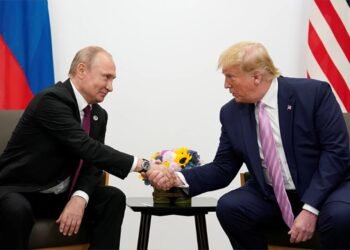



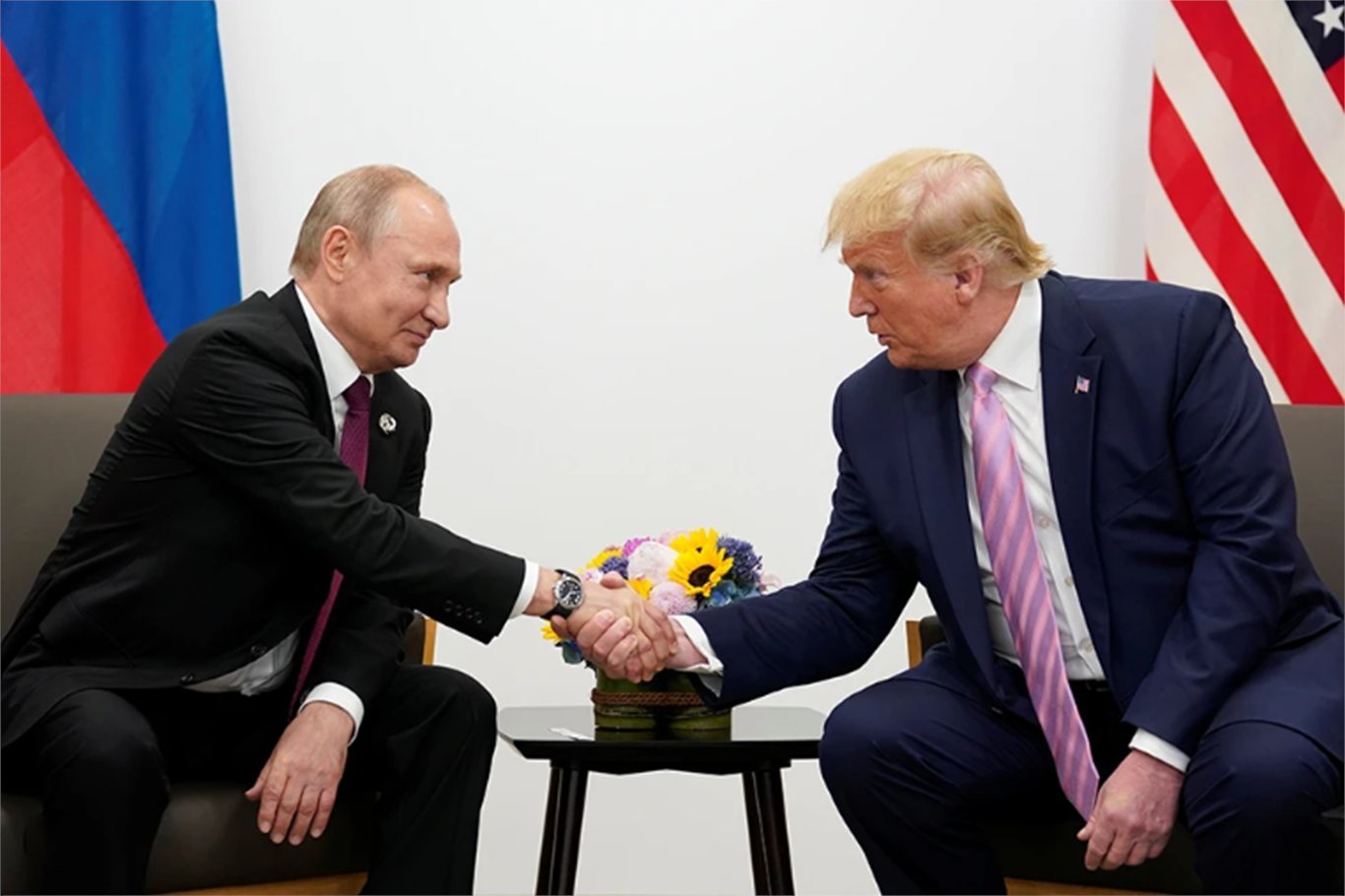
Washington, USA: Washington threatened economic punishment against Russia and countries buying its oil. Before the measures could take effect, Donald Trump stepped back, exposing the tension between geopolitical pressure, energy security and domestic political calculations.
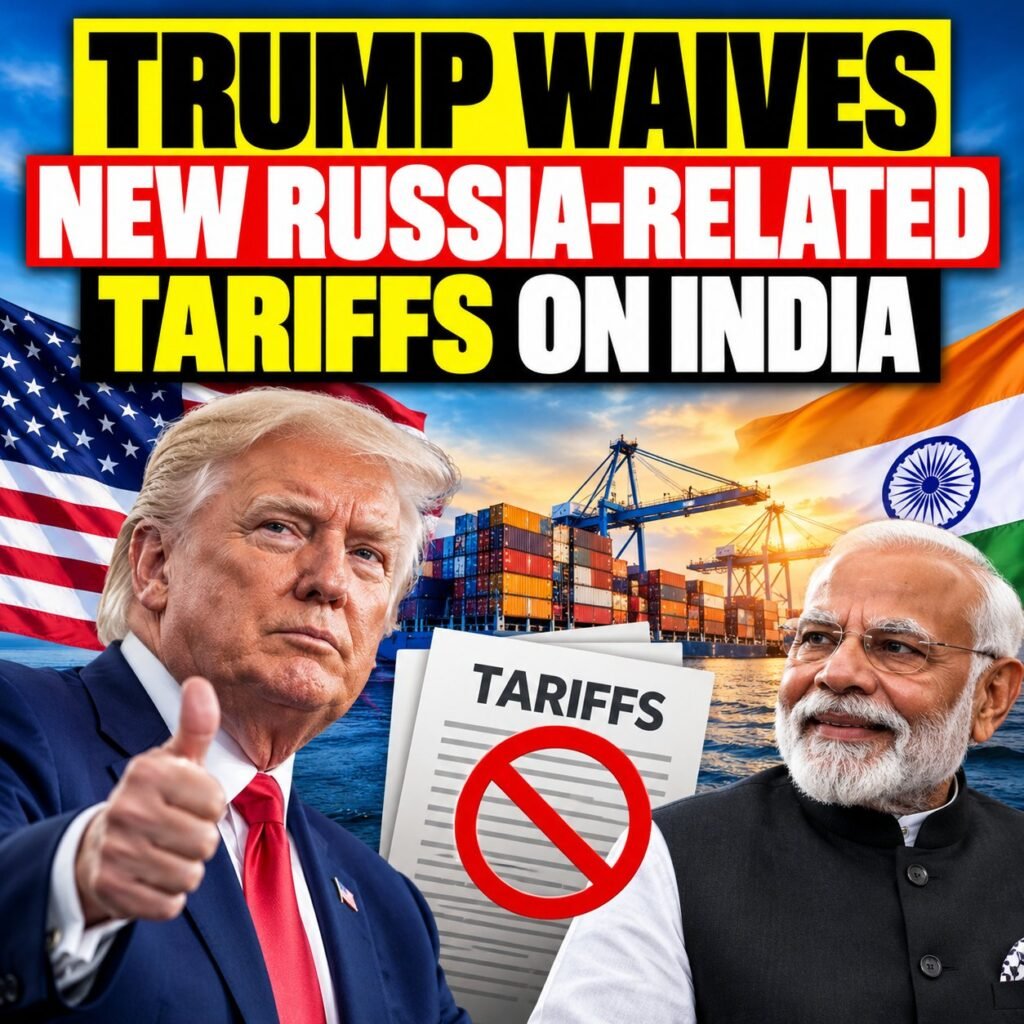
The most revealing moment in a sanctions policy is not when a government announces punishment, but when it decides whether to enforce it. US President Donald Trump has provided precisely such a moment. On 16 October, he signed an executive order waiving specified sanctions and tariff provisions under the Lindsey O. Graham Sanctioning Russia and Iran Act of 2026, just days before key measures were due to take effect. The White House justified the decision on grounds of US national interest, without publicly providing a detailed explanation of the calculations behind it.
The decision exposes a fundamental contradiction in Washington’s Russia policy. The administration has retained the language of economic pressure while suspending important instruments designed to intensify it. The question is no longer simply whether the United States can impose a heavier economic cost on Moscow. It is whether Washington is prepared to absorb the consequences of doing so when those consequences reach American consumers, energy markets and strategic relationships.
The legislation, signed by Trump on 18 September, was intended to increase pressure on Russia over its invasion of Ukraine, which began in February 2022. It authorised additional sanctions and tariffs, including duties of up to 100 per cent on goods from major purchasers of Russian oil and gas under specified conditions, alongside other measures targeting Russia and those facilitating sanctions evasion. The law also gave the president explicit authority to waive covered provisions by certifying to Congress that doing so served US national interests.
Trump has now exercised that authority. His order waives specified duties and several sanctions provisions while preserving the administration’s ability to reconsider its position. Officials are directed to monitor Russian energy purchases and potential sanctions evasion and to advise the president when circumstances might warrant further action.
This is not the complete dismantling of US sanctions against Russia. Existing measures outside the scope of the waiver remain in place. Nevertheless, the decision weakens the immediate force of a legislative initiative designed to increase pressure on Moscow and raises questions about the consistency of Washington’s approach.
Sanctions are intended to alter behaviour by increasing the economic and political costs of a targeted government’s actions. Their effectiveness depends not only on the severity of the penalties but also on the credibility of the threat that they will be imposed. When a government announces sweeping measures and then suspends key provisions before implementation, other countries have reason to question how reliably future threats will be enforced.
That uncertainty matters particularly for countries purchasing Russian energy. India and China, among the largest buyers of Russian oil, faced the prospect of additional US trade penalties under the new framework. For New Delhi, the issue extends beyond its relationship with Moscow: it involves energy affordability, economic growth, strategic autonomy and the broader future of India–US relations.
India has repeatedly argued that its energy procurement decisions must reflect national requirements and prevailing market conditions. Russian oil has played an important role in its energy supply mix since Western restrictions reshaped global oil trade following the invasion of Ukraine. A substantial tariff on Indian exports to the United States could have imposed costs on businesses and complicated an already consequential bilateral economic relationship.
The waiver reduces the immediate threat posed by the specified provisions of the new law. It does not, however, remove every potential source of trade friction between Washington and New Delhi, nor does it guarantee that the measures will never be reconsidered. India must therefore distinguish temporary relief from a durable settlement of the underlying disagreement over Russian energy.
For China, the issue also touches on the broader question of economic sovereignty and the reach of US trade policy. Beijing has opposed what it characterises as extraterritorial enforcement without an adequate basis in international law. Secondary tariffs can place countries in the position of having to weigh commercial relationships with Russia against access to the American market. That creates leverage for Washington, but it can also encourage alternative payment arrangements, supply chains and trading relationships designed to reduce exposure to US pressure.
The immediate economic rationale for Trump’s decision is equally important. Energy prices have been under pressure amid wider geopolitical instability, including the US-Israeli conflict with Iran. Additional restrictions on Russian oil could disrupt supply arrangements, increase uncertainty in international markets and add to costs already confronting households and businesses. With US midterm elections approaching, the administration has a domestic political incentive to avoid measures that might intensify public concerns about fuel prices and the cost of living.
That timing is relevant, but it does not establish that electoral considerations were the sole reason for the waiver. The White House formally cited national interest, and the available public explanation does not establish the precise weight given to energy prices, diplomacy or domestic politics. What is clear is that the decision reflects a familiar tension in economic statecraft: measures designed to punish an adversary can also impose costs on the countries implementing them.
The administration’s recent agreement involving Russian diesel exports has sharpened that contradiction. Trump has supported easing specified restrictions on Russian fuel supplies in an effort to improve availability and relieve price pressures. Critics argue that such arrangements risk generating revenue for Moscow while its war against Ukraine continues. The administration, by contrast, has presented energy access and price relief as important national interests. These competing objectives cannot be reconciled through rhetoric alone. If Washington wants to reduce Russia’s ability to finance its war, it must consider the consequences of exemptions that preserve Russian energy revenues. If it prioritises immediate energy-market stability, it must acknowledge that the policy may limit the economic pressure it can exert on Moscow.
The political response in Washington reflects this divide. Democratic Representative Don Beyer criticised the waiver as a retreat from congressional intent and a betrayal of Ukraine. Other lawmakers have raised concerns that easing restrictions on Russian energy could benefit the Kremlin. Such criticism highlights the difference between a law’s declared strategic purpose and the executive branch’s subsequent use of its discretion.
Yet the legislation itself included a waiver mechanism. Trump’s decision is therefore not simply a rejection of congressional authority; it is an exercise of discretion that Congress explicitly provided. The more consequential question is whether the administration’s use of that authority is supported by a sufficiently clear and consistent strategic rationale.
For Ukraine, the decision adds uncertainty to an already difficult security environment. Kyiv depends on sustained international support as Russia’s invasion continues, and any weakening of economic pressure can raise concerns about Moscow’s ability to finance its military campaign. At the same time, sanctions alone have not ended the war. Their contribution must be assessed alongside military assistance, diplomatic engagement, enforcement against evasion and the prospects for a negotiated settlement.
For Russia, the waiver offers near-term economic and diplomatic relief, although it does not mean that all existing restrictions have disappeared. It also reinforces the importance of energy markets in shaping the choices of governments that seek to isolate Moscow while remaining exposed to Russian supplies.
The wider lesson concerns the limits of economic coercion. Sanctions work most effectively when their objectives are clear, their enforcement is credible and participating countries can sustain the economic costs. When these conditions weaken, pressure can become inconsistent, and targeted governments may find greater room to exploit divisions among their opponents.
Trump’s decision leaves Washington with a strategic choice. It can treat the waiver as a temporary adjustment designed to manage immediate economic pressures, while retaining the possibility of stronger measures later. Or it can allow repeated exceptions to become a broader pattern in which economic stability routinely overrides the stated objective of changing Russian behaviour.
Neither outcome is predetermined. The administration retains the authority to reconsider the waiver, and future decisions will depend on developments in energy markets, Russia’s conduct, the war in Ukraine and the wider diplomatic environment.
For India, China and other countries exposed to the threatened tariffs, the episode offers temporary breathing space but not complete certainty. For Ukraine, it raises fresh questions about the durability of Western economic pressure. For Moscow, it demonstrates that the costs imposed by sanctions remain subject to political decisions in the countries enforcing them.
Ultimately, the credibility of US sanctions policy will depend less on the scale of penalties written into legislation than on the consistency with which Washington applies them. Economic pressure is a strategic instrument, not an end in itself. Its value lies in whether it advances a defined political objective without imposing costs that undermine that objective.Washington has shown that it can threaten economic escalation. The harder question is whether it can maintain pressure on Moscow while managing the energy, trade and political consequences at home and abroad.
-Jasper Zengerle