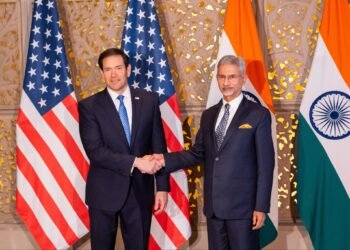


MUMBAI, India: Marco Rubio’s visit signals an expanding India–US partnership in trade, energy, defence and diplomacy, as global conflicts reshape strategic priorities and create new opportunities for cooperation.
The India–United States relationship is entering a consequential phase in which trade, industrial capacity, energy security, defence preparedness and geopolitical stability are becoming increasingly interconnected. US Secretary of State Marco Rubio’s press interaction during his official visit to India offered an unusually broad perspective on Washington’s priorities, from the near-completion of bilateral trade negotiations to the war in Ukraine, global oil disruptions and the possibility of renewed nuclear arms-control diplomacy involving the United States, Russia and China.
The central message was constructive: Washington recognises India’s growing importance as an economic power, a major refining centre, a defence partner and an influential diplomatic actor. Yet Rubio’s answers also revealed the pressures confronting American foreign policy as conflicts, competing security commitments and energy disruptions test the limits of international cooperation.
Rubio began by explaining why he had returned to India within a relatively short period. He pointed to the frequency of high-level engagement between the two countries, noting that India’s External Affairs Minister had visited the United States four times during the year. Washington, he suggested, should visit India more frequently.
“This is the most populous country in the world, it’s the largest democracy in the world, it’s an important commercial partner and business partner of the United States,” Rubio said. He also highlighted defence cooperation and India’s membership of the Quad, describing India as a “strong strategic partner.”
His remarks reflected a relationship that increasingly extends beyond traditional diplomacy. The two countries have shared interests in Indo-Pacific security, advanced technology, critical minerals, industrial supply chains and maritime stability. Their partnership does not eliminate differences over Russia, energy purchases or the management of international conflicts. Rather, its importance lies in their ability to pursue common interests while maintaining independent national priorities.
The most immediate bilateral prospect concerns trade. Rubio said negotiations were “very, very close,” describing the countries as being “about as close as you can be” to an agreement without having finalised it. He indicated that only a small number of issues remained and expressed hope that positive news could follow shortly.
He also clarified that the State Department does not formally conduct trade negotiations, although he has been involved in the issue through his national security responsibilities. This distinction matters: his optimism signals political confidence in the process, but it does not constitute confirmation that the agreement has been concluded.
Rubio connected President Donald Trump’s trade agenda to concerns about American manufacturing, employment and the relocation of production overseas. He argued that the United States had experienced deindustrialisation and had become vulnerable by outsourcing too much of its productive capacity. The administration’s approach seeks to restore domestic industrial strength while reassessing the economic relationships on which American security depends.
For India, this creates an opportunity to expand manufacturing partnerships, attract investment and strengthen access to international markets. A successful agreement could provide a framework for greater commercial engagement, although its ultimate significance will depend on the terms accepted by both governments and their implementation.
Technology and critical minerals formed another part of the strategic picture. Rubio referred to India’s participation in the American-led Pax Silica initiative and cooperation on critical-mineral issues. He also cited approximately $20 billion in Indian investment in the American economy as an indication of the relationship’s growing economic interdependence. These areas are increasingly important because semiconductor manufacturing, artificial intelligence and access to essential minerals influence both economic competitiveness and national security. Greater cooperation could help diversify supply chains, reduce vulnerabilities and encourage investment in advanced industries. The opportunity is not simply to increase bilateral trade, but to build productive capacity that can withstand geopolitical disruption.
Energy security, however, offered perhaps the clearest illustration of the changing relationship between commerce and geopolitics.
Rubio described India as a “refining superpower,” recognising its ability to process heavy crude and turn petroleum into commercially valuable products. His planned engagement with Reliance Industries at its Jamnagar complex was therefore directly connected to the administration’s wider energy priorities.
Asked why an American Secretary of State would meet a refinery executive, Rubio explained that energy was inseparable from national security. “Countries fight wars over energy, as an example. Economies collapse over lack of energy,” he said.
The observation captured a central reality of the current international environment: the availability of oil, the security of shipping routes and the ability to refine crude can influence inflation, industrial production, transport and political stability far beyond the immediate conflict zone.
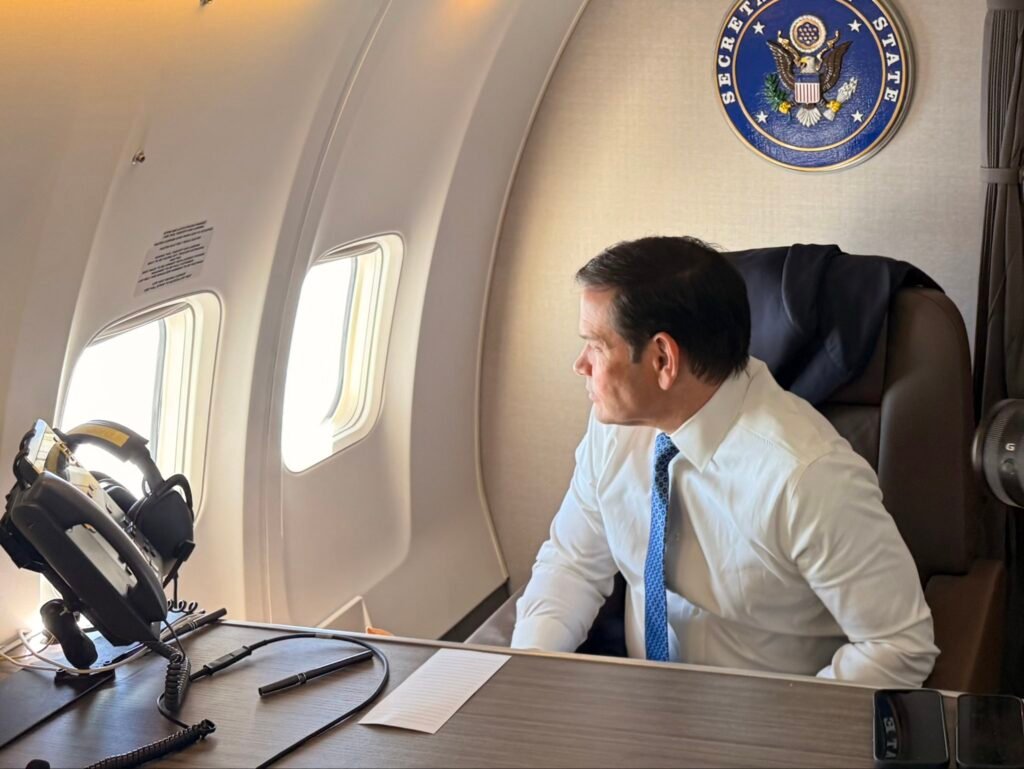
Rubio said discussions with Reliance would explore the possibility of processing additional Venezuelan crude. Indian refiners have experience handling heavy crude grades, while Indian companies also have interests and concessions in Venezuela. He suggested that greater production and refining could provide some immediate relief to global markets and contribute more substantially over time.
He did not present Venezuelan oil as a complete solution to the international supply problem. Additional production would face commercial and operational constraints, while American sanctions remain an important consideration. Any expansion would therefore depend on the applicable legal framework, investment conditions and the ability of companies to operate reliably.
The broader significance is that India’s refining capacity could become an increasingly valuable component of global energy resilience. Cooperation on Venezuelan crude would offer a possible avenue for aligning American energy objectives with Indian industrial capabilities, provided the practical and regulatory obstacles can be addressed.
Rubio’s comments on Russian oil purchases were similarly measured. Asked about India’s reduction in Russian oil imports, he said New Delhi had expressed a desire to diversify its energy portfolio and that it had made “substantial progress in that regard.”
He added that Washington was pleased to see this progress, while emphasising that diversification not Russian oil alone was the wider objective. Venezuela and other potential suppliers could form part of the discussion. His planned meeting with Reliance was also intended to explore the company’s position, possible constraints and opportunities for further cooperation.
For India, energy diversification offers greater flexibility and reduces exposure to disruptions involving any single supplier. However, decisions will continue to be shaped by domestic demand, crude quality, refining economics, contractual obligations and national energy interests. Rubio’s remarks indicated scope for discussion rather than an announcement of a new Indian commitment.
The conversation then turned to Ukraine, where Rubio sought to clarify Washington’s position amid reports of tensions with President Volodymyr Zelenskyy.
Rubio confirmed that he had spoken with Zelenskyy for approximately 45 minutes that day. He rejected claims that the United States had deliberately stopped intelligence sharing or that President Trump had ordered a change in military arrangements intended to weaken Ukraine. He also said that existing arrangements involving the Priority Ukraine Requirements List, known as PURL, had not changed.
Air-defence interceptors were a more complicated matter. Rubio acknowledged that demand for these systems was exceptionally high, with Ukraine, Saudi Arabia, Israel and American forces all requiring protection. The United States must also preserve minimum defensive capabilities at its own installations and meet its commitments to NATO and European security.
“These interceptors are expensive to make,” he said, explaining that production takes time. He noted that American manufacturing capacity was increasing, but rising output did not immediately eliminate competing demands. The United States maintains stocks of different munitions, yet individual transfers must be assessed against its global responsibilities. Rubio cited threats to an airfield in the United Kingdom as an example of the wider security requirements that must be considered.
Asked about reports that a particular batch of interceptors had not received final approval for transfer to Ukraine, Rubio acknowledged that a delay was possible while officials reviewed competing needs. He rejected the interpretation that such a review necessarily represented a political decision to harm Ukraine.
He also addressed reports that Ukrainian forces had not detected certain Russian air strikes on the 13th and 18th. According to Rubio, the American assessment was that the problem was technical rather than the result of an instruction to withhold warnings. He said Washington was continuing to provide warnings as before and that officials were examining whether difficulties within Ukrainian systems had affected the processing or use of the information.
These explanations underscored the distinction between a deliberate policy change and the operational pressures facing military support arrangements. They did not, however, remove the practical uncertainty surrounding the timing of individual deliveries or the continuing need to protect Ukraine against Russian attacks.
Rubio acknowledged that relations with Zelenskyy had experienced tensions. He attributed President Trump’s frustration partly to what Washington regarded as inaccurate claims about an American intelligence cutoff and partly to the lack of progress towards a negotiated settlement after a prolonged war. He also said the United States had raised concerns about Ukrainian attacks affecting Russian energy infrastructure and Black Sea shipping, including consequences for American commercial interests and cargo.
His broader argument was that the conflict needed to end through a negotiated agreement. Rubio pointed to civilian deaths, extensive damage to Ukraine’s electricity grid and heavy Russian military casualties. He warned that continued fighting could deepen the devastation and increase the risk of escalation beyond the immediate theatre.
The energy consequences of the war illustrated how interconnected these crises have become. Rubio said oil flows through the Strait of Hormuz had been severely disrupted but were, on some nights, approaching pre-conflict levels. On most nights, he estimated flows at approximately 70–80 per cent of earlier levels. He also cited Houthi attacks on Saudi pipeline infrastructure and strikes affecting refining capacity during the Russia–Ukraine war.
The effects are not confined to oil-producing countries. Rubio said governments were reporting difficulties obtaining diesel at affordable prices. Diesel is essential to freight transport, agriculture and industrial activity, meaning shortages or price increases can spread through supply chains and place additional pressure on consumers.
For India and other major energy importers, these developments reinforce the importance of secure maritime routes, diversified suppliers and reliable refining capacity. Energy policy is increasingly linked to economic resilience and foreign policy: disruptions in one region can raise costs elsewhere, affect food distribution and constrain industrial growth. Rubio’s remarks on Russia and China also extended to the possibility of a summit involving the leaders of the three countries to discuss nuclear arms control. Asked whether Beijing might participate, he argued that the only way to establish its willingness was to engage directly.
“You have to be able to speak to the other side,” he said, defending communication among the world’s three largest nuclear powers as beneficial to international security. He acknowledged that deep disagreements would remain and that a summit could not resolve every dispute, but argued that direct dialogue was worth pursuing.
The position reflects a practical view of diplomacy: communication is not an endorsement of another government’s actions, nor does it require concessions in advance. Where nuclear risks are involved, the consequences of failed communication can be too serious to ignore.
For India, the argument has particular relevance. New Delhi maintains relationships with Washington, Moscow and Beijing while seeking to protect its strategic autonomy. Dialogue among major powers could help reduce the risks of miscalculation, although any meaningful arms-control process would require sustained negotiations and concrete commitments rather than a summit alone.
Taken together, Rubio’s answers presented a broad picture of American foreign policy at a moment of global uncertainty. Trade negotiations, critical-mineral cooperation, industrial renewal, energy diversification, defence support and nuclear diplomacy are increasingly connected. Each involves immediate national interests, but each also has consequences for the wider international order.
The visit’s positive message should not obscure the outstanding challenges. The trade agreement remains unfinished; Venezuelan energy cooperation faces regulatory and commercial constraints; interceptor supplies are under pressure; the Ukraine war continues; and the proposed nuclear dialogue remains an opportunity rather than an established outcome. A credible partnership must be judged by the agreements and practical results that follow.
India and the United States nevertheless have substantial reasons to deepen cooperation. India brings industrial capacity, a large market, refining expertise and an influential diplomatic position. The United States brings significant technological, financial and security capabilities. A durable partnership can create mutual benefits without requiring either country to abandon its independent interests.
Rubio’s visit therefore represents more than another round of bilateral engagement. It highlights how the relationship is evolving alongside a world in which economic security, energy supply, military preparedness and diplomacy increasingly overlap. The next test will be whether the two governments can turn their positive political signals into implementable agreements, dependable supply arrangements and sustained cooperation.
The central outcome is an opportunity, not yet a completed settlement: Washington has publicly signalled confidence in the trade negotiations, interest in India’s refining and industrial capabilities, support for continued strategic engagement and a willingness to pursue dialogue on major international conflicts. If these intentions translate into practical progress, India–US cooperation could become an important stabilising force in an increasingly fragmented global environment.
⁃ Dr. M. Shahid Siddiqui