



OMDURMAN, Sudan: Sudan’s electricity crisis is becoming one of the least visible but most consequential dimensions of a war that has already devastated lives, livelihoods and institutions. The darkness spreading across homes, schools, hospitals and businesses is not merely the consequence of an ageing power grid or temporary fuel shortages. It is the physical expression of a state infrastructure being dismantled by war, economic collapse and institutional paralysis. Since fighting erupted between the Sudanese Armed Forces and the Rapid Support Forces in April 2023, the country’s electricity system has sustained damage estimated by the United Nations Development Programme at up to $3 billion. Electricity generation has collapsed, power cuts have become prolonged and unpredictable, and communities that once depended on a fragile national grid are increasingly being forced to construct private alternatives simply to survive.

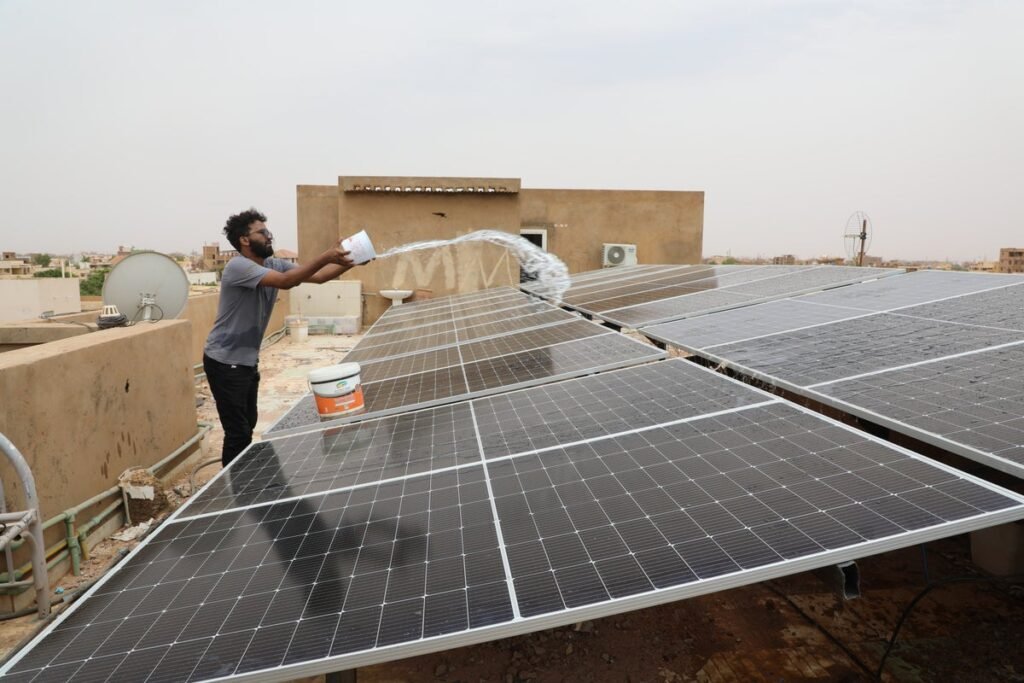
The consequences are particularly severe in places such as Omdurman, where the electricity crisis has moved from being an inconvenience to becoming a daily calculation of survival. For Randa al-Mansour, a 31-year-old mother of three, rooftop solar panels have provided a partial escape from the blackouts. But her experience also reveals the deeper inequality embedded in Sudan’s emerging energy economy. Her children can return home from school because their classrooms have no electricity, only to discover that their own home is also struggling with the same problem. In a country where summer temperatures can become extreme, the absence of electricity means more than darkness after sunset. It affects education, refrigeration, communication, water, ventilation, medical storage and the basic ability of families to live safely. The war has therefore created a cruel inversion of development: technology that should be expanding opportunity is instead becoming a private survival mechanism available primarily to those who can afford it.
That is the central contradiction of Sudan’s solar boom. The country has extraordinary solar potential, yet the people facing the greatest energy insecurity are frequently the least capable of purchasing solar equipment. UNDP’s latest assessment found that demand for solar power has surged since early 2024 as households, businesses and farmers attempt to escape the failing grid and the increasingly expensive diesel alternative. Yet currency depreciation, limited financing, customs delays, transportation problems, shortages of skilled technicians and the proliferation of low-quality equipment have pushed the cost of solar systems beyond the reach of millions. UNDP has warned that local solar costs have risen dramatically despite the long-term decline in global panel prices. The problem, therefore, is not a lack of technology. It is the collapse of the economic and institutional conditions required to make that technology accessible.
This distinction is critical because Sudan’s emerging solar economy can easily be misread as a story of resilience and innovation. There is certainly resilience in the way Sudanese households, farmers, hospitals, telecommunications companies and small businesses are adapting. But describing the expansion of solar simply as a renewable-energy success story risks obscuring the brutal circumstances producing it. Sudan is not transitioning smoothly from fossil fuels to clean energy. It is improvising around the ruins of a conventional energy system destroyed by conflict. Solar is expanding because the grid has collapsed, diesel is expensive and unreliable, and the state lacks the resources to restore electricity at the scale required. This is not yet a clean-energy revolution designed through national policy. It is an emergency energy economy created by war.
The figures underline the scale of that failure. Reporting in recent months has indicated that power cuts in some parts of Sudan have reached extraordinarily long durations, while the national generation system has been reduced dramatically from its pre-war capacity. The electricity infrastructure has been repeatedly exposed to attacks, looting, equipment shortages and a lack of resources for repairs. The destruction of generating and transmission infrastructure is compounded by another less visible loss: the departure of skilled engineers and technicians who are essential to maintaining and rebuilding a complex electricity system. Even if the guns eventually fall silent, Sudan will not be able to restore its energy system simply by replacing damaged equipment. It will have to rebuild the technical workforce, supply chains, institutions and investment environment that make a national grid functional.
The humanitarian implications are potentially even more serious than the economic ones. Electricity is the invisible infrastructure behind almost every modern public service. Hospitals need it to run equipment, refrigerate medicines and vaccines, maintain oxygen systems and perform emergency procedures. Water systems depend on power for pumping and distribution. Schools require electricity for lighting, cooling and basic communications. Telecommunications networks cannot function indefinitely without reliable energy. Farmers increasingly need electricity for irrigation. Small businesses depend on it for machinery, refrigeration and communications. When electricity disappears, these sectors do not simply become less efficient. Their ability to function begins to disappear altogether.
The experience of Sudanese diabetics illustrates the danger. For someone dependent on insulin, refrigeration is not a convenience; it is part of medical survival. When electricity disappears for prolonged periods and a household cannot afford solar power or another reliable backup system, medication can spoil. The result is a particularly vicious form of inequality in which the ability to preserve essential medicine increasingly depends on whether a family possesses enough money to purchase private electricity. That is an indictment of a system in which the collapse of public infrastructure is effectively transferring the cost of war onto individual households.
The same inequality is visible across the broader energy market. Wealthier households, businesses and families receiving remittances from abroad can purchase solar panels, batteries and inverters. Poorer households are left to cope with blackouts, expensive fuel, heat and food spoilage. UNDP itself acknowledges that solar has become essential infrastructure for millions while remaining inaccessible to millions more. Its proposed solutions including financing mechanisms, streamlined customs procedures, technician training and community-managed solar mini-grids point toward the real problem: Sudan does not merely need more solar panels. It needs a system that makes reliable energy financially and institutionally accessible.
That is where Sudan’s crisis becomes a broader question of political economy. If solar systems remain primarily private purchases, the country risks developing a two-tier electricity system. One tier will consist of households and businesses able to purchase batteries and rooftop systems and effectively disconnect themselves from the failing grid. The other will consist of poorer citizens who remain dependent on a deteriorating public network or increasingly expensive diesel generators. Such a system would deepen existing economic inequalities rather than resolve them. Electricity would cease to function as a broadly shared public utility and become another marker of wealth.
There is also a danger in assuming that solar automatically means affordability. The global price of photovoltaic technology may have fallen, but Sudanese consumers operate in a radically different economic environment. The collapse of the local currency, foreign-exchange shortages, import restrictions, security risks and transportation costs can overwhelm international price reductions. UNDP has identified months-long import delays, logistical barriers and inadequate access to credit as major constraints. Smaller businesses can be particularly disadvantaged because importing equipment may require large upfront payments and full-container purchases. A technology that is comparatively inexpensive in a stable global market can therefore become prohibitively expensive once it enters a war economy.
This is why the international response to Sudan’s electricity crisis must move beyond emergency relief. Humanitarian agencies cannot indefinitely treat electricity as a secondary concern while concentrating exclusively on food, shelter and medical assistance. Energy is embedded in all three. A hospital without reliable electricity is not fully operational. A water system without electricity cannot reliably deliver water. A school without power cannot function normally in extreme heat. A displaced family without energy cannot refrigerate food, charge communications equipment or maintain even basic household conditions.
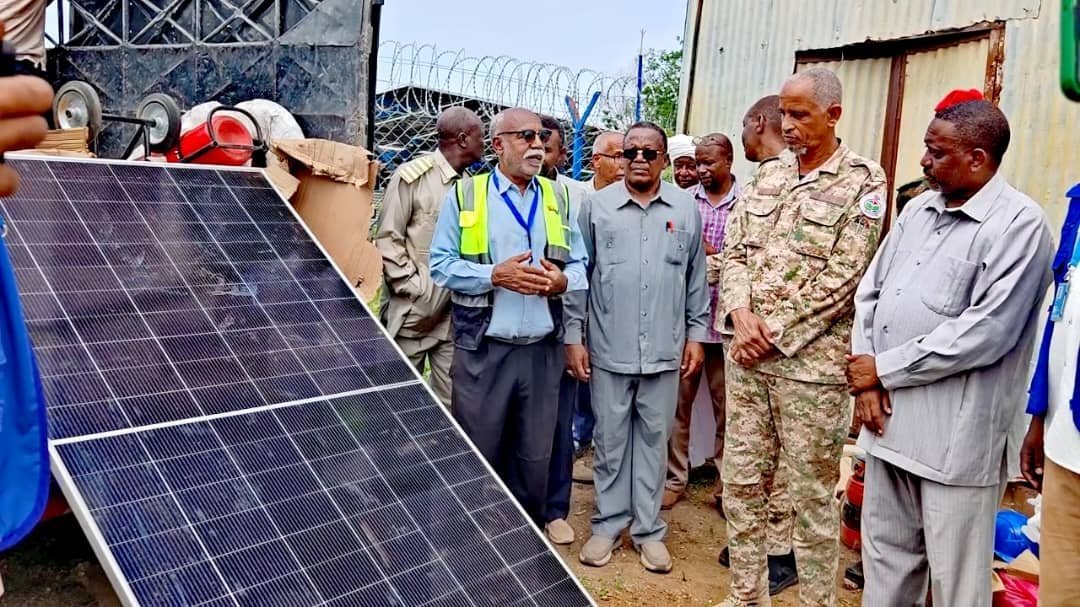
Sudan’s solar potential provides an opportunity precisely because rebuilding the entire national grid will take years and enormous capital. Decentralized solar mini-grids could provide electricity to communities that may remain disconnected from the national network for a prolonged period. Solar-powered water systems can support agriculture and public health. Community energy systems can reduce dependence on diesel. UNDP already has programmes aimed at expanding solar mini-grids and strengthening private-sector participation, with projects designed to support underserved communities and essential services.
But such programmes need to be scaled dramatically and integrated into a broader reconstruction strategy. Sudan needs concessional finance, guarantees against currency risk, reliable import channels, quality standards, technical training and financing models that allow low-income households and communities to pay gradually rather than absorb enormous upfront costs. UNDP has specifically proposed an Emergency Solar Access Fund and community-based financing models that could allow neighbourhoods to develop shared solar infrastructure rather than forcing individual families to purchase complete systems.
The international community should also recognize that restoring Sudan’s electricity system is not simply an economic investment. It is a stabilisation strategy. Reliable electricity can reduce operating costs for businesses, improve agricultural productivity, support healthcare, enable communications and help communities begin rebuilding livelihoods. Energy infrastructure can therefore become part of the architecture of peace rather than merely a beneficiary of peace.
The opposite is equally true. Continued destruction of energy infrastructure will prolong economic paralysis and deepen dependence on humanitarian assistance. A country cannot rebuild its economy when factories, workshops, farms, hospitals and schools cannot depend on electricity. Nor can displaced populations sustainably return to communities where water systems, health services and local businesses remain without power. Energy insecurity can therefore become self-reinforcing: war destroys electricity, electricity undermines economic recovery, economic collapse increases poverty and poverty makes recovery more difficult.
The question facing Sudan is consequently much larger than whether households will continue buying solar panels. The real question is whether the country’s post-war recovery will reproduce the inequalities created by the conflict or begin dismantling them. If electricity reconstruction is left entirely to private households and businesses, the outcome will likely be fragmented and unequal. If solar power is treated as a strategic public infrastructure project, however, it could help Sudan leapfrog some of the weaknesses of its pre-war energy system while rebuilding a more decentralized and resilient electricity network.
Sudan’s tragedy is that it possesses one of the essential ingredients for such a transformation in abundance: sunlight. What it lacks is security, functioning institutions, affordable capital and a political environment capable of converting natural potential into public infrastructure. The irony is difficult to ignore. A country with immense solar resources is experiencing an electricity crisis not because it lacks energy from nature, but because war has destroyed the systems needed to capture, finance, distribute and maintain it.
For families like Randa al-Mansour’s, solar power represents resilience. For families unable to afford it, the same technology represents another reminder of inequality. And for Sudan as a whole, that divide offers a warning: a solar revolution that only the relatively wealthy can afford will not solve an energy crisis; it will privatize it.
Sudan does not need electricity merely to switch on lights. It needs electricity to rebuild a society shattered by war. It needs power for hospitals, schools, farms, water systems, communications and businesses. It needs energy to restore economic dignity and make displaced communities capable of returning and rebuilding. The country’s solar potential could become one of the foundations of that recovery, but only if access to energy is treated as a public necessity rather than a luxury purchased by those fortunate enough to have the money.
The war has already taken lives, destroyed homes and fractured Sudan’s economy. It should not also permanently transform electricity into a privilege. The darkness in Sudan is not simply the absence of power. It is a warning about what happens when a state’s basic infrastructure becomes a casualty of war and when survival itself becomes something that only those who can pay can buy.
-Patricia Dzirutwe