


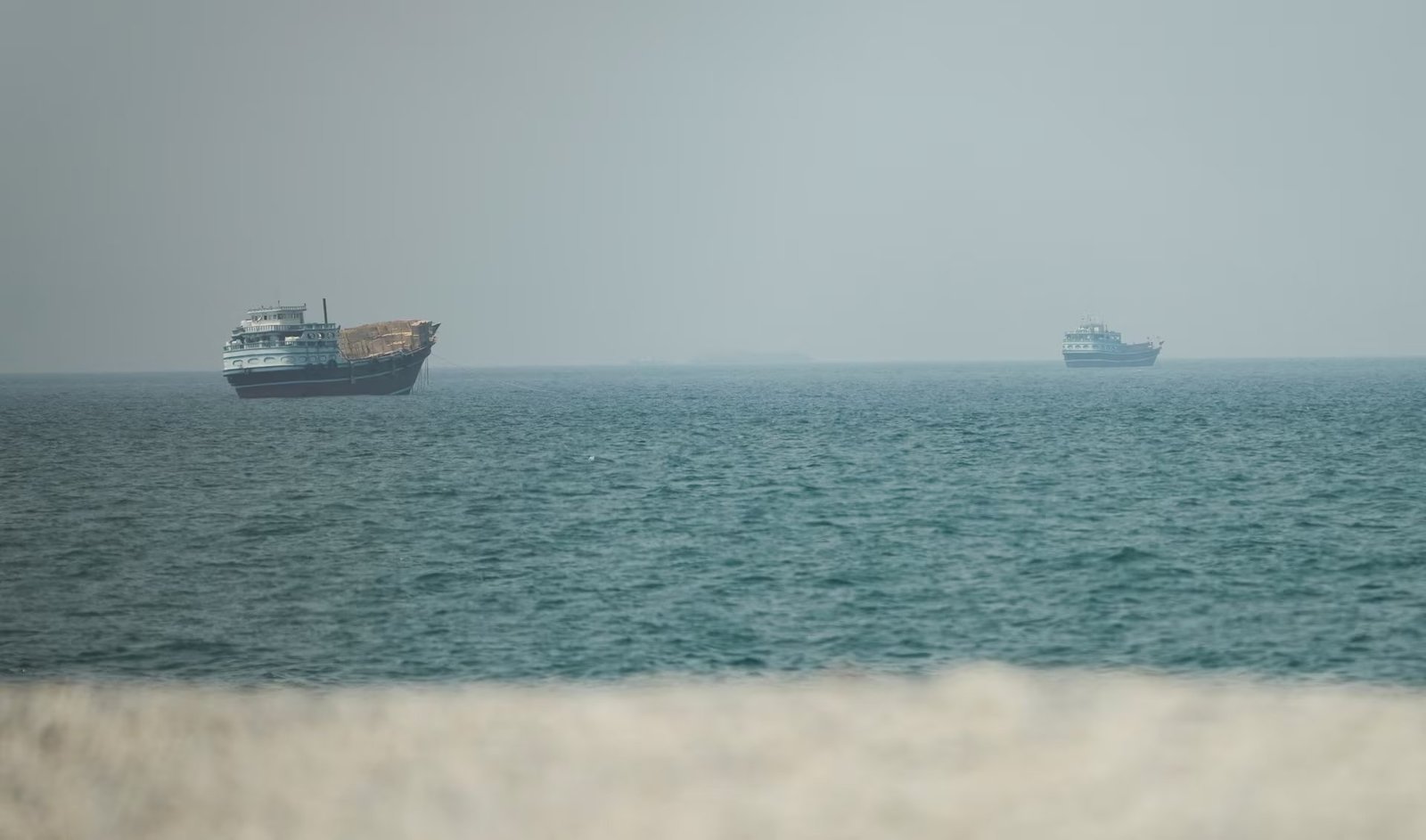
DUBAI: The conflict between the United States and Iran is taking a dangerous turn at sea. U.S. and Iranian forces exchanged fire around Iranian waters on Saturday, with attacks involving oil tankers and military vessels raising fresh concerns that the conflict could spread further into one of the world’s most important energy corridors, the Strait of Hormuz.
U.S. Central Command said American forces struck three Iranian oil vessels, including one near Kharg Island, a vital hub for Iran’s oil exports. The strikes came after Iran’s Islamic Revolutionary Guard Corps launched ballistic missiles toward two U.S. Navy ships.
The message from Washington was blunt. Admiral Brad Cooper, head of U.S. Central Command, said that if Iranian forces attack American ships, the United States will respond by imposing an even greater economic cost on Iran. For Tehran, however, the message is equally clear: any attempt to squeeze Iran’s economy through its oil industry or maritime routes will face a response.
The IRGC threatened to intensify attacks against U.S. military vessels operating in the region. Iranian forces also warned commercial ships against using what they described as unauthorized routes through the Strait of Hormuz. Iranian state media later reported that the IRGC Navy had targeted three tankers it said were travelling through unauthorized waterways, along with three U.S.-linked vessels in other areas. The claims could not immediately be independently verified.
The confrontation is significant because the waters around Iran are not simply another military theatre. They sit next to one of the world’s most important gateways for energy. The Strait of Hormuz connects the Persian Gulf with the Gulf of Oman and the wider Arabian Sea. Before the current conflict, roughly one-fifth of the world’s oil supply moved through the waterway. Any serious disruption could therefore quickly affect fuel prices, shipping costs and economies thousands of kilometres away.
KHARG ISLAND BECOMES A MAJOR FLASHPOINT
At the centre of the growing confrontation is Kharg Island. The island is Iran’s principal crude-oil export terminal and has long been central to the country’s ability to sell its oil overseas. That makes it strategically important and highly vulnerable in a conflict where Washington is increasingly targeting Tehran’s ability to generate revenue.
Iran’s oil exports have already been badly disrupted by the U.S. naval blockade that began in mid-April. Further attacks on Kharg could put even greater pressure on an economy already struggling under sanctions and wartime disruption.The possibility of an attack on Kharg has also been hanging over the conflict for months.
On August 31, U.S. President Donald Trump posted a one-line message accompanied by an AI-generated video showing Kharg Island being destroyed. Iranian officials responded by warning that any attack on the island would bring a powerful retaliation. Trump had previously spoken about taking control of Kharg Island in June before later saying that a U.S. military operation there was off the table. That uncertainty has now returned to the centre of the conflict.
THE REAL BATTLE MAY BE ECONOMIC
Washington’s strategy toward Iran increasingly appears to extend beyond conventional military targets. Sanctions, naval pressure and restrictions on Iranian oil exports are being used together to weaken Tehran’s ability to finance its military operations. Iran, meanwhile, has a powerful geographic advantage. It sits directly beside the Strait of Hormuz. That creates a dangerous calculation for both sides. The United States can put enormous pressure on Iran’s oil industry, but Tehran can threaten the maritime routes that connect Gulf energy supplies to the rest of the world. The result is a confrontation in which a strike against one tanker or oil terminal can have consequences far beyond the immediate battlefield.
Oil markets are already reacting.
Brent crude closed Friday at $96.28 a barrel, its highest level since July 24, as investors grew increasingly concerned about the possibility of further disruption to global supplies. For ordinary consumers, that can eventually mean higher fuel and transportation costs. For governments and businesses, it means renewed uncertainty over energy prices, shipping and supply chains.
A CONFLICT WITH GLOBAL CONSEQUENCES
The latest exchange of fire shows how quickly the U.S.-Iran confrontation is moving into a more dangerous phase. This is no longer only a contest involving missiles, military bases and airstrikes. Tankers, oil terminals and commercial shipping are becoming part of the strategic battlefield.
For Washington, the objective is to make the economic cost of Iran’s military campaign increasingly difficult to sustain. For Tehran, the objective is to show that Iran cannot be economically isolated without creating risks for the wider global economy. That is what makes the Strait of Hormuz so important.
A prolonged confrontation there could transform an already serious regional war into a global energy crisis. And with American and Iranian forces now exchanging fire around commercial vessels, the line between military escalation and economic disruption is becoming increasingly difficult to see.
WorldAffairs will continue to track the developing U.S.-Iran confrontation, its impact on the Strait of Hormuz and the wider consequences for global energy markets.
⁃ Chibuike Lawson