


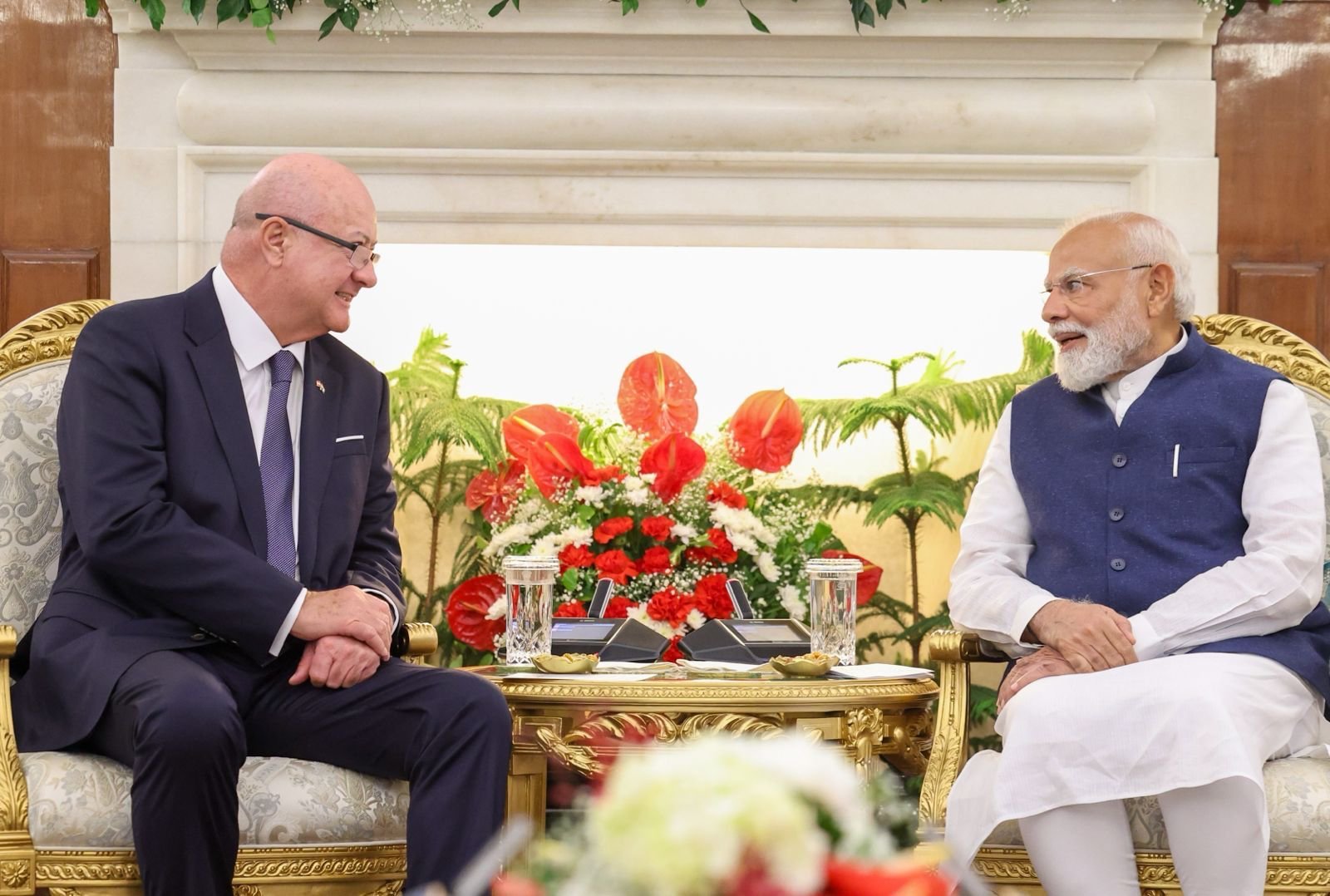
NEW DELHI: The 15 agreements signed between India and Austria are being presented as a bilateral milestone, but their real significance lies far beyond Vienna or New Delhi. They reflect a deeper shift underway in Europe’s geopolitical thinking, one shaped less by opportunity and more by strategic anxiety in an increasingly unstable world.
Europe today finds itself navigating overlapping crises. The prolonged war in Ukraine has upended its security assumptions, tensions in West Asia continue to threaten energy routes and maritime trade, and the global economy is fragmenting into competing blocs. In this environment, traditional alliances are proving insufficient. The outreach to India is therefore not a matter of diplomatic routine but a calculated attempt to diversify strategic partnerships.
Austria’s engagement with India must be understood within this broader European recalibration. While not a major military power, Austria represents a category of European states that are increasingly stepping beyond passive alignment and pursuing targeted bilateral partnerships. The agreements on defence cooperation, counter-terrorism, and cybersecurity indicate that even smaller European economies are seeking a more direct role in shaping their external security environment.
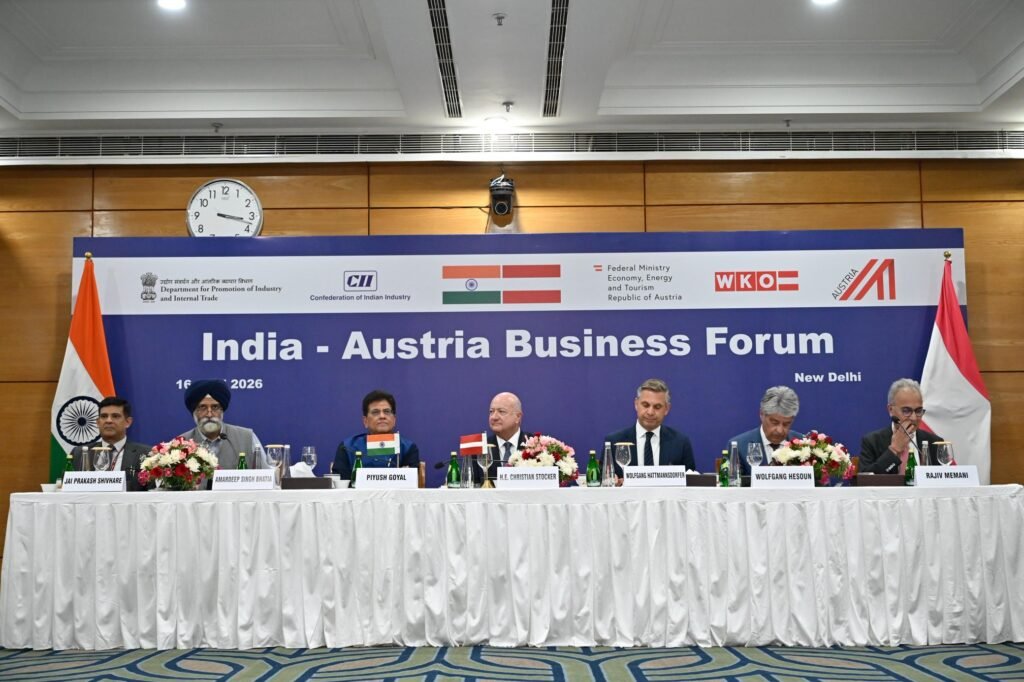
For India, this expands its footprint within Europe beyond its traditional partners and reinforces its position as a preferred interlocutor for a continent searching for balance between competing global powers. The defence cooperation framework, in particular, reflects an emerging model that avoids rigid alliances while enabling practical collaboration in training, industrial partnerships, and capacity building. This approach aligns with India’s long-standing emphasis on strategic autonomy while offering Europe a way to engage without escalating geopolitical tensions.
The counter-terrorism agreement further highlights a growing convergence in threat perception. Europe’s concerns about radicalisation, cyber-enabled extremism, and instability spilling over from conflict regions increasingly mirror challenges that India has long confronted. The institutionalisation of cooperation in this domain suggests a recognition that security threats are no longer geographically contained but interconnected across regions.
At the heart of the partnership, however, lies technology. The focus on quantum computing, machine learning, advanced materials, and cybersecurity underscores a critical reality: geopolitical influence in the coming decades will be determined as much by technological capability as by military strength. Austria’s engineering expertise and research ecosystem complement India’s scale, digital infrastructure, and human capital. This creates a mutually beneficial framework at a time when both sides are seeking to reduce dependence on dominant technology hubs.
The emphasis on joint research and innovation is also tied to a larger transformation in global economics. The era of efficiency-driven globalisation is giving way to resilience-driven supply chains. Disruptions caused by pandemics, conflicts, and maritime tensions have exposed the vulnerabilities of concentrated production networks. The mechanisms agreed upon by India and Austria to facilitate business, resolve regulatory challenges, and promote startup collaboration are part of a broader attempt to build diversified and reliable economic linkages.
Equally significant is the focus on skills and education. Europe’s demographic challenges and labour shortages contrast sharply with India’s youthful workforce. Agreements on vocational training, recognition of qualifications, and academic collaboration are not merely educational initiatives, they are long-term strategies to align labour markets and sustain economic growth. Austria’s push to attract Indian students into its technical institutions reflects a deeper investment in human capital connectivity.
Even the seemingly softer elements of the partnership, such as audiovisual co-production and youth mobility programmes, play a strategic role. Cultural exchanges and people-to-people ties create the social foundation necessary for sustaining complex economic and security relationships. In a fragmented world, these connections often determine the durability of partnerships.
What emerges from the India–Austria agreements is a pattern that is increasingly visible across global diplomacy. Countries are moving away from rigid alliances toward flexible, sector-specific collaborations. Economic partnerships are being designed alongside security considerations, and technology is becoming central to both.
Austria’s engagement with India is a reflection of Europe adapting to this new reality. It is an acknowledgment that the global order is no longer defined by a few dominant powers but by a network of partnerships shaped by shared interests and mutual vulnerabilities.
For India, this moment reinforces its role as a pivotal actor in a multipolar world capable of engaging with multiple regions without being constrained by any single alignment. For Europe, it represents a pragmatic shift toward building resilience through diversification.
The agreements themselves may appear incremental, but their cumulative impact could be far-reaching. If effectively implemented, they have the potential to transform India–Austria relations into a meaningful component of the wider India–Europe strategic framework.
In a time when global headlines are dominated by conflict and competition, this partnership offers a quieter but equally important narrative: the gradual construction of a new geopolitical architecture based not on blocs, but on networks.