




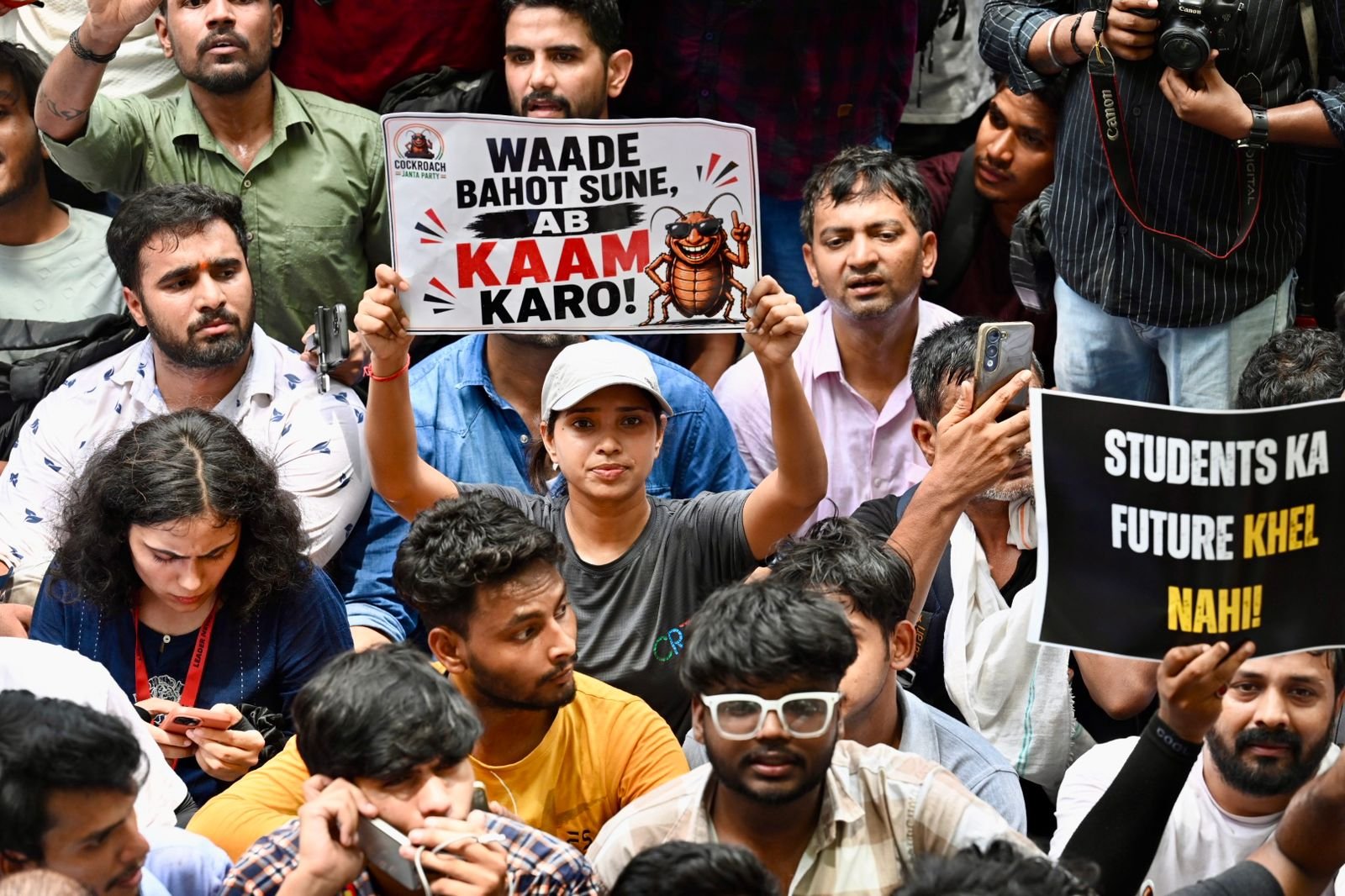
NEW DELHI, India: The sight of young Indians gathering in the capital wearing cockroach masks would, in another moment, have been dismissed as internet absurdity spilling into public space. But the emergence of the so-called “Cockroach Janata Party” (CJP) and its first real-world protest in New Delhi points to something far more consequential: a generational shift in how political frustration is expressed, amplified, and potentially mobilised.
What began as a satirical online construct has, within days, transformed into one of the fastest-growing political phenomena on Indian social media. The CJP’s Instagram following surged into the tens of millions within a week of its launch, outpacing the digital reach of established national parties. While such metrics are not a proxy for political legitimacy, they are a powerful indicator of sentiment particularly among India’s young, hyper-connected population.
The movement’s symbolism is as telling as its speed. The cockroach, an organism associated with survival under extreme conditions, has been adopted as a tongue-in-cheek emblem of endurance. This is not accidental. It reflects a deeper psychological shift: from optimism to adaptation, from aspiration to survival. For a generation navigating persistent unemployment pressures, competitive exam disruptions, and rising economic uncertainty, the metaphor resonates with uncomfortable clarity.
India’s demographic advantage long framed as its greatest economic asset is increasingly under strain. Youth unemployment remains a structural concern, with periodic recruitment delays and examination controversies amplifying distrust in public institutions. The grievances articulated during the CJP’s protest, including demands linked to exam integrity and ministerial accountability, are not new. What is new is the form in which they are being communicated.
Satire has become the language of dissent.
Unlike traditional political mobilisation, which depends on ideology, organisation, and leadership, this new form of engagement thrives on relatability and replication. Memes compress complex socio-economic frustrations into shareable narratives that travel faster than policy arguments ever could. In doing so, they bypass conventional gatekeepers and speak directly to a generation that consumes politics not through speeches or manifestos, but through screens.
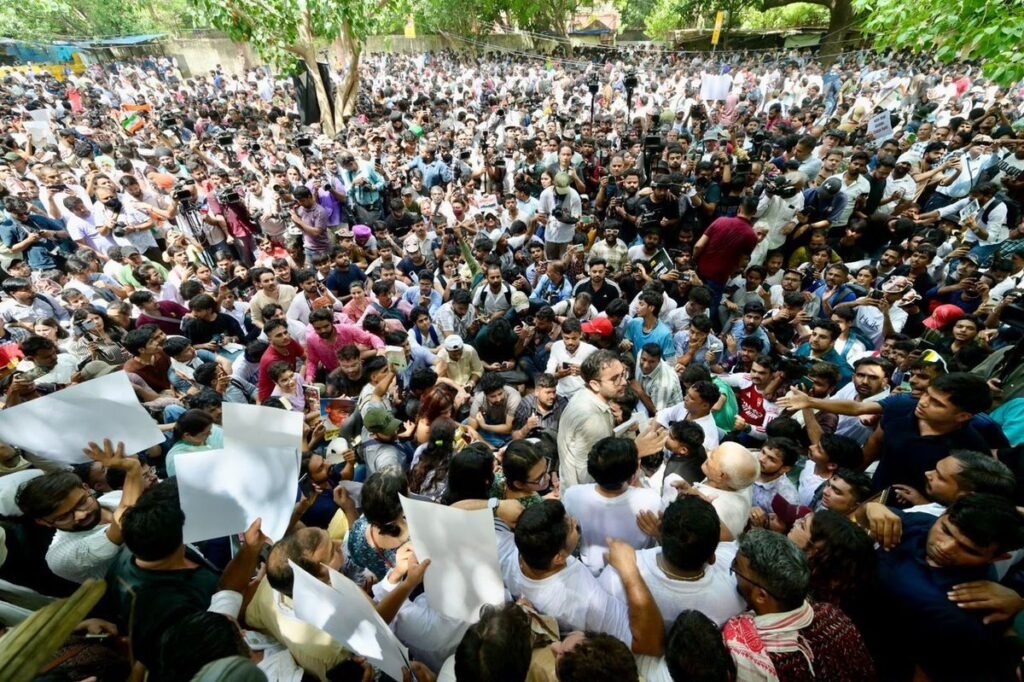
Yet the transition from digital virality to physical mobilisation reveals both the potential and the limits of such movements. Despite its massive online following, the CJP’s first protest drew a crowd in the hundreds a respectable turnout, but one that underscores the persistent gap between digital engagement and real-world action. Online participation is instantaneous and low-cost; protest demands time, risk, and commitment.
This gap raises an important question about the future trajectory of such movements. Are they transient expressions of collective frustration, destined to fade with the next viral cycle? Or do they represent the early stages of a more fundamental reconfiguration of political participation?
The answer may depend less on the movement itself and more on how the political system responds.
Initial reactions from authorities have been measured, reflecting an awareness of the risks of overreaction. A movement built on irony is uniquely difficult to confront. Crackdowns risk legitimising it; dismissal risks underestimating it. This ambiguity gives such movements a strategic advantage they operate in a grey zone between satire and seriousness.
Critics have questioned the authenticity of the CJP’s rapid digital growth, pointing to the possibility of artificial amplification or the absence of organisational depth. These concerns are valid, but they do not negate the underlying reality the movement reflects. Even if the vehicle is exaggerated, the sentiment it carries is real.
And that sentiment is rooted in a growing disconnect between expectation and experience.
For decades, India’s political narrative has been anchored in upward mobility and opportunity. But for many young citizens, that promise now feels deferred. When formal channels of participation appear slow or ineffective, alternative modes of expression emerge. Today, that mode is satire. Tomorrow, it could be something more structured or more disruptive.
The future of “cockroach politics” will likely follow one of three paths. It may dissipate as attention shifts, co-opted by the relentless churn of the digital economy. It may be absorbed into mainstream political discourse, with parties adopting its language and addressing its core issues. Or it may evolve into a more organised form of civic engagement, translating digital energy into sustained pressure.
Each scenario carries implications for India’s democratic landscape.
If it fades, it will still leave behind a blueprint for rapid, decentralised mobilisation. If it is co-opted, it could reshape how political messaging is crafted and delivered. If it evolves, it may signal the arrival of a new class of political actors digitally native, culturally fluent, and structurally unconventional.
What is clear is that the rise of the Cockroach Janata Party is not an isolated anomaly. It is part of a broader global pattern in which political expression is being reshaped by platforms, humour, and participatory culture. From meme-driven campaigns to leaderless movements, the boundaries between entertainment and engagement are increasingly blurred.
India is now experiencing its own version of this transformation.
Dismissing it as a joke would be a mistake. Because when satire becomes the dominant language of political expression, it is rarely because people have stopped caring.
It is because they are no longer convinced that anyone is listening. And that, more than the masks or the memes, is the real warning embedded in India’s cockroach politics.
– Dr.M Shahid Siddiqui