



MANILA / NEW DELHI: As the strategic balance in the Indo-Pacific undergoes rapid change, the Quad’s top diplomats will reconvene in Manila on July 23, 2026, on the sidelines of the ASEAN Foreign Ministers’ meetings, in what could become one of the grouping’s most consequential ministerial engagements since its landmark meeting in New Delhi two months ago.
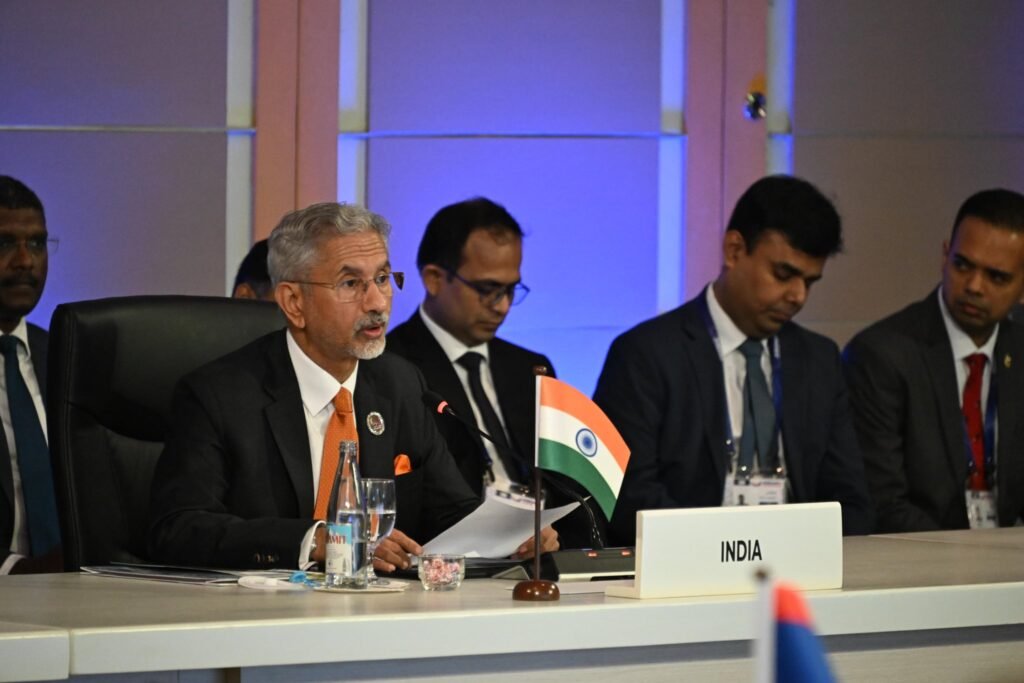
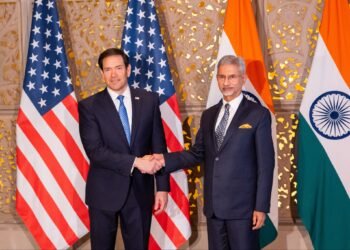
India’s External Affairs Minister S. Jaishankar, who is visiting the Philippines on July 22–23, will participate in the ASEAN-India Foreign Ministers’ Meeting, the East Asia Summit (EAS) Foreign Ministers’ Meeting, and the ASEAN Regional Forum (ARF) before joining his counterparts US Secretary of State Marco Rubio, Australian Foreign Minister Penny Wong, and Japanese Foreign Minister Takeshi Iwaya for the 12th Quad Foreign Ministers’ Meeting.
The gathering comes at a pivotal geopolitical moment. Since the 11th Quad Foreign Ministers’ Meeting in New Delhi on May 26, 2026, the Indo-Pacific has witnessed intensified strategic competition, renewed tensions in the South China Sea and Taiwan Strait, evolving US-China diplomatic engagement, and growing uncertainty surrounding regional security architecture. Against that backdrop, Manila is expected to test not only the Quad’s unity but also its ability to translate strategic commitments into practical outcomes.
The New Delhi ministerial meeting marked an important evolution of the Quad. The four countries launched the Indo-Pacific Maritime Surveillance Collaboration (IPMSC) to strengthen maritime domain awareness across the Indian Ocean and the wider Indo-Pacific. They also advanced the Quad Critical Minerals Initiative, aimed at securing resilient supply chains, and introduced new cooperation on regional energy security, reflecting the grouping’s broader shift from security dialogue to strategic delivery.
The Manila meeting is expected to review progress on these initiatives while identifying new areas for cooperation amid an increasingly volatile regional environment.
For India, Jaishankar’s visit underscores the growing importance of Southeast Asia within New Delhi’s Act East Policy. The Ministry of External Affairs has highlighted that 2026 has been designated the ASEAN–India Year of Maritime Cooperation, reinforcing India’s focus on maritime connectivity, regional resilience, and deeper engagement with ASEAN at a time when sea lanes and supply chains have become central to geopolitical competition.
Yet the meeting also takes place against a backdrop of strategic ambiguity.
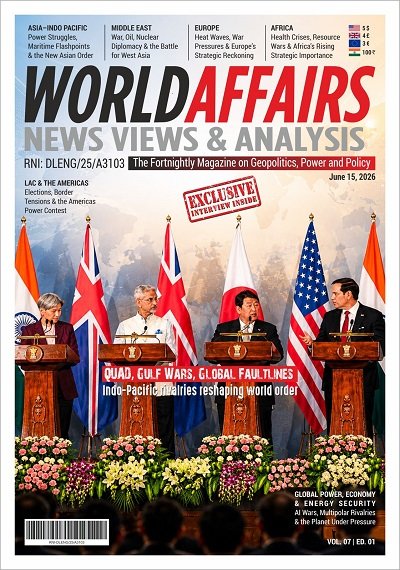
Despite reaffirming their commitment to a free, open, inclusive, and rules-based Indo-Pacific during the May meeting, the Quad foreign ministers did not confirm the date or venue of the next Quad Leaders’ Summit, which India is expected to host later this year. The omission has fuelled speculation about the pace of the grouping’s political agenda as Washington simultaneously seeks to manage competition with China while strengthening regional partnerships.
Unlike treaty alliances, however, the Quad has deliberately evolved as a flexible strategic coalition. Its growing relevance stems not from collective defence commitments but from practical cooperation in maritime security, critical technologies, cyber resilience, disaster response, infrastructure, and resilient supply chains.
The choice of Manila further reinforces the strategic convergence between ASEAN and the Quad. The Philippines, ASEAN Chair for 2026, has adopted the theme “Navigating Our Future, Together,” placing emphasis on regional peace, maritime security, economic integration, digital transformation, and inclusive growth. As tensions persist in the South China Sea, Manila has become one of Southeast Asia’s most strategically important capitals, making this year’s ASEAN and Quad meetings particularly significant.
China continues to view the Quad as an emerging strategic counterweight to its regional influence, while the four member countries insist the grouping is designed to strengthen regional stability rather than contain any single nation.
Whether that narrative continues to resonate across Southeast Asia will depend less on diplomatic declarations than on the Quad’s ability to deliver tangible outcomes through initiatives announced in New Delhi on May 26 and reviewed in Manila on July 23. As foreign ministers gather in the Philippine capital, the Quad faces a defining question: can it move beyond strategic messaging and become the Indo-Pacific’s most effective platform for regional cooperation in an era of intensifying geopolitical competition?
-WNN Manila Desk with David Hudson