



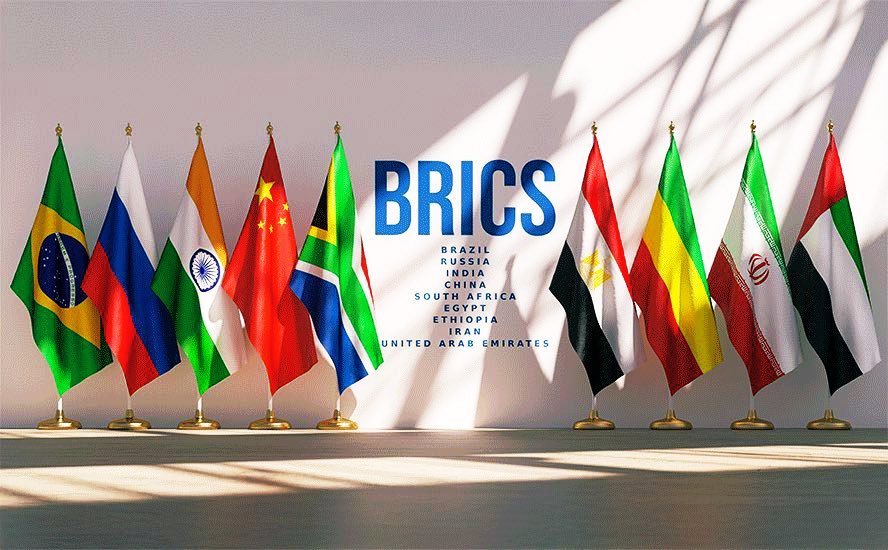
WASHINGTON/NEW DELHI: Donald Trump’s return to aggressive protectionism has jolted the global South, reshaping economic alliances and emboldening the BRICS bloc to seek new unity amid the most sweeping U.S. tariffs in over a century.
As of August 2025, the U.S. has enacted a 50% tariff on imports from both India and Brazil, the highest rates under Trump’s revised trade regime. For India, this is a two-stage hike: a 25% tariff effective August 7, followed by an additional 25% penalty taking effect 21 days later. The White House links these measures to New Delhi’s continued Russian oil imports, labeling them a threat to U.S. national security. Exemptions remain for select sectors like pharmaceuticals and electronics, but most Indian and Brazilian exports, including agricultural goods, textiles, jewelry, and IT hardware, now face rates that analysts warn could slash outbound shipments to the U.S. by up to 60%, hitting GDP by 1% or more.
For Brazil, the trigger was twofold: not only does Trump cite excessive trade barriers and retaliation for former President Jair Bolsonaro’s prosecution, but also broader frustrations with its export policy. Roughly $14.5 billion in Brazilian goods are affected, sparing only a few products like orange juice and aircraft.
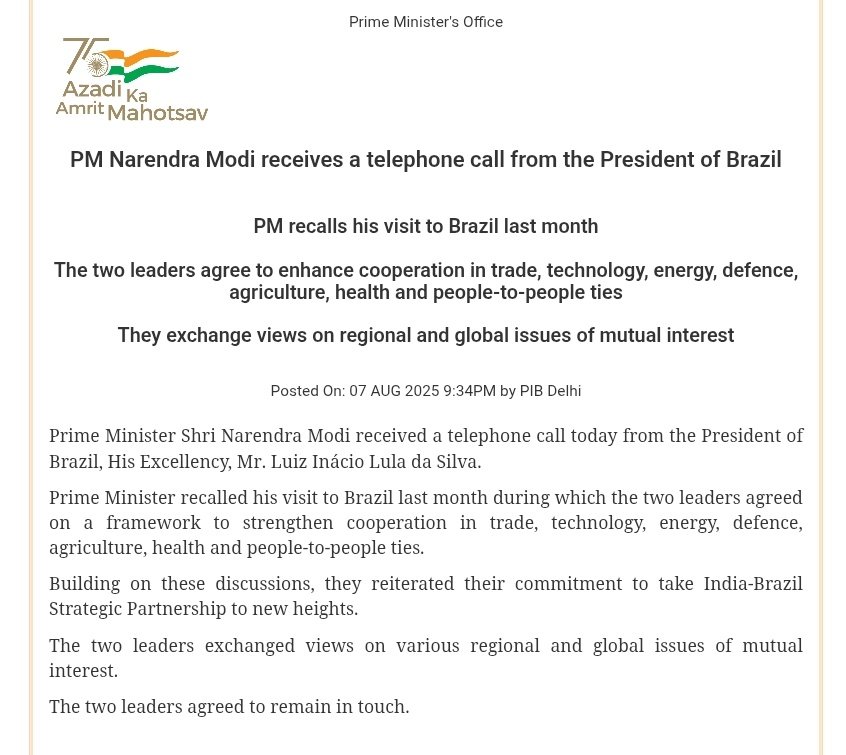
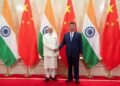
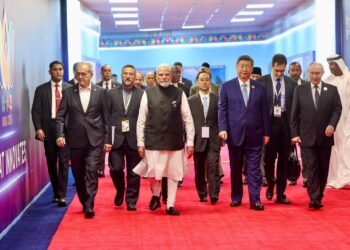
BRICS’ response is at a critical inflection. Brazilian President Luiz Inácio Lula da Silva has called for urgent coordination, reaching out to India’s Narendra Modi and China’s Xi Jinping to formulate a joint reply. Lula frames Trump’s approach as an assault on multilateral systems in favor of one-on-one deals, warning that smaller nations absent collective action are left defenseless against U.S. muscle. While Lula insists he won’t “humiliate himself” with direct entreaties to Trump, Brazil has lodged complaints at the WTO and is pushing harder for collective BRICS action.
India, meanwhile, treads a careful path: condemning the tariffs as “unjustified and unreasonable,” but signaling continued openness to negotiation in the 21-day window before full penalties kick in. New Delhi has emphasized the double standards of the West, pointing out that the U.S. and EU also continue certain Russian trades while pressuring India to halt oil purchases. India has increased imports of American oil and made concessions like lowering select U.S. tariffs, while quietly stepping up diplomatic outreach, both within BRICS and toward bilateral compromise.
Within the BRICS forum, consensus remains fragile. India remains wary of China’s ambitions inside the bloc, while Brazil appears more combative. Russia, deeply sanctioned by the West, continues to push for intensified de-dollarization and alternative trade mechanisms. The working expectation is for BRICS to release a joint condemnation of protectionism and, over the longer term, push to accelerate shared financial infrastructure such as local-currency payment systems and perhaps explore new reserve currency mechanisms. Yet, concrete coordinated tariffs or supply chain pivots will take time—and continued border frictions or domestic political shifts could undercut unity.
In the immediate term, the tariffs’ global ripple effects are sharp: U.S. consumers could see rising prices on generics, apparel, tech hardware, and coffee, while vulnerable export sectors, especially labor-intensive ones in India and Brazil face steep declines in U.S. market access. Several U.S. trade partners, including the EU, UK, Japan, and South Korea, have managed negotiated lower-tariff deals. Meanwhile, China awaits possible tariff escalation if bilateral talks over Russian oil imports stall.
Ultimately, Trump’s tariff surge is fast becoming a make-or-break test for BRICS and the broader Global South. Can internal rifts be bridged, or will unilateral U.S. moves crack the facade of emerging-market solidarity? In the short term, expect rhetorical unity and legal challenges, but only cautious and incremental economic retaliation. Over time, these tariffs could catalyze accelerated financial and trade independence across BRICS, if members can maintain cohesion in the face of accelerating U.S. pressure.
The stakes are historic: BRICS’ next moves may determine whether the global South remains reactive, or forges a true economic counterweight capable of reshaping the global order.
– Dr. Shahid Siddiqui; follow via X @shahidsiddiqui














Thanks for sharing. I read many of your blog posts, cool, your blog is very good.