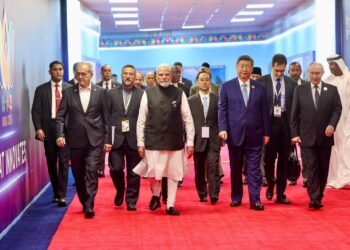




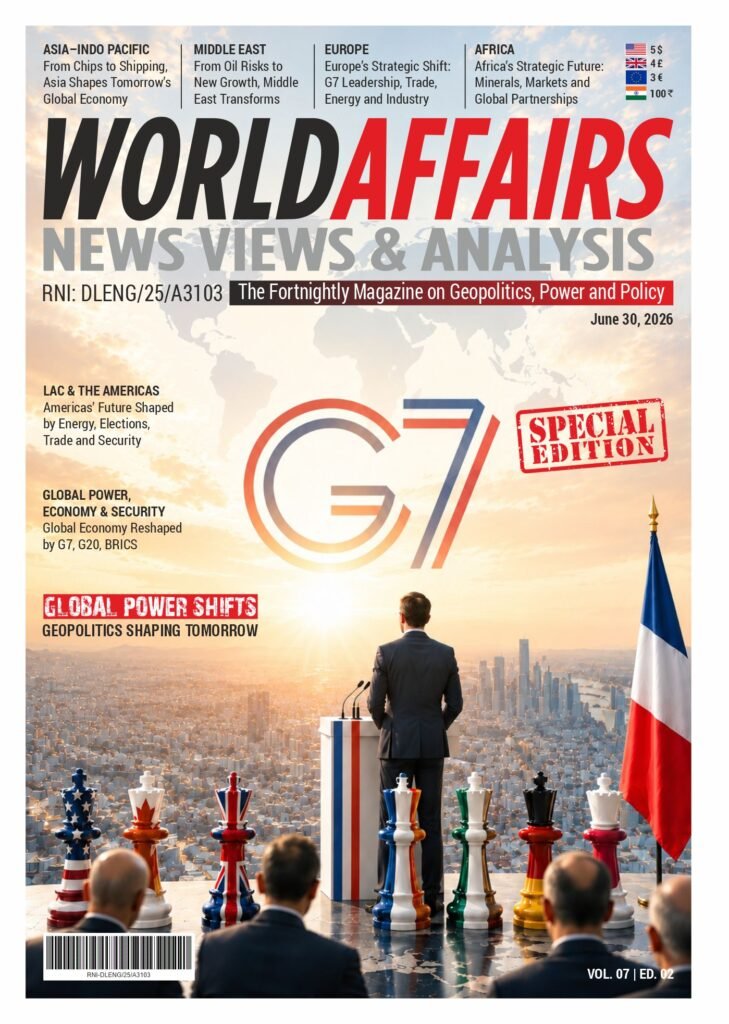
ÉVIAN-LES-BAINS, France: The G7 Summit opened on the tranquil shores of Lake Geneva under circumstances that are anything but calm. Wars, trade disputes, technological competition, and questions about the future of global leadership have converged in Évian-les-Bains, transforming this Alpine resort into the center of international diplomacy.
At the heart of the gathering stands U.S. President Donald Trump, arriving with what he describes as a diplomatic breakthrough in the Gulf and an ambition to carry that momentum into some of the world’s most dangerous conflicts. His message to fellow leaders was unmistakable: if a deal with Iran is within reach, why not attempt the same with Ukraine, Russia, and even Lebanon?
Whether that ambition translates into lasting diplomacy remains the defining question of this summit.
A Summit Suddenly Rewritten by Iran
Only weeks ago, expectations for the G7 centered on economic security, critical minerals, artificial intelligence, and the growing challenge posed by China’s dominance in strategic industries. Those issues remain important, but Trump’s announcement of a memorandum of understanding between Washington and Tehran has fundamentally altered the summit’s political landscape. The significance extends beyond the agreement itself. If implemented successfully, the reopening of the Strait of Hormuz would remove one of the most immediate threats to global energy markets. For Europe, already navigating economic uncertainty and high defense spending, stability in the Gulf would provide welcome relief.
Yet many leaders in Évian appear cautiously optimistic rather than celebratory. The details of the agreement remain unpublished, and the durability of any understanding between Washington and Tehran will ultimately be measured not by announcements but by implementation.
Diplomacy has produced many promising headlines over the years. Far fewer have survived contact with reality.
The Next Test Lies in Ukraine
With Iran potentially moving toward de-escalation, Trump has shifted his attention toward an even more difficult challenge: ending the war in Ukraine. His remarks about recent conversations with both Ukrainian President Volodymyr Zelenskiy and Russian President Vladimir Putin suggest an administration eager to position itself as a broker rather than a participant in the conflict. The statement that both leaders may be “open” to discussions offers a rare note of optimism in a war that has entered its fifth year.
But optimism alone does not end wars.
The strategic calculations of Moscow and Kyiv remain far apart. Ukraine continues to seek stronger military and financial backing from its partners, while Russia believes time and battlefield pressure remain on its side. Against that backdrop, Zelenskiy’s revelation that he offered direct talks with Putin at the summit and that Putin was unwilling to engage serves as a reminder of how distant a negotiated settlement remains. For Trump, Ukraine represents a diplomatic challenge far greater than Iran. Any agreement would require compromises neither side currently appears prepared to make.
A Growing Gap Between America and Its Allies
The most important story in Évian may not be any single conflict. It may be the increasingly complicated relationship between the United States and its closest partners. European leaders welcome American engagement when it contributes to stability. They become uneasy when that engagement arrives accompanied by tariff threats, abrupt policy shifts, or rhetoric that deepens political divisions.
Trump’s warning that France could face 100 percent tariffs on wine exports if it maintains its digital tax on American technology companies landed as a stark reminder that economic disputes remain deeply intertwined with security cooperation.
The timing was particularly striking. While leaders gathered to discuss collective responses to global challenges, one of the summit’s most powerful participants was simultaneously threatening punitive measures against a fellow G7 member.
French President Emmanuel Macron’s response reflected broader European frustration. His argument that tariffs ultimately hurt everyone speaks to a growing concern across Europe that strategic unity cannot be sustained indefinitely if economic disputes continue to escalate.
Immigration: The Issue That Never Leaves the Table
Trump’s comments on immigration shortly before arriving in France ensured another contentious debate would shadow the summit.
For many European governments, immigration remains one of the most politically sensitive issues of the decade. Trump’s remarks resonate with voters concerned about border control and national identity, but they also expose a widening philosophical divide between nationalist and centrist visions of governance. The issue illustrates a broader reality shaping international politics today: domestic politics increasingly drives foreign policy. Leaders no longer arrive at summits focused solely on international problems. They arrive carrying domestic electoral pressures that influence every diplomatic decision they make.
Why the Modi-Trump Meeting Matters
Amid discussions dominated by wars and trade disputes, the planned meeting between Indian Prime Minister Narendra Modi and President Trump may prove one of the summit’s most consequential conversations.
India occupies a unique position in today’s geopolitical landscape. It is simultaneously a strategic partner of the West, a leading voice of the Global South, a major economic power, and a country maintaining its own independent foreign policy approach. The meeting will be closely watched not merely because of bilateral relations, but because it reflects a larger shift underway in global affairs. The era when major international decisions were shaped exclusively by Western powers is steadily giving way to a more multipolar reality.
India’s presence at the summit as a guest highlights that transformation.
Beyond the Headlines
The picturesque setting of Évian offers a striking contrast to the challenges confronting world leaders. Beneath the carefully choreographed photographs and diplomatic statements lies a deeper struggle over the future of the international order.
Can diplomacy still prevent conflicts from escalating? Can economic competition be managed without triggering fragmentation? Can allies remain united despite growing disagreements? And can institutions like the G7 adapt to a world where power is becoming increasingly dispersed?
These questions will outlast the summit itself.
The Real Measure of Success
For Trump, the immediate objective is clear: transform a claimed diplomatic success with Iran into broader momentum for peace elsewhere.
For European leaders, the challenge is preserving unity while managing disagreements with Washington.
For Ukraine, the priority remains securing meaningful support and maintaining international attention.
For India and other emerging powers, the summit is another opportunity to shape conversations that increasingly affect the entire world, not just the traditional Western bloc.
The outcome of the Évian summit will not be judged by its communiqués or photo opportunities. It will be judged by whether the diplomatic energy generated here produces tangible progress after leaders return home.
On the shores of Lake Geneva, the world’s major powers are searching for common ground in an increasingly divided age. Whether they find it may determine not only the success of this summit, but the direction of global politics in the years ahead.
–Dr. M Shahid Siddiqui