

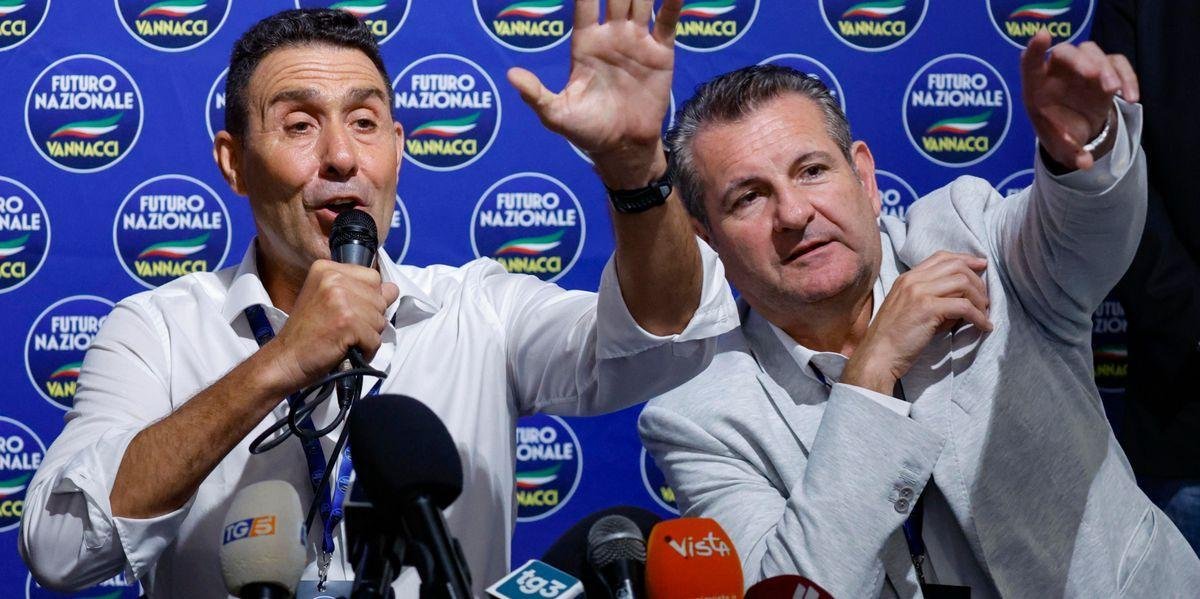
ROME, Italy: Italy’s political landscape is entering a new phase of uncertainty as General Roberto Vannacci launches a new far-right political movement that could reshape the country’s conservative bloc ahead of next year’s elections.
At the inaugural congress of Futuro Nazionale on Sunday, Vannacci was introduced as a modern-day Julius Caesar and welcomed by enthusiastic supporters chanting “Generale.” The former paratrooper and European Parliament member is positioning himself as the most uncompromising nationalist voice in Italian politics, seeking to challenge Prime Minister Giorgia Meloni from the right rather than from the traditional opposition.
The emergence of Futuro Nazionale highlights growing tensions within Italy’s conservative camp. While Meloni successfully transformed herself from an opposition firebrand into a governing leader after taking office in 2022, Vannacci is attempting to capitalize on the frustrations of voters who believe her government has moderated too much in power.
“We represent the rejects and the dregs, and are proud of it,” Vannacci told supporters, embracing an anti-establishment message that has become a hallmark of populist movements across Europe.
Recent polling suggests the new party is approaching 5 percent support, a significant figure in Italy’s fragmented political system. Although still smaller than the major parties, such numbers could prove decisive in a closely contested election and complicate Meloni’s efforts to secure another term.
The most controversial aspect of Vannacci’s platform centers on immigration. Positioning himself as Italy’s hardest-line advocate of border controls, he argued that the country’s foreign-born population should be dramatically reduced. Rejecting traditional integration policies, he instead promoted what he described as a strategy of “re-migration,” drawing strong applause from supporters.
Beyond immigration, Futuro Nazionale’s program revives several themes that once defined Italy’s nationalist opposition before the realities of governing softened many of those positions. Vannacci called for a debate on Italy’s membership in the euro currency system, demanded the abandonment of the European Union’s Green Deal climate policies, and advocated ending Italy’s long-standing restrictions on nuclear power.
The party also supports tax reductions for families with children, reflecting broader concerns over Italy’s demographic decline and aging population.
Yet the rise of Futuro Nazionale presents a difficult strategic dilemma for Meloni. On one hand, a future alliance with Vannacci could strengthen the broader right-wing coalition. On the other, such cooperation risks alienating moderate voters and international partners concerned about Vannacci’s openly anti-European Union rhetoric, his favorable stance toward Russia, and his links to hard-right movements elsewhere in Europe.
Security and law enforcement remain central to his message. Despite Italy already recording comparatively low levels of violent crime by international standards, Vannacci has pledged a policy of zero tolerance toward criminal activity and promised the construction of additional prisons.
Perhaps most revealing was his acknowledgment that political promises often collide with governing realities. Echoing a military maxim, Vannacci noted that no plan survives first contact with reality and must adapt to changing circumstances.
That observation may ultimately define the challenge facing both Vannacci and Meloni. The former is campaigning with the freedom of an outsider, while the latter governs under the constraints of economic markets, European commitments, and coalition politics. As Italy moves closer to the next election, the contest may not be between left and right, but between two competing visions of conservatism: Meloni’s pragmatic nationalism and Vannacci’s more confrontational brand of populism.
– Crispian Popper
READ THE FULL E-MAGAZINE | WorldAffairs: For Decision-Makers Who Need More Than Headlines