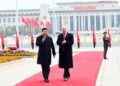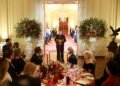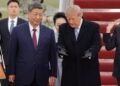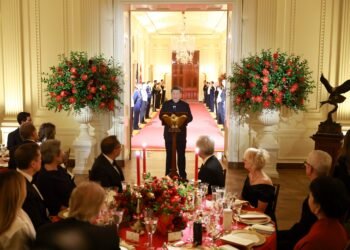



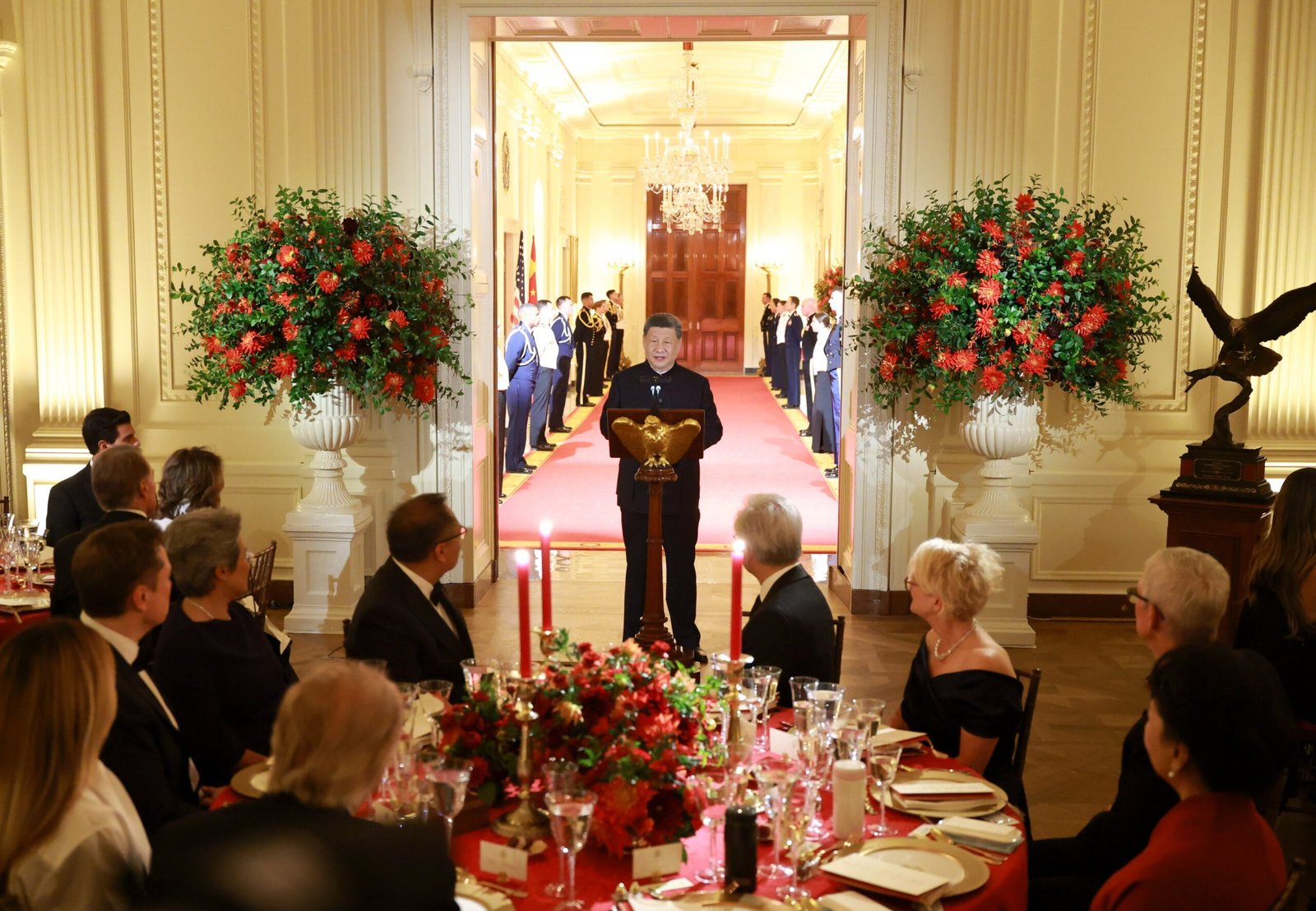
WASHINGTON, USA: The White House delivered all the grandeur of a historic state visit. Military honors, a black-tie state dinner, Marine One tours, and meticulously choreographed ceremonies framed President Donald Trump’s welcome for Chinese President Xi Jinping in Washington. Yet beyond the diplomatic spectacle, the summit revealed a far more consequential reality: the United States and China remain locked in an increasingly complex struggle over power, technology, Taiwan, trade, and the future architecture of the international order.
At a moment when the war involving Iran continues to destabilize the Middle East, artificial intelligence is transforming economic and military competition, and global supply chains remain vulnerable to geopolitical shocks, the Trump–Xi meeting became less about resolving disputes than preventing strategic rivalry from spiraling into open confrontation.
Trump sought to emphasize the personal relationship between the two leaders, describing Xi as a trusted friend with whom he had built mutual respect since his first presidency. Xi’s message was notably more strategic. He argued that while competition between major powers is unavoidable, it must remain “within bounds” and avoid becoming a zero-sum contest that threatens global peace.
The contrast in their opening remarks reflected the broader reality of contemporary U.S.–China relations. Washington increasingly defines Beijing as its principal long-term strategic competitor, while Beijing portrays coexistence and managed competition as essential for global stability. The summit produced impressive symbolism, but remarkably little evidence of substantive progress on the issues that matter most.
For nearly a decade, policymakers in both capitals have accepted that bilateral relations have entered a period of structural competition. The debate is no longer whether rivalry exists, it is whether it can be managed without war.
Xi once again invoked the “Thucydides Trap,” the geopolitical theory suggesting that conflict often emerges when a rising power challenges an established one. His warning was carefully directed at Washington. Rather than allowing history to dictate the future, Xi argued that China and the United States should compete by advancing together rather than wrestling until one side prevails.
Trump offered a different vision rooted less in geopolitical theory than transactional diplomacy. His approach continues to rely on personal engagement, economic leverage, and negotiated bargains. While that strategy has occasionally produced temporary agreements, particularly on tariffs and trade, it has struggled to bridge the deeper strategic divisions over security, technology, and regional influence. The result is an unusual paradox: both governments publicly reject confrontation while simultaneously expanding the military, technological, and economic capabilities that intensify their competition. No issue better illustrates that contradiction than Taiwan.
During their private discussions, Xi urged Trump to adhere to opposition against Taiwanese independence and to handle the Taiwan question with prudence. For Beijing, Taiwan remains the most sensitive issue in the bilateral relationship, one directly linked to sovereignty and national reunification. Chinese leaders continue to insist that reunification is inevitable while refusing to renounce the use of force if necessary.
Washington views Taiwan through an entirely different strategic lens. The United States remains legally committed to providing Taiwan with defensive military equipment sufficient to deter aggression while maintaining its long-standing policy of opposing unilateral changes to the status quo by either side. Trump has previously described arms sales to Taiwan as a valuable negotiating instrument, revealing how security and trade have become increasingly intertwined in American diplomacy.
For Beijing, however, military assistance to Taiwan is not a bargaining chip, it is a direct challenge to China’s core national interests. That fundamental disagreement remained unresolved in Washington and continues to represent the greatest military flashpoint in the Indo-Pacific.
If Taiwan represents the military frontier of U.S.–China rivalry, artificial intelligence has become its technological battlefield.
Both governments recognize that AI will define the next generation of economic competitiveness, military capability, industrial productivity, and geopolitical influence. Yet their governing philosophies remain sharply different.
Trump has consistently resisted stronger international regulation, arguing that excessive oversight could undermine innovation and weaken America’s technological leadership. Xi emphasized a more state-centric approach, insisting that AI should always remain under human control and serve the well-being of society rather than operate without meaningful safeguards.
Despite these philosophical differences, the summit hinted at an important area of potential cooperation. Officials from both countries have quietly explored mechanisms for notifying one another about significant AI-related incidents, recognizing that unmanaged technological crises could carry global consequences. Much like nuclear confidence-building measures during the Cold War, emerging AI guardrails may become essential even as strategic competition accelerates.
Economics remains the one domain where Washington and Beijing still possess strong incentives to cooperate. On the eve of the summit, negotiators agreed to extend their existing trade truce by two months, preventing another round of tariff escalation while discussions continue toward a longer-term commercial framework. The extension reflects a shared recognition that neither economy benefits from renewed instability at a time of slowing global growth.
Yet beneath the temporary ceasefire lies a much larger contest. China continues demanding that the United States relax export restrictions on advanced semiconductor technologies, arguing that such controls represent economic containment rather than legitimate security policy. Washington maintains that limiting China’s access to cutting-edge chips is essential for protecting national security and preserving leadership in critical technologies including AI, quantum computing, and advanced manufacturing.
Trade has therefore evolved beyond commerce. Industrial policy has become geopolitical strategy, and technological leadership has become a central pillar of national power.
The Middle East emerged as another revealing fault line during the summit.
Trump has repeatedly urged Beijing to use its considerable influence over Tehran to pressure Iran toward accepting American terms for ending the prolonged conflict. From Washington’s perspective, China’s dependence on Gulf energy gives it substantial leverage over the Iranian leadership.
Beijing’s calculation is markedly different.
China has consistently condemned military escalation and called for renewed diplomatic engagement between Washington and Tehran. During the summit, Xi reportedly supported reviving an interim agreement that briefly reduced tensions before collapsing amid renewed fighting around the Strait of Hormuz. For Beijing, uninterrupted energy flows and regional stability remain paramount strategic interests.
The divergence illustrates two competing diplomatic models. The United States continues to rely primarily on coercive leverage backed by sanctions and military partnerships, while China favors negotiated stability designed to preserve commerce and regional connectivity. Neither approach produced a breakthrough in Washington, underscoring how Middle Eastern geopolitics has become another arena of U.S.–China strategic competition.
Perhaps the most striking feature of the summit was not what occurred inside the Oval Office but what unfolded around it.
The White House invested enormous political capital in projecting prestige. Every ceremonial detail from the military review to the presidential helicopter tour was intended to reinforce America’s confidence and leadership. Yet many seasoned Asia observers noted that symbolism appeared to overshadow substantive diplomacy. The lengthy ceremonial program contrasted sharply with the relatively limited public progress on Taiwan, semiconductor controls, AI governance, or Iran.
The absence of prominent Chinese corporate leaders from the state dinner further reinforced that impression. Although American technology executives were well represented, the missing Chinese business delegation highlighted the continuing mistrust that shadows even economic engagement between the world’s two largest economies.
Ultimately, the Washington summit should not be measured by the number of agreements signed, because its primary objective was something more modest: preserving dialogue during one of the most volatile periods in U.S.–China relations. The two powers remain economically intertwined while strategically distrustful. They cooperate on financial stability while competing over advanced chips. They discuss AI safety while racing for technological supremacy. They seek regional stability while supporting sharply different approaches to Iran, and they continue to view Taiwan through fundamentally incompatible strategic frameworks.
This is the defining geopolitical contradiction of the twenty-first century. The United States and China no longer possess the strategic trust necessary for genuine partnership, yet both understand that outright confrontation would carry consequences extending far beyond Asia or the Pacific.
Washington’s state banquet projected confidence. Xi’s warnings reflected caution. Between those competing narratives lies the uncomfortable reality of a fragmented world where diplomacy is increasingly less about ending rivalry than ensuring rivalry never becomes war.
–Steve Holland