


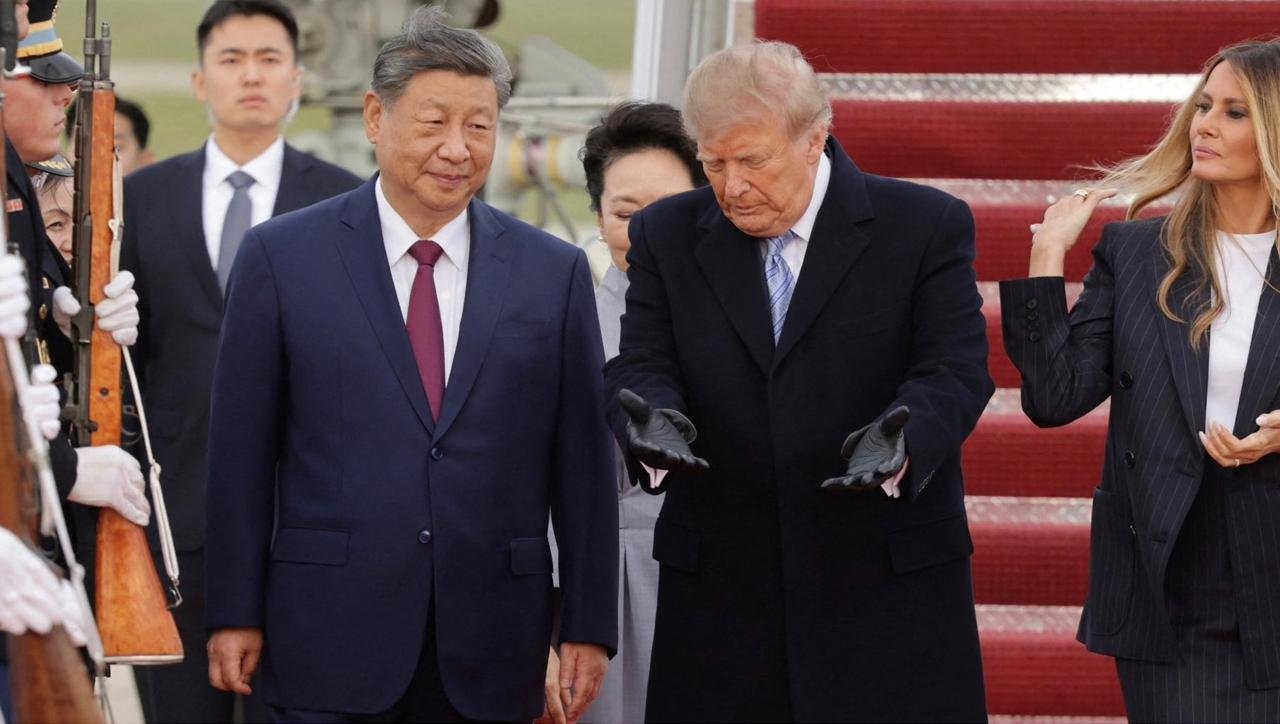
WASHINGTON, USA: Some summits are remembered for the agreements they produce. Others are remembered because they reveal how the world’s balance of power is changing. The White House meeting between U.S. President Donald Trump and Chinese President Xi Jinping belongs firmly in the second category. Behind the ceremonial welcome, the state dinner and carefully choreographed diplomacy lies a far more consequential reality: neither leader arrived in Washington believing he needed an immediate victory. Both believe history is working in their favor.
That shared confidence makes this one of the most strategically significant encounters of the decade. The United States and China are no longer negotiating the terms of cooperation; they are negotiating the boundaries of rivalry. Trade, Taiwan, artificial intelligence and Iran are merely the visible fronts of a much broader contest over technological supremacy, economic resilience and the future architecture of global order.
The extension of the bilateral trade truce by two months illustrates this new diplomatic logic. Rather than resolving structural disputes over tariffs, industrial policy and market access, both governments chose to postpone confrontation. The decision is less an economic breakthrough than a recognition that neither Washington nor Beijing currently benefits from renewed instability. Temporary agreements have become the preferred currency of U.S.–China diplomacy because they create strategic space without forcing either side into politically costly concessions.
For Donald Trump, the calculation is straightforward. His presidency has increasingly framed competition with China as an industrial and technological race rather than simply a trade dispute. The administration’s investments in domestic manufacturing, semiconductor production, critical mineral supply chains and artificial intelligence are designed to convince allies and markets that America can reduce strategic dependence on China while preserving its position as the world’s leading innovation economy. Trump’s confidence rests on the belief that economic growth and technological leadership will gradually translate into greater geopolitical leverage.
Xi Jinping approaches the same relationship from an entirely different historical perspective. Beijing’s leadership increasingly views the current era as one of irreversible global transition in which Western dominance is slowly giving way to a more multipolar system centered on Asian economic power. Despite China’s slowing property sector and weaker domestic consumption, its leadership remains confident that advanced manufacturing, electric vehicles, clean energy technologies and industrial scale provide long-term advantages that few countries can replicate. In Beijing’s strategic narrative, patience is not weakness, it is power.
This difference explains why the summit carries remarkably low expectations for dramatic announcements. Neither leader is attempting to persuade the other to change course. Instead, both are testing whether competition can remain controlled while each waits for structural trends to strengthen his own position.
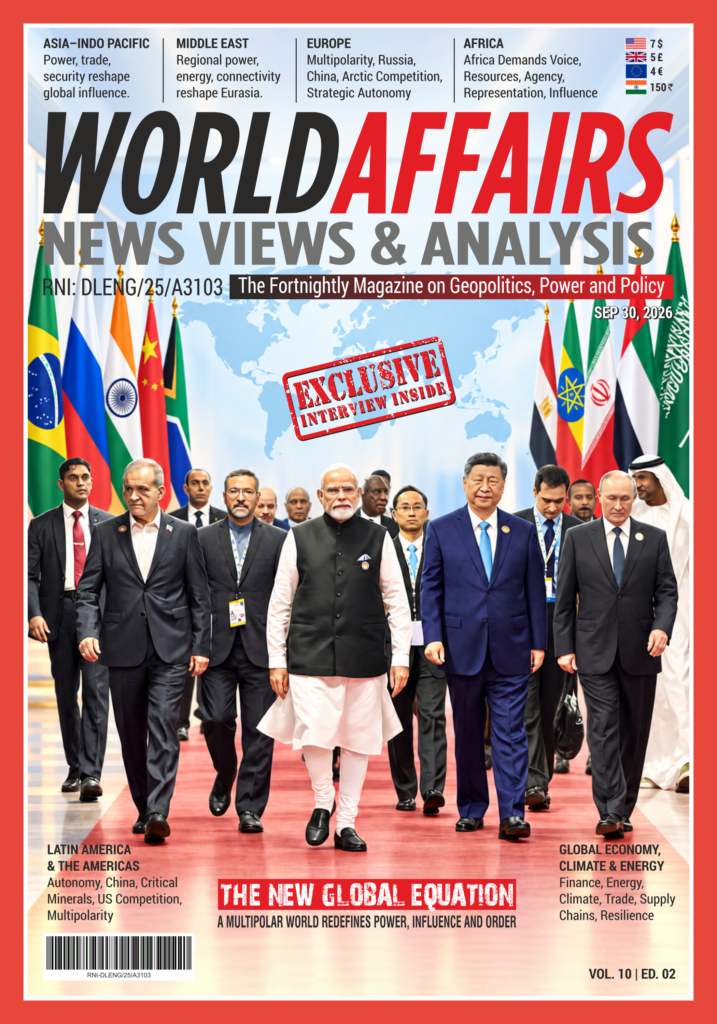
Artificial intelligence has become the clearest example of this emerging reality. Previous generations of U.S.–China rivalry were defined by trade deficits, naval deployments and manufacturing capacity. Today, the decisive battlefield increasingly lies inside data centers, advanced chips and algorithmic innovation. Discussions surrounding a possible notification mechanism for AI incidents suggest both governments recognize that technological competition now carries risks extending beyond economics into military stability itself. Just as nuclear hotlines sought to prevent accidental escalation during the Cold War, AI communication channels may become essential in preventing crises generated by autonomous systems and advanced military computing.
Yet cooperation in AI remains constrained by a deeper contradiction. Washington simultaneously seeks strategic guardrails while restricting China’s access to the very semiconductor technologies required to compete at the highest level. Beijing sees export controls not as commercial policy but as an attempt to slow China’s technological rise. The result is an unusual diplomatic paradox: both countries acknowledge shared risks while accelerating competition in the same strategic domain.
The Middle East presents another revealing fault line. Trump has repeatedly argued that China possesses unique leverage over Iran because Beijing remains one of Tehran’s most important economic partners and energy customers. From Washington’s perspective, Chinese influence should translate into diplomatic responsibility. Beijing rejects that assumption. Chinese officials have consistently condemned military escalation while avoiding direct pressure on Tehran, reflecting a foreign policy built upon preserving relationships across competing regional powers rather than aligning with one security coalition.
China’s position is driven less by ideology than by strategic necessity. Unlike the United States, China depends heavily on Gulf energy imports and has invested substantial diplomatic capital in maintaining productive relations with Saudi Arabia, Iran and other regional actors simultaneously. Pressuring Tehran too aggressively could weaken Beijing’s carefully cultivated image as an alternative great power capable of engaging rivals without demanding political alignment. Consequently, expectations of a Chinese diplomatic breakthrough on Iran were always far greater in Washington than in Beijing.
Taiwan remains the summit’s most dangerous unresolved issue because it exposes the irreconcilable foundations of both governments’ strategic identities. Beijing views reunification as a matter of sovereignty and national legitimacy, while Washington considers Taiwan’s security central to maintaining credibility among Indo-Pacific allies. Trump’s previous suggestion that arms sales represent a valuable negotiating chip introduces tactical flexibility but does not alter the underlying strategic equation. Delaying weapons approvals may create diplomatic breathing room, yet ambiguity cannot permanently reconcile two fundamentally incompatible positions on deterrence and sovereignty.
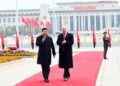
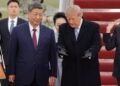
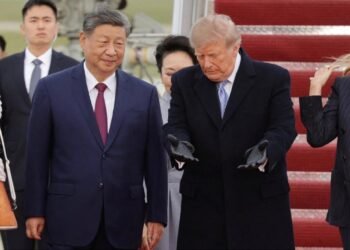
The symbolism surrounding Xi’s visit therefore deserves closer attention. Trump’s personal welcome of Xi and First Lady Peng Liyuan, the elaborate White House preparations and the emphasis on leader-to-leader engagement reflect more than presidential style. Trump has long believed that personal relationships between powerful leaders can stabilize otherwise volatile geopolitical relationships. Xi shares that preference, not because trust has replaced competition, but because direct dialogue reduces uncertainty in an increasingly fragmented international system. Both leaders appear to value predictable communication precisely because institutional confidence between their governments has eroded.
Perhaps the most striking feature of the Washington summit is what it says about the evolution of global diplomacy itself. During earlier decades, U.S.–China meetings sought deeper integration through trade liberalization, investment and globalization. Today’s dialogue is almost the reverse. The objective is no longer expanding interdependence but managing strategic decoupling without triggering systemic conflict. Supply chains are being diversified, technologies are being localized and national security has become inseparable from economic policy. The age of engagement has quietly given way to the age of managed competition.
That transformation extends beyond Washington and Beijing. Allies across Europe, the Indo-Pacific and the Gulf increasingly find themselves navigating between two competing economic and technological ecosystems rather than a single integrated global market. Decisions about semiconductors, critical minerals, digital infrastructure and AI governance now carry geopolitical consequences comparable to traditional military alliances. The Trump–Xi summit is therefore not simply about bilateral relations; it is about defining the operating rules of an emerging multipolar world.
No communiqué issued from the White House is likely to resolve these structural tensions. The trade truce may be extended again. AI dialogue may begin cautiously. Taiwan will remain unresolved, and Iran will continue to divide American and Chinese strategic priorities. Yet avoiding breakdown has become a meaningful diplomatic achievement in its own right.
History may ultimately judge this summit not by the agreements it produced, but by the reality it confirmed: the defining contest of the twenty-first century is no longer whether the United States and China will compete. It is whether two powers convinced that time favors them can prevent that competition from becoming the crisis that reshapes the international order.
– Ryan Wang, China