

ADVERTISEMENT
  • About
  • Advertise
  • Privacy & Policy
  • Contact
thewnn.com
ADVERTISEMENT
  • Home
  • Politics
  • Business
  • Climate & Energy
  • WNN Exclusive
  • Others
    • AFRICA
    • EDUCATION
    • Entertainment
    • Environment
    • Europe
    • Finance
    • Health
    • Peace & Conflict
    • Religion & Faith
  • WNN AFRICA
  • en
    • ar
    • en
    • fr
    • fa
E-Magazine
No Result
View All Result
  • Home
  • Politics
  • Business
  • Climate & Energy
  • WNN Exclusive
  • Others
    • AFRICA
    • EDUCATION
    • Entertainment
    • Environment
    • Europe
    • Finance
    • Health
    • Peace & Conflict
    • Religion & Faith
  • WNN AFRICA
  • en
    • ar
    • en
    • fr
    • fa
No Result
View All Result
thewnn.com
No Result
View All Result
ADVERTISEMENT
ADVERTISEMENT
Home JUSTIN News

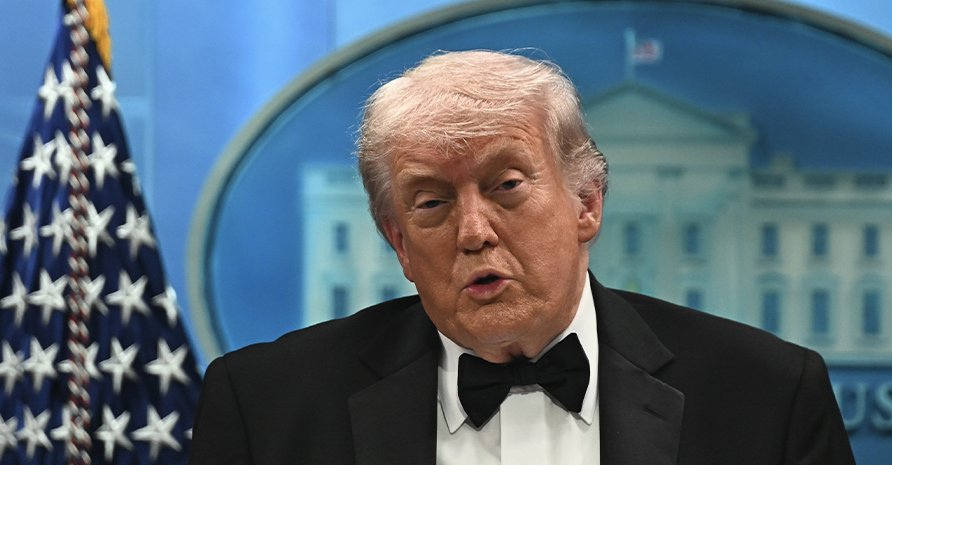
Trump Unimpressed by Iran Offer, Talks Stall

U.S. President Donald Trump is unhappy with the latest Iranian proposal, a U.S. official said.

U.S. President Donald Trump is unhappy with the latest Iranian proposal, a U.S. official said.

Share on FacebookShare on Twitter
ADVERTISEMENT

WASHINGTON: Donald Trump’s rejection of Iran’s latest proposal to end the war is not just a diplomatic impasse, it is a signal that the conflict is entering a more entrenched and dangerous phase. Tehran’s offer to defer nuclear negotiations until after a ceasefire and maritime normalization was always unlikely to satisfy Washington, but the speed with which it was dismissed reveals a deeper strategic rigidity. For the United States, the nuclear question is the core of the crisis; for Iran, sequencing is leverage. Neither side is prepared to concede that hierarchy.

What makes this moment more consequential is that diplomacy is no longer confined to Washington and Tehran. Iran’s parallel outreach has now drawn Moscow firmly into the equation. During high-level talks in Russia, Vladimir Putin not only praised Iran’s resilience but explicitly reaffirmed Moscow’s strategic partnership with Tehran and pledged to “do everything” to support its interests while advocating for peace. The meeting with Abbas Araqchi effectively produced three outcomes: diplomatic backing for Iran at a critical juncture, Russia’s renewed offer to act as mediator, and a clear signal that Tehran is not isolated despite Western pressure.

This Moscow alignment complicates the conflict in fundamental ways. Russia’s support political, strategic, and potentially operational reduces Iran’s urgency to compromise while simultaneously increasing the geopolitical cost for Washington to escalate. It also reflects a broader convergence of interests between two states that view U.S. pressure as a systemic challenge rather than a situational dispute. The result is a widening of the conflict’s geopolitical scope, transforming it from a regional war into a node within great-power competition.

ADVERTISEMENT
ADVERTISEMENT

Meanwhile, the battlefield consequences are already global. The disruption of oil flows through the Strait of Hormuz has turned the conflict into an economic shockwave. Tanker traffic has collapsed, shipments are being blocked or redirected, and oil prices are climbing again, feeding inflation across major economies. What was once a localized military confrontation now functions as a choke point for the global energy system.

Against this backdrop, the collapse of diplomatic momentum is striking. Planned U.S. engagement through intermediaries has been scaled back, while Iran has doubled down on shuttle diplomacy from Islamabad to Muscat to Moscow seeking leverage rather than immediate compromise. The sequencing dispute over nuclear negotiations is therefore less about technical order and more about negotiating power. Iran wants guarantees, sanctions relief, and maritime access before addressing its nuclear program; the United States insists those guarantees are impossible without first constraining that very program.

The shadow of the Joint Comprehensive Plan of Action looms large over this standoff. Its collapse destroyed the one framework that had previously aligned sequencing with mutual trust. Today, neither exists. Washington doubts Tehran’s intentions, while Tehran sees little incentive to front-load concessions after past reversals. The result is a diplomatic structure with no foundation.

ADVERTISEMENT

Domestic politics further narrow the space for compromise. Trump faces rising pressure to end a war that is delivering economic pain without clear strategic gains, yet any agreement perceived as weak on nuclear issues risks political backlash. Iran, for its part, is framing the conflict as a matter of sovereignty and resistance, reinforcing its unwillingness to concede under pressure, especially with visible backing from Moscow.

The outcome of the Moscow meeting underscores a critical shift: Iran is no longer negotiating from isolation but from alignment. Russia’s willingness to support, mediate, and deepen strategic ties gives Tehran both diplomatic cover and strategic patience. For Washington, this raises the stakes of every decision whether to escalate, negotiate, or recalibrate.

In this context, Trump’s rejection of Iran’s proposal does more than stall talks; it reinforces a trajectory toward a longer conflict with expanding geopolitical dimensions. The disagreement over sequencing is, in reality, a proxy for a deeper incompatibility of objectives. Until both sides find a framework that addresses security, sovereignty, and nuclear concerns simultaneously rather than sequentially, diplomacy will continue to falter.

The danger is that time is no longer neutral. Every week of continued conflict tightens energy markets, deepens geopolitical alignments, and raises the cost of resolution. With Russia now visibly backing Iran and the United States holding firm on its red lines, the war is no longer just about Iran, it is about the shape of global order in a period of intensifying rivalry.

Advertisement. Scroll to continue reading.

-Jonathan Feast

READ THE FULL E-MAGAZINE | WorldAffairs: A Complete, Unfiltered Lens on Geopolitics, the World Economy, and Global Policy

Tags: #BreakingNews#Diplomacy#EnergyCrisis#Geopolitics#GlobalMarkets#GlobalSouth#Iran#IranWar#MiddleEastCrisis#NuclearDeal#OilPrices#StraitOfHormuz#Trump#TrumpIran#USIranTensions#WarUpdate#WNN#WorldAffairs#WorldNewsNewsTrumpUSAWNN
ADVERTISEMENT
Previous Post

Decoding Trump’s ‘Call Us’ Gambit as Iran Turns to Russia in War Standoff

Stay Connected

  • 23.9k Followers
  • 99 Subscribers
  • Trending
  • Comments
  • Latest
Trump Confirms Maduro Arrest, Signals U.S. Control in Venezuela

Trump Confirms Maduro Arrest, Signals U.S. Control in Venezuela

January 3, 2026
Blueprints from the Past: Rethinking India’s Tourism with Tradition at Its Heart

Blueprints from the Past: Rethinking India’s Tourism with Tradition at Its Heart

August 21, 2025
From Fragility to Foresight: Astana Drives Central Asia’s Ecological Turnaround

From Fragility to Foresight: Astana Drives Central Asia’s Ecological Turnaround

April 22, 2026
After Maduro: The High Cost of a Violent Shortcut

After Maduro: The High Cost of a Violent Shortcut

January 4, 2026
WNN Launches to Deliver Real News, Real Time, Worldwide

WNN Launches to Deliver Real News, Real Time, Worldwide

1270
Putin Lambasts Trade Sanctions on Eve of Visit to China

Putin Lambasts Trade Sanctions on Eve of Visit to China

5
US-China Trade Talks on Export Controls to Resume for a Second Day

US-China Trade Talks on Export Controls to Resume for a Second Day

2
Trump Faces Uproar from MAGA Base Over Possible Iran Strike

Trump Faces Uproar from MAGA Base Over Possible Iran Strike

2
Decoding Trump’s ‘Call Us’ Gambit as Iran Turns to Russia in War Standoff

Decoding Trump’s ‘Call Us’ Gambit as Iran Turns to Russia in War Standoff

April 27, 2026
Gunfire at WH Dinner: Trump Rushed to Safety

Gunfire at WH Dinner: Trump Rushed to Safety

April 26, 2026
Reza Pahlavi Urges Western Action on Iran, Criticizes Germany’s Silence

Reza Pahlavi Urges Western Action on Iran, Criticizes Germany’s Silence

April 24, 2026
Lebanon Ceasefire Frays as Israel-Hezbollah Clashes Escalate Ahead of Washington Talks

Lebanon Ceasefire Frays as Israel-Hezbollah Clashes Escalate Ahead of Washington Talks

April 23, 2026

Recent News

Decoding Trump’s ‘Call Us’ Gambit as Iran Turns to Russia in War Standoff

Decoding Trump’s ‘Call Us’ Gambit as Iran Turns to Russia in War Standoff

April 27, 2026
Gunfire at WH Dinner: Trump Rushed to Safety

Gunfire at WH Dinner: Trump Rushed to Safety

April 26, 2026
Reza Pahlavi Urges Western Action on Iran, Criticizes Germany’s Silence

Reza Pahlavi Urges Western Action on Iran, Criticizes Germany’s Silence

April 24, 2026
Lebanon Ceasefire Frays as Israel-Hezbollah Clashes Escalate Ahead of Washington Talks

Lebanon Ceasefire Frays as Israel-Hezbollah Clashes Escalate Ahead of Washington Talks

April 23, 2026
ADVERTISEMENT
thewnn.com

WNN- (World Affairs News Network) is a GLOBAL news platform delivering fast, accurate, and deeply contextual reporting from every corner of the world. Built on the pillars of clarity, credibility, and context in collaboration with Wakanda Network (Africa) and Sadbhawna Today - India's National Daily Hindi Newspaper, WNN brings you real news as it unfolds, unfiltered, uncompromised, and globally relevant.

Follow Us

Email ID: editor@thewnn.com

Tel. No.: +1 (929) 607-9858

Subscribe on YouTube

Join Us on Facebook

WNN’s Hindi Partner

  • About
  • Advertise
  • Privacy & Policy
  • Contact

© 2025 thewnn.

Welcome Back!

Login to your account below

Forgotten Password?

Retrieve your password

Please enter your username or email address to reset your password.

Log In

Add New Playlist

No Result
View All Result
  • Home
  • Politics
  • Business
  • Climate & Energy
  • WNN Exclusive
  • Others
    • Africa
    • Education
    • Entertainment
    • Environment
    • Europe
    • Finance
    • Health
    • Peace & Conflict
    • Religion & Faith
  • WNN AFRCIA
  • E-MAGAZINE

© 2025 thewnn.