


ADVERTISEMENT
  • About
  • Advertise
  • Privacy & Policy
  • Contact
thewnn.com
ADVERTISEMENT
  • Home
  • Politics
  • Business
  • Climate & Energy
  • WNN Exclusive
  • Others
    • AFRICA
    • EDUCATION
    • Entertainment
    • Environment
    • Europe
    • Finance
    • Health
    • Peace & Conflict
    • Religion & Faith
  • WNN AFRICA
  • en
    • ar
    • en
    • fr
    • fa
E-Magazine
No Result
View All Result
  • Home
  • Politics
  • Business
  • Climate & Energy
  • WNN Exclusive
  • Others
    • AFRICA
    • EDUCATION
    • Entertainment
    • Environment
    • Europe
    • Finance
    • Health
    • Peace & Conflict
    • Religion & Faith
  • WNN AFRICA
  • en
    • ar
    • en
    • fr
    • fa
No Result
View All Result
thewnn.com
No Result
View All Result
ADVERTISEMENT
ADVERTISEMENT
Home Africa

Iran Conflict Pushes Farmers Toward Compost and Natural Fertilizers

Share on FacebookShare on Twitter
ADVERTISEMENT

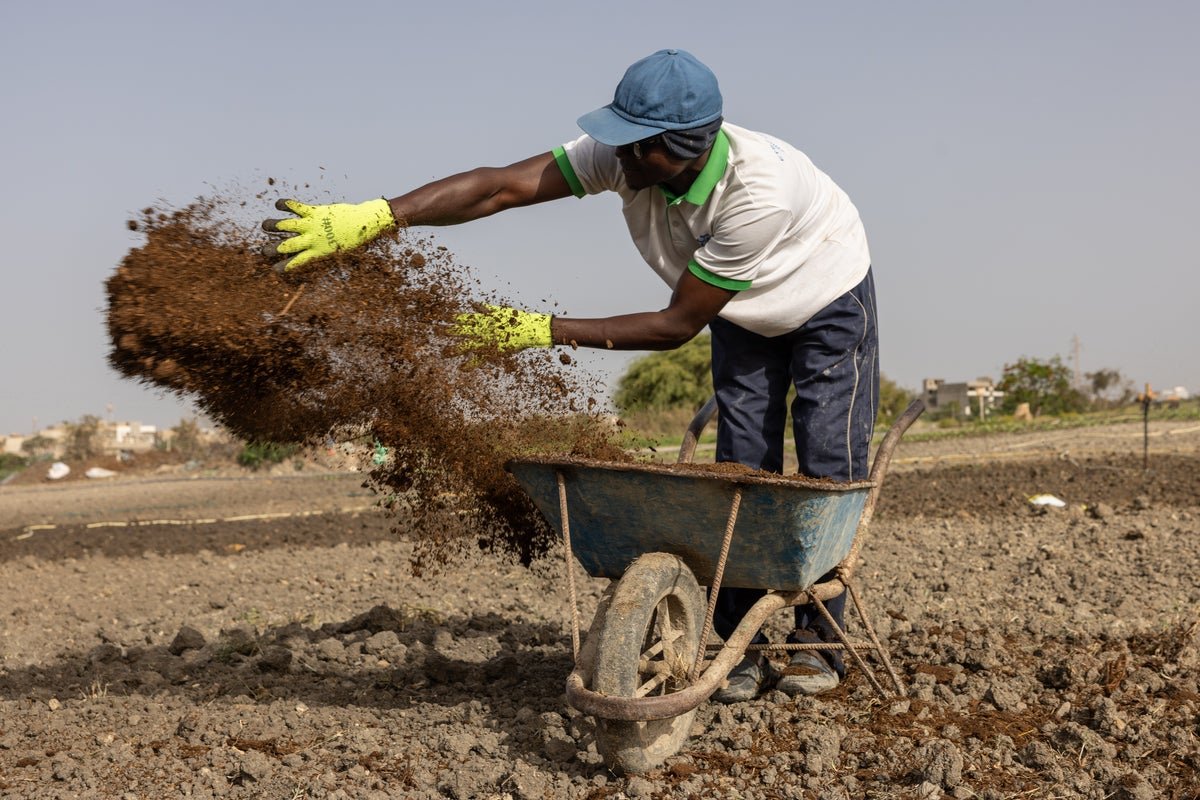
DAKAR, Senegal: When Senegalese farmer Abou Sow watched U.S. missiles strike Iran, his concern was not geopolitics, it was survival. Within weeks of the conflict that began on February 28, fertilizer prices surged by 40%, sending shockwaves through farming communities across West Africa and beyond.

This is the often-overlooked cost of global conflict. While attention remains fixed on military escalation, the real consequences are unfolding quietly in agricultural fields, where rising input costs threaten food security for millions.

The disruption is rooted in the Strait of Hormuz, a strategic chokepoint for global energy flows. Iran’s influence over the passage has constrained natural gas supplies, a key ingredient in the production of chemical fertilizers. The ripple effect has been immediate and severe, driving global fertilizer prices up by as much as 50%. For Abou Sow, this crisis reinforces a decision he made years ago. Nearly a decade earlier, he abandoned chemical fertilizers in favor of organic compost and natural alternatives. Today, he trains farmers across Senegal to source manure locally and produce nutrient-rich compost, promoting a system that is less dependent on volatile global markets. His message is increasingly urgent: waiting for geopolitical stability is no longer viable. Farmers must adapt or risk collapse.
Yet the transition is not without challenges. In remote areas, sourcing and transporting organic inputs like manure remains difficult and costly. Without infrastructure and support, some farmers may be forced to abandon their land altogether.

The Senegalese government has attempted to respond, announcing subsidies and the distribution of 30,000 tons of organic fertilizer. However, many argue that this effort is insufficient, particularly in a global system where agricultural subsidies estimated at $700 billion annually continue to favor chemical fertilizers over sustainable alternatives.

Ironically, the crisis may present an environmental opportunity. Chemical fertilizers are heavily reliant on fossil fuels and contribute significantly to greenhouse gas emissions. Organic alternatives, by contrast, improve soil health, reduce water pollution, and help capture carbon in the soil.

Experts believe that this moment could accelerate a long-overdue transition toward climate-friendly agriculture, if governments choose to support it.

In Brazil, the shift is already underway. Despite being one of the world’s largest agricultural exporters, the country depends on imports for over 80% of its fertilizer. The current crisis has pushed prices sharply higher, forcing farmers to explore alternatives.

Biofertilizers, which use microorganisms to enhance nutrient absorption, are gaining traction. The sector has grown rapidly, expanding by 15% between 2023 and 2024. Unlike chemical fertilizers, these solutions can often be produced locally, reducing exposure to global supply disruptions.

Brazil’s climate also plays a role. High rainfall and temperatures reduce the effectiveness of chemical fertilizers, making organic and biological options more practical and sustainable.

Elsewhere, progress has been slower. In countries like Mexico, government policies continue to favor chemical fertilizers through subsidies, limiting the adoption of alternatives. This policy imbalance highlights a broader global issue: the persistence of outdated agricultural models in a rapidly changing world.

The current crisis raises a fundamental question about the future of food production. Are governments preparing farmers for resilience, or reinforcing dependency on fragile global supply chains?

Advertisement. Scroll to continue reading.
ADVERTISEMENT
ADVERTISEMENT

From Senegal’s compost-driven farms to Brazil’s expanding biofertilizer industry, a new agricultural reality is taking shape. It is one defined not by choice, but by necessity.

Global conflict has once again exposed systemic vulnerabilities. But it has also created an opening to rethink how food is produced, distributed, and sustained.

For farmers like Abou Sow, the conclusion is clear. Food security cannot depend on distant wars or unstable supply routes. It must be built on local resilience, sustainable practices, and immediate action.

ADVERTISEMENT

-Mogomotsi Lewis Magome

READ THE FULL E-MAGAZINE | WorldAffairs: For Decision-Makers Who Need More Than Headlines

Tags: #AfricaAgriculture#AgriTech#Biofertilizers#BrazilFarming#ClimateChange#FarmersCrisis#FertilizerCrisis#FoodCrisis#Geopolitics#GlobalFoodSecurity#GlobalSouth#GreenFarming#IranConflict#OrganicFarming#SoilHealth#SustainableAgriculture#WNN#WorldAffairsNewsWNN
ADVERTISEMENT
Previous Post

Ethiopia Votes Amid Fragile Peace and Fractured Politics

Stay Connected

  • 23.9k Followers
  • 99 Subscribers
  • Trending
  • Comments
  • Latest
Trump Confirms Maduro Arrest, Signals U.S. Control in Venezuela

Trump Confirms Maduro Arrest, Signals U.S. Control in Venezuela

January 3, 2026
Blueprints from the Past: Rethinking India’s Tourism with Tradition at Its Heart

Blueprints from the Past: Rethinking India’s Tourism with Tradition at Its Heart

August 21, 2025
BRICS at 20 and the Battle for the New World Order

BRICS at 20 and the Battle for the New World Order

May 15, 2026
From Fragility to Foresight: Astana Drives Central Asia’s Ecological Turnaround

From Fragility to Foresight: Astana Drives Central Asia’s Ecological Turnaround

April 22, 2026
WNN Launches to Deliver Real News, Real Time, Worldwide

WNN Launches to Deliver Real News, Real Time, Worldwide

8756
Putin Lambasts Trade Sanctions on Eve of Visit to China

Putin Lambasts Trade Sanctions on Eve of Visit to China

9
Trump Faces Uproar from MAGA Base Over Possible Iran Strike

Trump Faces Uproar from MAGA Base Over Possible Iran Strike

3
Iran-linked Hackers Threaten to Release Trump Aides’ Emails

Iran-linked Hackers Threaten to Release Trump Aides’ Emails

3
Iran Conflict Pushes Farmers Toward Compost and Natural Fertilizers

Iran Conflict Pushes Farmers Toward Compost and Natural Fertilizers

June 1, 2026
Ethiopia Votes Amid Fragile Peace and Fractured Politics

Ethiopia Votes Amid Fragile Peace and Fractured Politics

May 31, 2026
Ebola Outbreak in Eastern Congo: A Race Between Trust and Transmission 

Ebola Outbreak in Eastern Congo: A Race Between Trust and Transmission 

May 31, 2026
White House Clarifies: Trump’s H-1B Visa Rules to Impact Only New Applicants

Trump Signals Imminent Decision on Iran Deal

May 30, 2026

Recent News

Iran Conflict Pushes Farmers Toward Compost and Natural Fertilizers

Iran Conflict Pushes Farmers Toward Compost and Natural Fertilizers

June 1, 2026
Ethiopia Votes Amid Fragile Peace and Fractured Politics

Ethiopia Votes Amid Fragile Peace and Fractured Politics

May 31, 2026
Ebola Outbreak in Eastern Congo: A Race Between Trust and Transmission 

Ebola Outbreak in Eastern Congo: A Race Between Trust and Transmission 

May 31, 2026
White House Clarifies: Trump’s H-1B Visa Rules to Impact Only New Applicants

Trump Signals Imminent Decision on Iran Deal

May 30, 2026
ADVERTISEMENT
thewnn.com

WNN- (World Affairs News Network) is a GLOBAL news platform delivering fast, accurate, and deeply contextual reporting from every corner of the world. Built on the pillars of clarity, credibility, and context in collaboration with Wakanda Network (Africa) and Sadbhawna Today - India's National Daily Hindi Newspaper, WNN brings you real news as it unfolds, unfiltered, uncompromised, and globally relevant.

Follow Us

Email ID: editor@thewnn.com

Tel. No.: +1 (929) 607-9858

Subscribe on YouTube

Join Us on Facebook

WNN’s Hindi Partner

  • About
  • Advertise
  • Privacy & Policy
  • Contact

© 2025 thewnn.

Welcome Back!

Login to your account below

Forgotten Password?

Retrieve your password

Please enter your username or email address to reset your password.

Log In

Add New Playlist

No Result
View All Result
  • Home
  • Politics
  • Business
  • Climate & Energy
  • WNN Exclusive
  • Others
    • Africa
    • Education
    • Entertainment
    • Environment
    • Europe
    • Finance
    • Health
    • Peace & Conflict
    • Religion & Faith
  • WNN AFRCIA
  • E-MAGAZINE

© 2025 thewnn.