


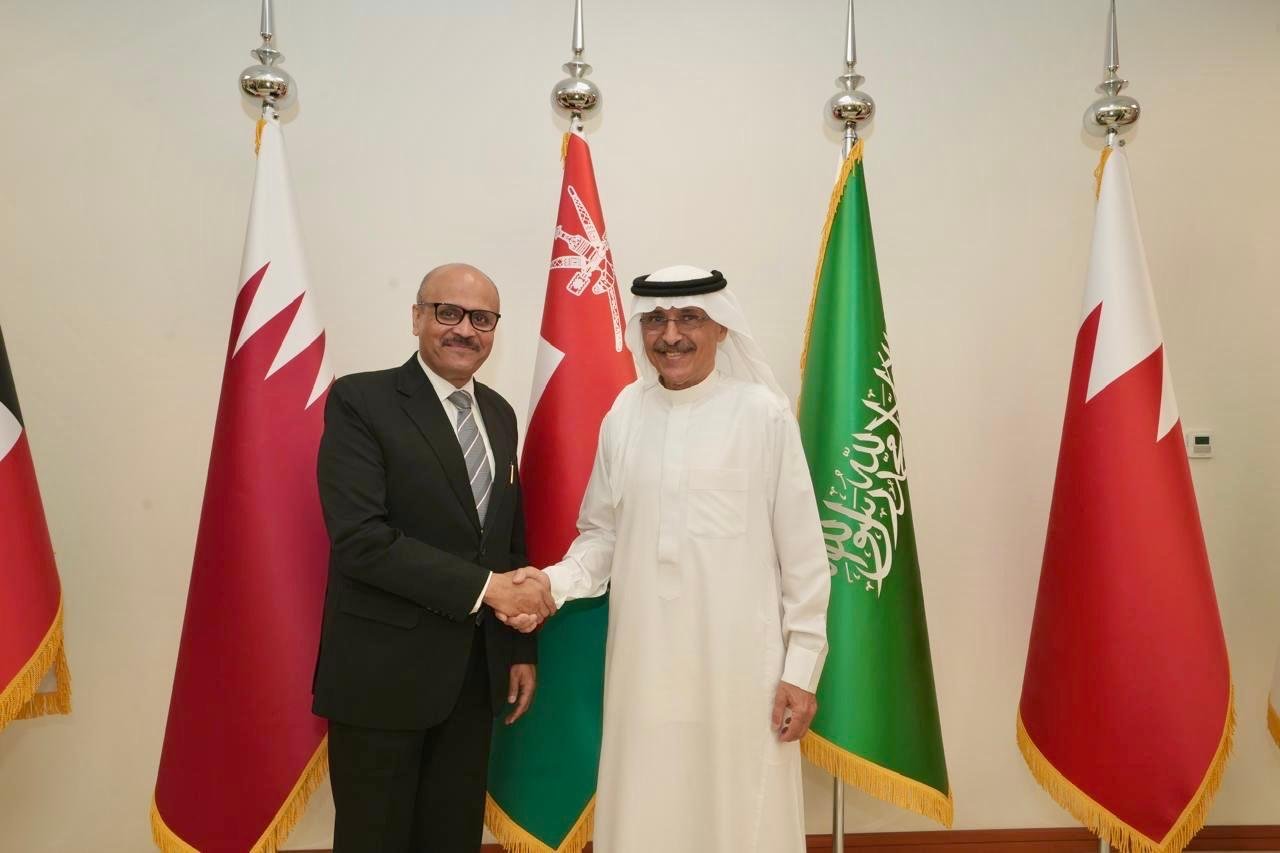
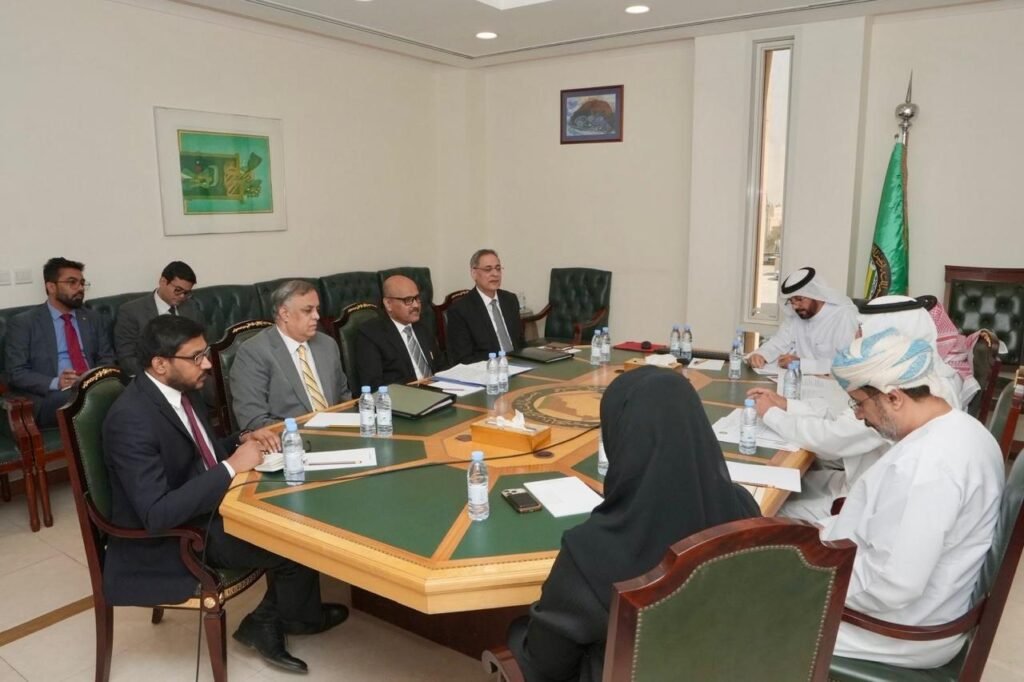
RIYADH/ NEW DELHI: Arun Kumar Chatterjee, Secretary (CPV & OIA) at India’s Ministry of External Affairs, held the India-GCC political dialogue with H.E. Dr. Abdulaziz Aluwaisheg, Assistant Secretary-General of the Gulf Cooperation Council (GCC), to review and strengthen the implementation of the India-GCC Joint Action Plan.
During the meeting, both sides emphasized expanding cooperation across multiple sectors, including security, trade, investment, energy, agriculture, education, health, culture, and people-to-people interactions. The discussions also covered key regional and international issues of mutual interest, highlighting the growing strategic convergence between India and the GCC states.
The dialogue comes amid an evolving global and regional landscape, with energy security, trade diversification, and geopolitical stability emerging as priority concerns for both India and the GCC. Analysts note that India’s economic engagement with the GCC, which constitutes a significant portion of its trade and energy imports, is increasingly complemented by strategic, educational, and cultural initiatives, making the partnership multidimensional.
According to official figures, India-GCC bilateral trade in FY2023-24 was approximately US$161.6 billion, with India exporting US$56.4 billion and importing US$105.3 billion. The GCC remains India’s primary energy supplier, providing around 35% of its oil imports and 70% of natural gas requirements. Additionally, the Indian diaspora in the GCC exceeds 9.3 million, reinforcing strong people-to-people ties that further anchor bilateral relations.
Observers say this dialogue signals a deliberate effort by both sides to broaden their partnership beyond conventional trade and energy dependence. Discussions on areas such as health, education, digital cooperation, and agriculture indicate a long-term vision of a resilient and mutually beneficial India-GCC strategic relationship.
The India-GCC political dialogue, by reaffirming commitments under the Joint Action Plan, is expected to guide practical measures that strengthen security coordination, enhance economic integration, and expand cultural and social cooperation. It also lays the groundwork for India to leverage its growing influence in the Gulf region and globally, particularly as it prepares to assume the BRICS chairmanship in 2026.
With evolving global supply chains, regional geopolitical shifts, and energy market volatility, the India-GCC partnership is increasingly viewed as a strategic pillar for stability, growth, and mutual prosperity in Asia and the Middle East.
-WNN Desk