

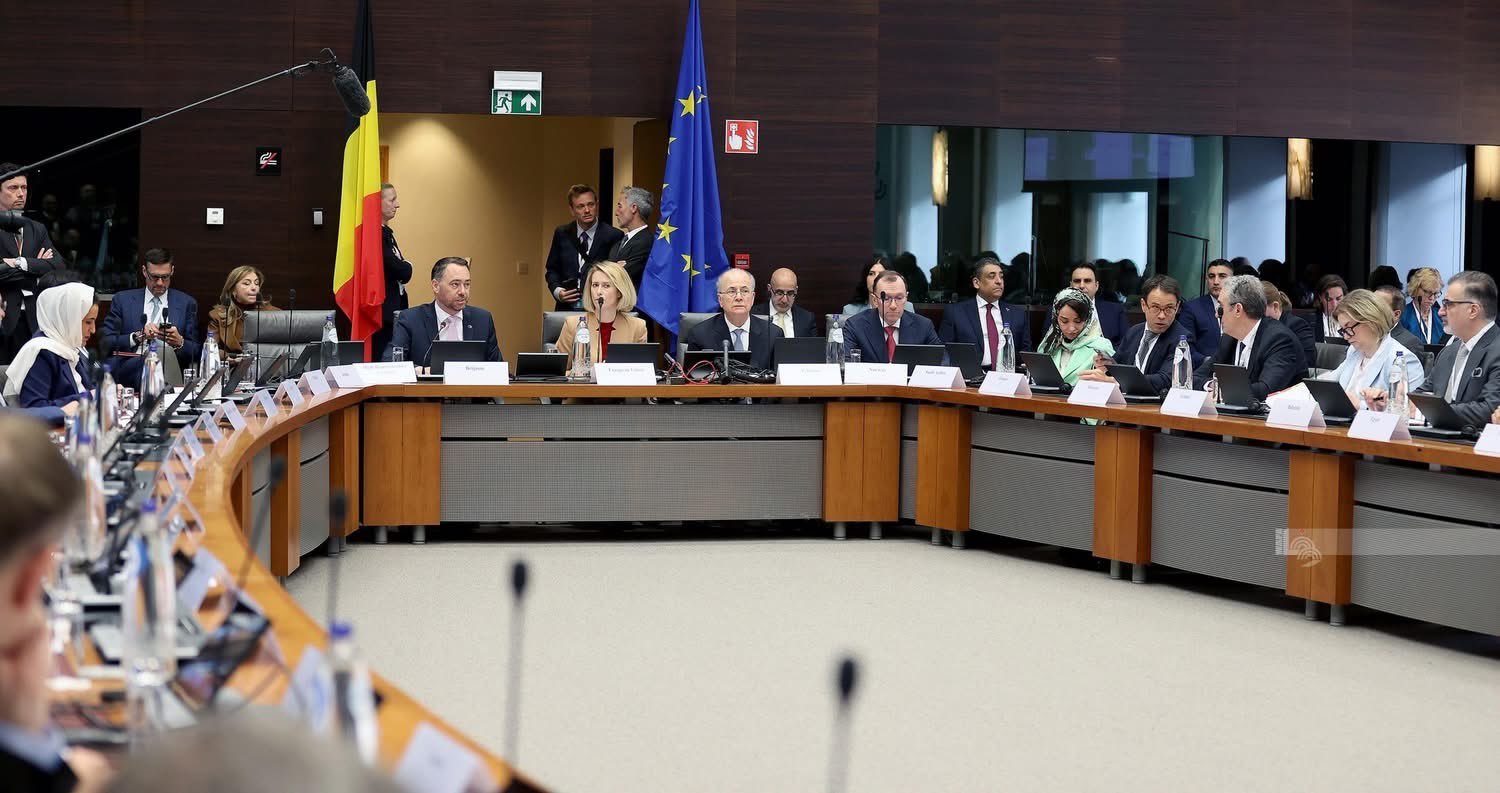
BRUSSELS/WASHINGTON : Europe is no longer content being a bystander in the Middle East. The Brussels conference on Palestinian stability, attended by more than 60 countries, signals a strategic shift by the European Union to insert itself into a conflict it has historically financed but rarely shaped. For decades, the EU has been the largest donor to the Palestinians and a critical economic partner to Israel, yet its political weight has remained constrained by internal divisions and an overreliance on normative diplomacy. Now, that posture is being tested in real time as Gaza lies in ruins, the West Bank simmers with escalating violence, and a far more dangerous confrontation between the United States and Iran threatens to redraw the entire regional order.
The internal European recalibration is not incidental. The electoral defeat of Viktor Orbán has potentially removed one of the most consistent blockers of EU consensus on Israel. Under Orbán, Hungary repeatedly vetoed sanctions and diluted European responses, effectively shielding Israeli policy from unified EU pressure. His likely successor, Péter Magyar, has signaled a more pragmatic and law-aligned approach, including re-engagement with international legal institutions. This shift could unlock long-stalled measures such as sanctions on violent settlers in the West Bank or more assertive political positioning against Israeli actions in Gaza.
Yet structural contradictions remain embedded within the European project. Countries like Germany and Austria continue to prioritize their strategic and historical alignment with Israel, making any sweeping punitive action unlikely. The result is a familiar European equilibrium: strong rhetoric paired with limited enforceability. Even as leaders like Spain’s prime minister push for suspending the EU-Israel Association Agreement, the probability of such a move materializing remains low without unanimous political will.
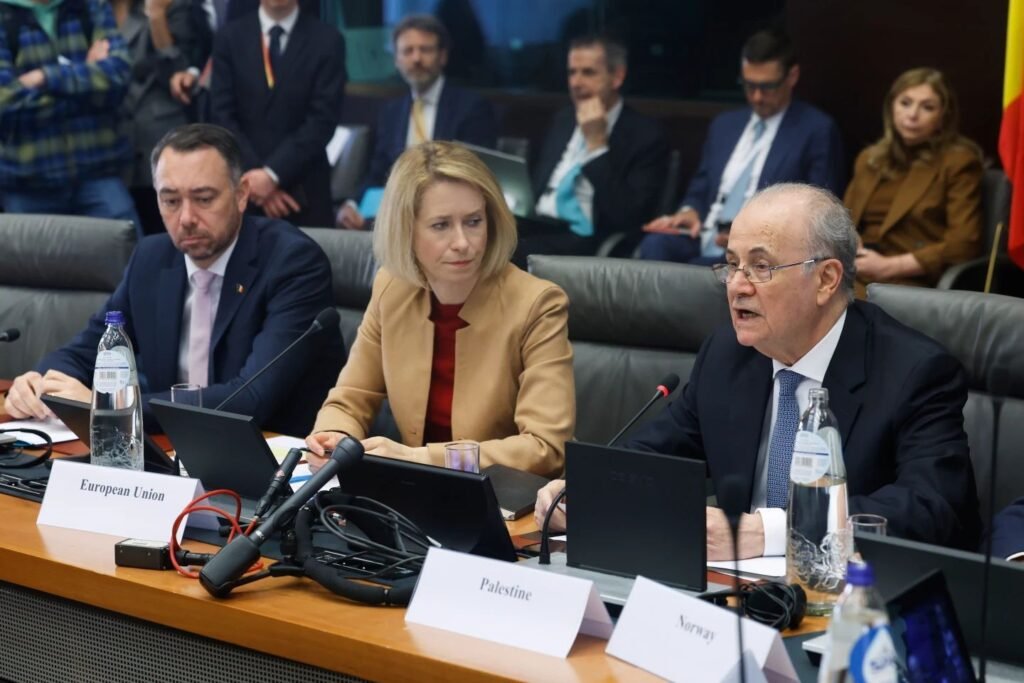
Meanwhile, the reality on the ground is rapidly overtaking diplomatic frameworks. Gaza’s devastation has reached a level where reconstruction is not merely an economic challenge but a political impossibility without a fundamental restructuring of governance. Palestinian Prime Minister Mohammad Mustafa has called for a unified authority, “one state, one government, one law” reflecting a growing acknowledgment that fragmentation within Palestinian territories is itself a core barrier to sovereignty. However, this vision collides with entrenched realities: the unresolved status of Hamas, Israel’s security imperatives, and the absence of mutual trust necessary for disarmament or political integration.
Compounding Europe’s challenge is the divergence between its multilateral approach and Washington’s increasingly transactional strategy. The United States, under Donald Trump, has demonstrated a willingness to bypass traditional frameworks, using coercive tools such as economic blockades and military signaling to force outcomes. This was evident in the Gaza ceasefire negotiations, from which Europe was largely absent, and is even more pronounced in the ongoing standoff with Iran. While the EU emphasizes international law and consensus, the U.S. continues to dictate the tempo of escalation and de-escalation across the region.
That confrontation with Iran is not a parallel issue, it is the defining variable shaping all others. The extension of the U.S.–Iran ceasefire has temporarily reduced the risk of immediate confrontation, but it has done little to bridge the deep structural divide between the two sides. Tehran insists on lifting the U.S. blockade of its ports as a precondition for renewed talks, while Washington demands the reopening of the Strait of Hormuz to unrestricted international shipping. This narrow waterway carries roughly a fifth of global energy supplies, and its militarization has already sent oil prices surging, exposing the fragility of global economic stability.
Iran’s posture suggests a strategy of calibrated escalation. By threatening regional oil infrastructure and signaling its ability to disrupt gulf energy flows, Tehran is effectively raising the stakes for both the United States and its allies. The message is clear: any attempt to contain Iran will carry systemic economic consequences. For Europe, heavily dependent on stable energy markets, this creates a strategic dilemma. Its diplomatic ambitions in Gaza risk being overshadowed, or entirely derailed by a crisis unfolding thousands of kilometers away in the Gulf.
At the same time, the broader regional landscape remains dangerously fluid. Hezbollah’s renewed attacks on Israeli positions, despite an existing truce, underscore the fragility of ceasefire arrangements. Planned talks between Israel and Lebanon in Washington may offer a pathway to de-escalation, but they are unlikely to resolve the underlying tensions driving repeated cycles of confrontation. What exists today is not peace, but a patchwork of temporary pauses in violence each vulnerable to rapid collapse.
In this context, Europe’s renewed activism appears both necessary and insufficient. The Brussels conference reflects an ambition to transform the EU from a passive financier into an active geopolitical actor. However, ambition alone does not translate into influence. The Middle East is increasingly defined by hard power calculations, where leverage is measured not in declarations but in the ability to shape outcomes on the ground.
The convergence of crises from Gaza’s разрушение to West Bank instability, from U.S.–Iran brinkmanship to energy market volatility, has created a geopolitical environment in which traditional diplomatic tools are losing effectiveness. Europe is entering this arena at a moment when the efforts of engagement are shifting, and where moral authority, while important, is no longer decisive.
The real question is not whether the European Union can convene conferences or articulate visions of peace. It is whether it can align its internal divisions, deploy meaningful leverage, and sustain a coherent strategy in a region where competing powers are willing to act decisively and absorb the consequences. Without that transformation, Europe risks remaining what it has long been in the Middle East: indispensable in resources, but peripheral in results.
-Edith Schoenbaum and Bill Gambrell
READ THE FULL E-MAGAZINE | WorldAffairs: For Decision-Makers Who Need More Than Headlines
–