


WASHINGTON/DUBAI/ISLAMABAD: Iran’s latest seizure of vessels in the Strait of Hormuz is not an isolated escalation but a deliberate consolidation of control over the most critical artery of global energy flows. The timing within hours of Donald Trump extending a ceasefire without a defined diplomatic pathway reveals a deeper structural reality: the conflict has moved beyond conventional military signaling into the domain of economic coercion and systemic disruption. Tehran is no longer merely responding to pressure; it is actively reshaping the strategic environment in which that pressure operates.
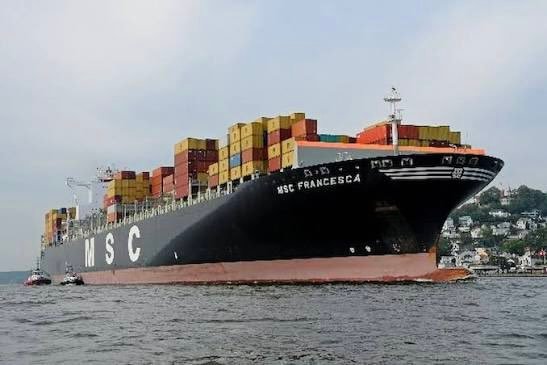
Verified reports cited by WorldAffairs confirm that Iranian forces seized two commercial vessels, identified as MSC Francesca and Epaminondas, while additional ships came under fire in the same corridor. The operation, carried out by the Islamic Revolutionary Guard Corps, was justified on regulatory grounds alleged permit violations and navigation interference, but its implications are far broader. By enforcing selective access rather than imposing a total closure, Iran is perfecting a model of “controlled disruption”: maintaining enough ambiguity to avoid outright war while generating sufficient risk to influence global markets and diplomatic behavior.
This strategy is unfolding within the framework of an ongoing U.S. naval blockade initiated in mid-April, designed to restrict Iranian maritime trade following the collapse of earlier ceasefire talks. The blockade itself has become a central point of contention, with Tehran conditioning any meaningful negotiation on its removal. What emerges is a feedback loop of escalation, U.S. pressure justifies Iranian countermeasures, which in turn reinforce Washington’s strategic posture. The result is not movement toward resolution but the entrenchment of mutually reinforcing coercive strategies.
Crucially, the Strait is no longer just a geographic chokepoint; it has become the primary instrument through which both sides project power. Carrying roughly 20% of global oil and gas flows under normal conditions, even partial disruptions reverberate across international markets. The latest incidents have already triggered renewed volatility in energy prices and shipping insurance, while stranding vessels and forcing rerouting across already stressed supply chains. This transforms the crisis from a regional security issue into a global economic shock mechanism, one that Iran can activate or modulate at relatively low cost compared to conventional military engagement.
The diplomatic track, meanwhile, is eroding under the weight of these dynamics. Attempts to restart negotiations, including mediation efforts by Pakistan, have faltered as both sides recalibrate their expectations. Tehran’s refusal to engage under blockade conditions, coupled with Washington’s insistence on nuclear concessions and strategic compliance, reflects a fundamental misalignment that cannot be bridged through tactical ceasefire extensions alone. The absence of a defined timeline for negotiations further reinforces the perception that the ceasefire is a temporary pause rather than a pathway to de-escalation.
Military signaling continues to reinforce this stalemate. Iranian displays of ballistic capabilities and rhetoric asserting long-term control over the Strait are designed not only to deter escalation but to normalize a new strategic baseline in which maritime dominance is assumed rather than contested. Simultaneously, U.S. contingency planning reportedly including concerns over mines that could take months to clear highlights the operational risks of attempting to forcibly reopen the corridor. The implication is stark: even if large-scale conflict is avoided, the infrastructure of global trade remains exposed to prolonged instability.
What distinguishes the current phase from earlier Gulf crises is the precision of Iran’s approach. Rather than seeking outright closure, which would trigger immediate and unified international retaliation Tehran is exploiting thresholds. Limited seizures, calibrated attacks, and legalistic justifications allow it to exert influence while avoiding actions that would legitimize a full-scale military response. This “grey-zone maritime strategy” complicates deterrence because it operates below the threshold of conventional war while still producing strategic effects.
At the same time, the conflict is expanding horizontally. Renewed tensions involving Hezbollah and Israeli forces in southern Lebanon are feeding into the broader instability, creating a multi-theater dynamic where progress in one arena is contingent on restraint in another. This interconnected escalation reduces the viability of isolated diplomatic breakthroughs and reinforces the perception that the crisis is systemic rather than episodic.
The net effect is a transition from crisis to condition. The Strait of Hormuz is no longer intermittently contested; it is structurally unstable. Iran’s actions suggest a strategic objective that goes beyond immediate concessions: embedding its influence into the mechanics of global energy security itself. By doing so, it ensures that any attempt to sideline it economically or politically carries consequences far beyond the region.
For global stakeholders, this represents a profound shift. The question is no longer whether the Strait will remain open, but under what conditions, at what cost, and subject to whose authority. As long as these questions remain unresolved, the current pattern of managed confrontation is likely to persist, locking the global economy into a cycle where geopolitical signaling and energy volatility are inseparable.
-WNN Newsroom with Keith Graff, Sharon Fletcher and Cliff Fletcher
READ THE FULL E-MAGAZINE | WorldAffairs: For Decision-Makers Who Need More Than Headlines