



ASTANA, Kazakhstan: On Earth Day in Astana, President Kassym-Jomart Tokayev did more than open a summit, he issued a strategic challenge to the way states define power, growth, and survival. His address at the Regional Ecological Summit 2026 was not framed as environmental diplomacy; it was articulated as a doctrine of statecraft, one that collapses the divide between ecology, economy, and political stability. By declaring the environment “the very foundation of human livelihood,” Tokayev effectively repositioned sustainability from a constraint into a precondition of sovereignty.
This reframing is not rhetorical innovation, it is a recognition of structural pressure. Central Asia’s ecological crisis has moved from abstraction to immediacy: water scarcity, desertification, glacier retreat, and biodiversity loss are no longer distant risks but active disruptors of economic systems and regional stability. The summit, therefore, was less about consensus-building and more about confronting a narrowing window for coordinated action.
Tokayev’s critique of the United Nations introduced an unusually sharp geopolitical edge. His warning against treating the UN Charter as a “cherry-picking platform” was not diplomatic ornamentation; it was a direct indictment of selective multilateralism. For Kazakhstan and increasingly for much of the Global South climate governance has become entangled with questions of fairness and sovereignty. The insistence on a “fair, balanced and stimulating” transition reflects a deeper resistance to uniform decarbonization models that risk constraining developing economies while allowing flexibility for advanced ones. In this framing, ecological policy is no longer technocratic, it is political economy by other means.
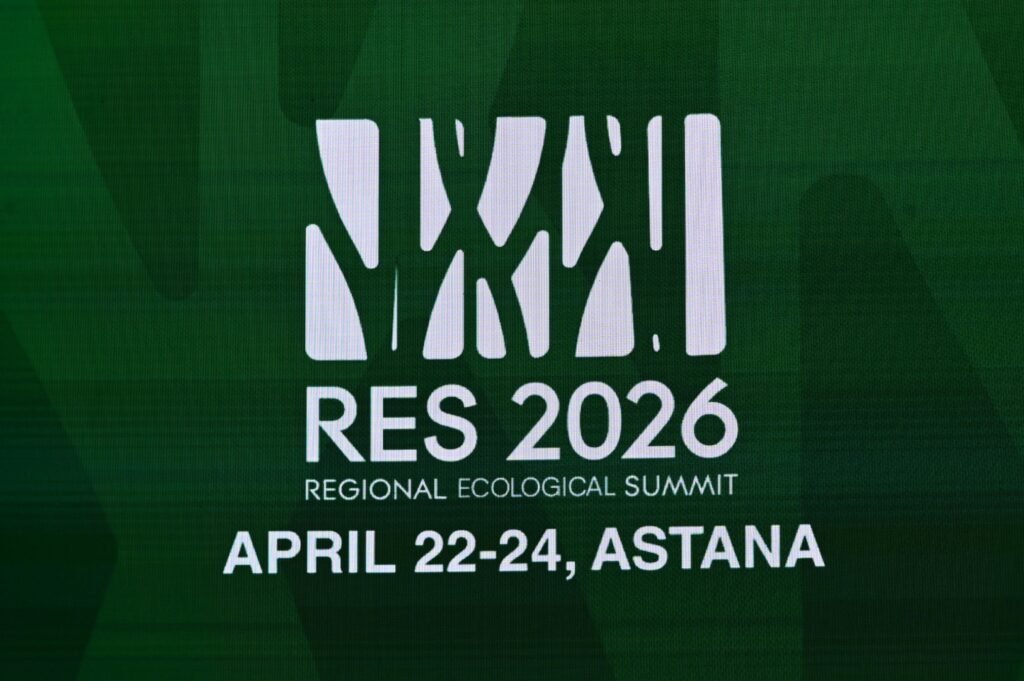
Yet the speech’s most consequential pivot lies in its regional logic. “Nature can exist without geopolitics, and the latter cannot exist without nature,” Tokayev argued, advancing a thesis that redefines ecology as the foundation of security architecture. In Central Asia, this is not theoretical. Shared river basins, fragile ecosystems, and climate-induced stress have created a condition of enforced interdependence. Environmental breakdown in one state reverberates across borders, turning ecology into a de facto instrument of regional stability or instability.
The historical memory of the Aral Sea looms over this argument. Its collapse remains one of the starkest examples of ecological mismanagement, while its partial recovery demonstrates that coordinated intervention, though difficult, is possible. Tokayev’s elevation of the Caspian Sea into a strategic ecological zone coupled with his call to exclude military activity, extends this logic further, suggesting that environmental preservation must now be embedded within security doctrine itself.
Other regional leaders reinforced this emerging convergence. President Emomali Rahmon emphasized the necessity of ecological investment frameworks, including green bonds and market-based mechanisms, underscoring that transition is as much a financial challenge as it is a political one. Participation from leaders such as Serdar Berdimuhamedov and Vahagn Khachaturyan signaled that ecological risk is now recognized across the region as a shared strategic concern rather than a national anomaly. Their alignment, however, remains provisional tested not by declarations but by implementation.
The most structurally ambitious proposal to emerge from Astana the creation of an International Water Organization under UN auspices captures both the promise and the difficulty of this moment. Water, more than energy, is poised to define Central Asia’s geopolitical trajectory. Institutionalizing its governance would mark a shift from episodic negotiation to structured cooperation. Yet it would also require states to accept constraints on unilateral control, a concession that has historically proven elusive.
The international response to Kazakhstan’s initiative reflects cautious endorsement. In a formal message, The Duke of Richmond and Gordon described the summit as “a most welcome and timely initiative” and underscored that “water is one of our most precious resources… essential for future generations.” These lines, while measured, reinforce the summit’s central thesis: ecological stewardship is inseparable from long-term prosperity and stability. They also signal that Astana’s proposals particularly on water governance are gaining resonance beyond the region.
Yet beneath the coherence of the doctrine lies a set of unresolved contradictions. Kazakhstan’s own energy strategy embodies the tension. While committing to expand renewables and build a low-carbon economy, it continues to rely on oil, gas, and coal as pillars of national revenue. This is not policy inconsistency; it is structural reality. For resource-dependent economies, abrupt transition risks fiscal shock and social disruption. Kazakhstan’s attempt to reconcile this by promoting nuclear energy and leveraging its position as the world’s leading uranium exporter reflects a broader strategy: to shape the transition rather than be constrained by it.
Domestically, Tokayev’s emphasis on constitutional environmental protections, civic mobilization through initiatives like “Clean Kazakhstan,” and the integration of artificial intelligence into ecological management points to a multi-layered approach. Governance, society, and technology are being aligned to support the ecological pivot. Whether this alignment can be sustained will determine whether the doctrine translates into measurable outcomes.
The adoption of a regional action program for 2026–2030 and a joint declaration on ecological solidarity suggests forward movement. But Central Asia’s history is not short of frameworks; it is short of execution. The critical variables remain unchanged: political will, institutional capacity, financing, and the ability to reconcile national interests with collective necessity.
Astana 2026, therefore, is best understood not as a breakthrough, but as a stress test. It measures whether a region long defined by fragmented approaches can transition toward coordinated ecological governance. It tests whether global climate frameworks can adapt to demands for equity. And it challenges Kazakhstan itself to balance ambition with structural constraints.
Tokayev has elevated ecology from policy discourse to strategic doctrine. He has identified the dissonance between global norms and regional realities. He has outlined mechanisms, financial, institutional, and technological to bridge that gap.
What remains is delivery.
If Central Asia can convert this moment into binding cooperation, Astana will mark the beginning of a new geopolitical logic, one where ecology is not a peripheral concern but the axis of stability. If it cannot, the summit will stand as a precise articulation of the problem, and a reminder that recognition, however sophisticated, is not the same as resolution.
READ THE FULL E-MAGAZINE | WorldAffairs: For Decision-Makers Who Need More Than Headlines