


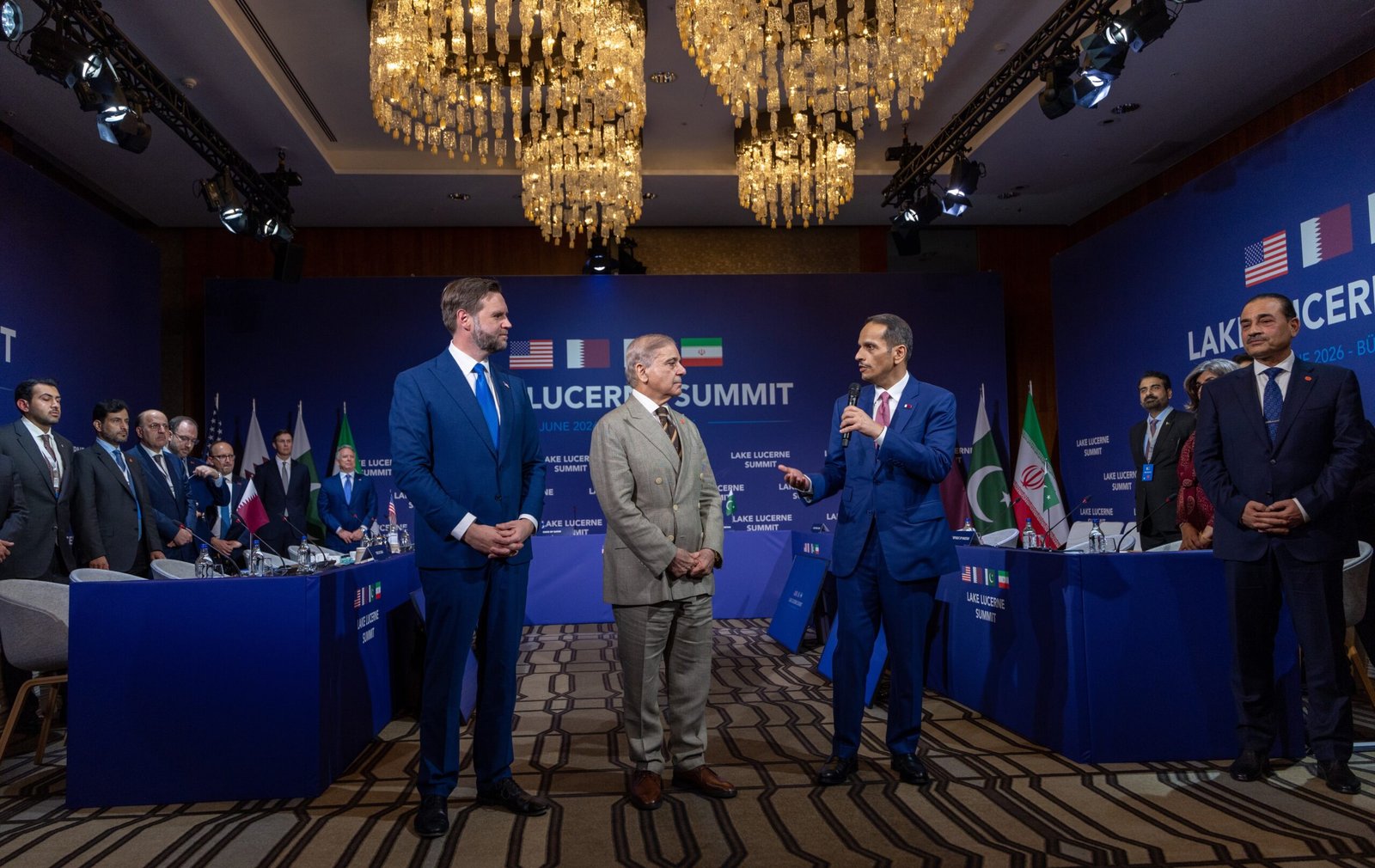
BUERGENSTOCK, Switzerland: For a brief moment in the Swiss Alps, diplomacy reclaimed center stage in one of the world’s most volatile geopolitical confrontations. After months of military escalation, economic uncertainty, and fears of a wider regional war, senior American and Iranian officials concluded high-level negotiations in Bürgenstock with what appears to be their most meaningful diplomatic understanding in years. Mediators from Qatar and Pakistan announced a 60-day roadmap toward a broader agreement, offering a rare glimpse of optimism in a region that has become accustomed to crisis. Yet beneath the carefully worded statements and diplomatic handshakes lies a more complicated reality: the forces that brought Washington and Tehran to the negotiating table remain very much alive.
The talks unfolded against the backdrop of renewed tensions in the Strait of Hormuz, the world’s most important energy corridor. Only days before negotiations began, Iran once again moved to restrict maritime traffic through the strategic waterway, citing ongoing violence in Lebanon and accusing Washington of failing to uphold earlier commitments linked to regional de-escalation. At the same time, President Donald Trump returned to a familiar strategy of public pressure. His warnings that the United States could resume military action if Iran or its allies crossed certain red lines injected uncertainty into an already delicate diplomatic process. The contrast was striking: while negotiators worked behind closed doors to build confidence, political leaders continued speaking the language of deterrence.
And yet the talks survived.
That alone may be the most important takeaway from Switzerland. For years, U.S.–Iran relations have oscillated between confrontation and cautious engagement. What makes the current moment different is that both sides appear to recognize the growing costs of instability. Iran faces economic pressures despite recent sanctions relief measures, while Washington understands that another major Middle Eastern conflict could destabilize global energy markets and divert attention from broader strategic competitions elsewhere. The agreement announced in Switzerland reflects this reality. Beyond discussions over Iran’s nuclear programme, negotiators focused heavily on practical issues: maintaining freedom of navigation through the Strait of Hormuz, establishing communication channels to prevent accidental escalation, and creating mechanisms to reduce violence in Lebanon.
These are not headline-grabbing breakthroughs. They are confidence-building measures designed to prevent a crisis from spiraling out of control. In many ways, Lebanon has emerged as the hidden centerpiece of the negotiations.
Although the world’s attention remains fixed on Hormuz and Iran’s nuclear ambitions, the continuing confrontation between Israel and Hezbollah has become a major test of regional stability. Despite ceasefire announcements and diplomatic interventions, violence along the Lebanese front remains capable of triggering a broader conflict that could rapidly draw in Iran, Israel, and the United States. That reality helps explain why negotiators devoted significant attention to Lebanon. Any sustainable understanding between Washington and Tehran will ultimately depend not only on nuclear issues but also on whether both sides can manage the actions of regional partners and allies.
Economic considerations are equally important.
Iranian Foreign Minister Abbas Araqchi has highlighted commitments involving oil exports, access to frozen financial assets, and reconstruction initiatives. For Tehran, these measures provide tangible evidence that diplomacy can deliver economic benefits. For Washington, stabilizing energy markets remains a strategic objective, particularly after months of volatility linked to disruptions in Gulf shipping routes. The market reaction underscores the stakes. Oil prices continue to respond almost instantly to developments surrounding the Strait of Hormuz, demonstrating how closely the global economy remains tied to the security of a narrow stretch of water separating Iran from its Arab neighbors.
But perhaps the most significant outcome from Bürgenstock is psychological rather than political. After years in which dialogue often appeared impossible, the mere fact that senior officials remained engaged despite public threats, competing narratives, and deep mistrust suggests that neither side currently views confrontation as its preferred option. That does not mean peace is assured. Far from it. The disagreements over sanctions, nuclear restrictions, regional militias, and enforcement mechanisms remain profound.
The next sixty days will therefore be decisive.
Technical negotiators may be able to draft frameworks and implementation schedules, but durable agreements require political courage. Leaders in Washington, Tehran, Jerusalem, Doha, and across the region will need to decide whether they are prepared to invest in a long-term security architecture rather than another temporary pause between crises. History offers reasons for skepticism. U.S.–Iran diplomacy has repeatedly advanced only to collapse under the weight of domestic politics, regional rivalries, and mutual suspicion. Yet history also shows that transformative agreements often emerge from moments when the alternatives become too dangerous to ignore.
That may be the real significance of the Switzerland talks. They are not a peace settlement. They are not a strategic reset. They are an acknowledgment by all sides that the cost of continued escalation may finally be exceeding the perceived benefits.
For now, the guns have not fallen silent across the region, and the Strait of Hormuz remains a geopolitical pressure point. But diplomacy has created a narrow opening. Whether that opening becomes a pathway to regional stability or merely another missed opportunity will define the Middle East’s geopolitical trajectory for the remainder of 2026 and beyond.
-Stephen Saphir