


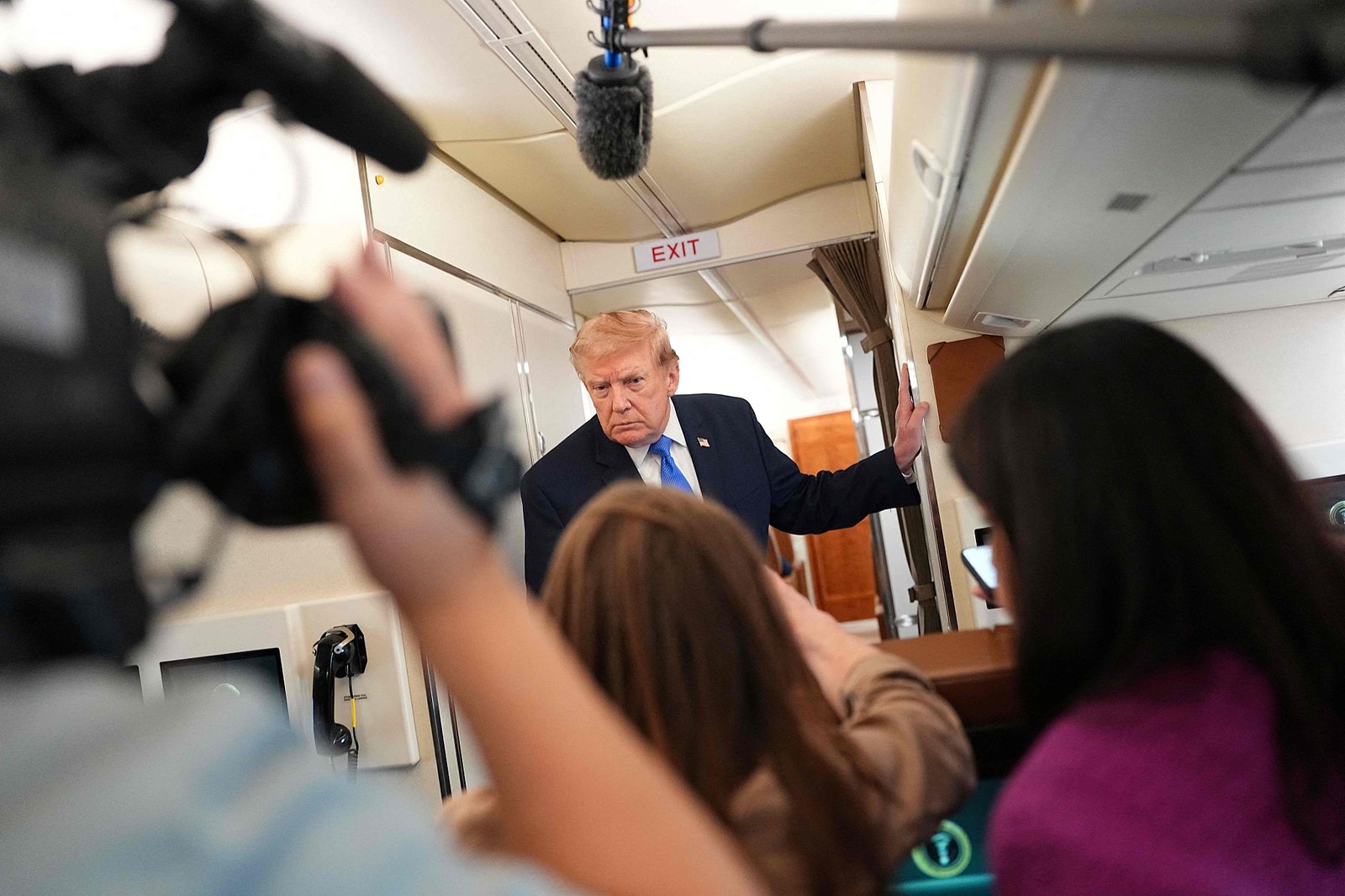
CAIRO: Donald Trump has stepped back from the brink once again. After days of threats and warnings of another U.S. attack on Iran, the president now says talks with Tehran will begin on Monday afternoon. He has not set a deadline for an agreement, and there is still no clear indication that the two sides are close to a breakthrough. But the decision to talk rather than strike has opened a narrow diplomatic window at a moment when the region was moving dangerously in the opposite direction.
Trump says he would rather make a deal than kill people. That may sound obvious, but after weeks of military escalation, it carries real significance. His latest move suggests that Washington is willing to test diplomacy one more time before considering another round of military action.

Whether Tehran is prepared to make the same calculation remains uncertain.
The immediate pressure point is the Strait of Hormuz, the narrow waterway through which a huge share of the world’s energy supplies normally moves. Iran’s ability to restrict shipping has sent a powerful message to Washington and the global economy: this conflict cannot be contained easily once energy routes become part of the battlefield.
The consequences are already being felt. Oil prices have moved sharply as markets react to every new threat and every hint of diplomacy. When Trump signalled that talks were coming, prices fell as traders began betting that a wider confrontation might be avoided. If negotiations collapse, that optimism could disappear just as quickly.
For consumers far from the Gulf, this is not simply another geopolitical crisis playing out on television. A prolonged disruption around Hormuz can mean higher fuel costs, more expensive transportation and renewed inflationary pressure. The strategic calculations being made in Washington and Tehran can eventually reach households and businesses thousands of kilometres away.
That economic pressure may be one of the reasons Trump is giving diplomacy another opportunity.But the president is not negotiating over a single issue. The Strait of Hormuz, Iran’s nuclear programme, ballistic missiles, sanctions and the wider balance of power in the Middle East have increasingly become part of the same conversation.
Iran, meanwhile, has little reason to enter negotiations without using the leverage it still possesses. Tehran knows that Hormuz gives it influence, even as the military pressure from the United States and Israel creates serious risks for Iran itself.
Iranian Foreign Minister Abbas Araqchi has been speaking with Saudi and Pakistani officials, while Tehran has also been engaged with Oman over arrangements involving the Strait of Hormuz. The diplomatic activity suggests that regional governments are increasingly looking for an exit from a conflict that threatens to become larger and more expensive.
But reopening a shipping route is easier than resolving the nuclear dispute.
Washington wants assurances that Iran cannot develop a nuclear weapon. Tehran continues to deny that it is seeking one and is unlikely to accept an agreement that it considers a surrender of its strategic interests. Any serious settlement would therefore have to address questions that go well beyond the immediate crisis.
And then there is Israel.
Israeli officials have made clear that diplomacy will not necessarily prevent further military action. Energy Minister Eli Cohen has warned that Israel would respond if Iran attempts to rebuild its nuclear programme or expand its ballistic-missile capabilities.
That position makes the diplomatic window even more fragile. Washington and Tehran may be willing to talk, but Israel retains its own calculations and its own red lines.
This is where Trump’s strategy faces its biggest test.
He wants to demonstrate strength without becoming trapped in an open-ended war. He wants Iran to make concessions without appearing to be negotiating from weakness. And he wants Hormuz reopened quickly while securing a nuclear agreement that can survive beyond the immediate crisis.
None of those objectives will be easy to achieve.
Trump has repeatedly threatened escalation and then created more time for negotiations. Critics may see that as inconsistency. Supporters may call it strategic flexibility. The reality is probably somewhere in between.
The president is discovering that military power can create leverage, but it cannot by itself produce a durable political settlement.
That is why Monday’s talks matter. They may not produce a deal. They may not even produce a clear breakthrough. But they will reveal whether Washington and Tehran still have enough political space to negotiate before the next military escalation makes diplomacy impossible.
For now, the immediate threat of another strike appears to have receded. Oil markets have responded positively. Regional diplomacy is intensifying. And the possibility of a wider war has, at least temporarily, been pushed back.
But nothing has been resolved.
Trump has given diplomacy another chance. Iran has another opportunity to decide whether negotiation serves its interests. Israel is watching closely. And the world is watching the Strait of Hormuz.
The next few days could determine whether this is the beginning of a genuine diplomatic off-ramp or simply another pause before the conflict returns.
-Shireen Alaa El-Din