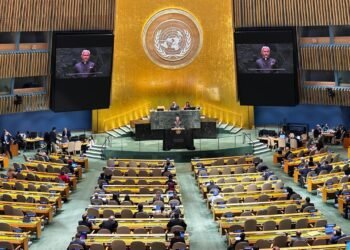




BUERGENSTOCK, Switzerland / BEIRUT: The United States announced a 60-day waiver of selected sanctions on Iran on Monday following high-level talks in Switzerland, while officials in Lebanon reported a sustained reduction in hostilities under a broader regional de-escalation framework.
The developments come after a tense weekend that had threatened to derail the week-old understanding between Washington and Tehran. Concerns intensified following warnings from U.S. President Donald Trump that military action could resume if Iran disrupted shipping through the Strait of Hormuz after Tehran declared the strategic waterway closed. However, tanker traffic through the strait began recovering on Monday, while global oil prices continued to decline amid signs of diplomatic progress.
U.S. Vice President JD Vance described the talks with Iranian representatives in Switzerland as constructive, saying they had established a foundation for a potential long-term agreement. Iranian officials, however, disputed suggestions that discussions had formally addressed Tehran’s nuclear programme.
The negotiations, held at the Qatari-owned mountain resort of Bürgenstock and facilitated by Pakistan and Qatar, produced a roadmap aimed at reaching a comprehensive agreement within 60 days. Mediators said the discussions also resulted in mechanisms designed to reduce tensions in Lebanon and safeguard commercial navigation through the Strait of Hormuz.
As part of the initial confidence-building measures, the U.S. Treasury announced a sanctions waiver valid until August 21, allowing Iran to export oil and related products and receive payments for those sales.
Speaking after the talks, Vance said the parties had established a strong basis for future negotiations. He indicated that discussions included inspection arrangements, management of frozen Iranian assets, and mechanisms intended to support ceasefire implementation.
Despite the positive tone from Washington, Iranian Foreign Ministry spokesperson Esmaeil Baghaei stated that no new commitments had been made regarding Iran’s nuclear programme. Tehran continues to maintain that its nuclear activities are peaceful in nature.
Meanwhile, signs of calm emerged in Lebanon following months of conflict between Israel and Hezbollah. Lebanese officials reported that fighting had significantly diminished since the weekend, offering cautious hope that the ceasefire could hold.
The next phase of technical negotiations is expected to continue throughout the week as diplomats seek to transform the interim understanding into a more durable agreement capable of reducing tensions across the Middle East.
– Peter Graham and Laila Bassam
READ THE FULL E-MAGAZINE | WorldAffairs: For Decision-Makers Who Need More Than Headlines