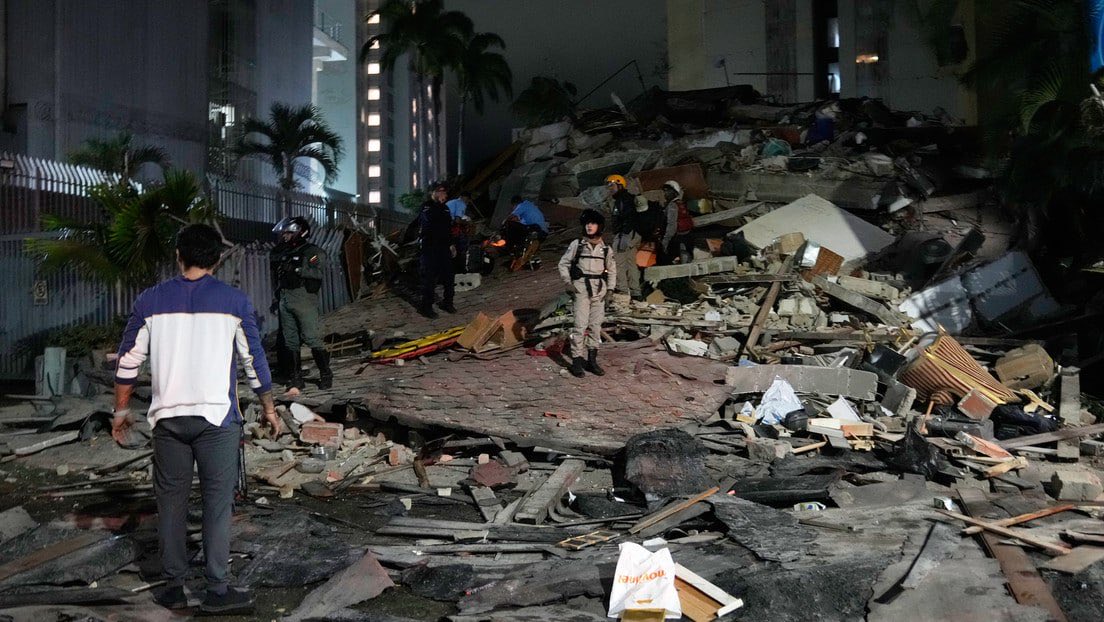
CARACAS: Rescue teams worked through the night across Venezuela after two powerful earthquakes struck near the capital, Caracas, causing widespread destruction, collapsing buildings, and raising fears of a major humanitarian disaster.
According to the U.S. Geological Survey (USGS), a magnitude 7.2 earthquake struck approximately 160 kilometers west of Caracas on Wednesday afternoon. Less than a minute later, an even stronger magnitude 7.5 tremor shook the region, triggering panic across much of the country.
Scientists warned that the disaster could result in significant loss of life and extensive damage. Preliminary assessments indicated that casualties could be substantial as emergency responders continued searching for survivors trapped beneath collapsed structures.
Interim President Delcy Rodríguez announced plans to declare a national state of emergency and seek international assistance to support rescue and recovery efforts.
“We extend our condolences to all families affected by this tragedy,” Rodríguez said during a televised address, while noting that authorities were still compiling nationwide figures on casualties and injuries.
Reports from Caracas and surrounding regions described collapsed residential buildings, damaged infrastructure, and overwhelmed emergency services. Interior Minister Diosdado Cabello said rescue teams, security forces, and civil protection agencies had been mobilized nationwide.
Emergency footage broadcast by local media showed first responders navigating piles of concrete and twisted metal in search of survivors. Relatives gathered near damaged buildings hoping for news of loved ones believed to be trapped.
Gustavo Duque, mayor of Caracas’ Chacao municipality, confirmed that several buildings had collapsed. He said at least 18 people were rescued alive from one structure and urged residents to remain in open areas due to the threat of aftershocks.
“We will do everything possible to save as many lives as we can,” Duque said.
In Falcon state, authorities reported dozens of injuries and ongoing searches for missing residents as rescue operations expanded across affected communities.
Residents Flee Buildings as Tremors Strike
The earthquakes occurred during a public holiday commemorating a key victory in Venezuela’s struggle for independence, leaving many people at home when the shaking began.
Residents across Caracas described scenes of chaos as buildings swayed violently and people rushed into the streets.
Witnesses reported hearing loud crashes as furniture, household items, and sections of building facades collapsed. Many compared the event to Venezuela’s devastating 1967 earthquake, with some saying the latest tremors felt even stronger.

Emergency alerts sent to mobile phones provided brief warnings before the most intense shaking began, prompting some residents to evacuate moments before structures suffered damage.
Hospitals and Critical Services Under Pressure
Hospitals in Caracas activated emergency protocols and called in additional medical staff to handle an influx of injured residents.
Authorities also suspended classes for the remainder of the week while engineers assessed structural damage to schools, public buildings, and transportation networks.
Venezuela’s main international airport at Maiquetía was temporarily closed after sustaining damage, disrupting domestic and international travel.
Energy infrastructure appeared largely unaffected in the immediate aftermath, though companies operating in the country began inspecting facilities and accounting for personnel. Industry sources warned that prolonged power outages could affect oil production if electrical services are not restored quickly.
Tsunami Threat Lifted
Following the earthquakes, the U.S. Tsunami Warning System briefly issued alerts for Puerto Rico, the U.S. Virgin Islands, the British Virgin Islands, and parts of the southern Caribbean. The warning was later withdrawn after further analysis indicated no significant tsunami threat.
Venezuela sits along a complex tectonic boundary where the Caribbean Plate interacts with the South American Plate, making the region vulnerable to seismic activity.
As rescue efforts continue and damage assessments expand, officials caution that the full scale of the disaster may not be known for days. Thousands of emergency personnel remain deployed across affected areas in a race to locate survivors and provide assistance to communities devastated by one of the strongest earthquakes to strike Venezuela in recent decades.
-Tathiana Nava