

LIMA: After months of diplomatic hostility rooted in one of Latin America’s most contentious political crises, Peru and Mexico have agreed to restore full diplomatic relations, marking a significant shift in regional politics and signaling that pragmatic engagement may be replacing ideological confrontation.
The breakthrough follows Peru’s decision to grant safe-conduct passage to former Prime Minister Betssy Chávez, allowing her to leave the Mexican Embassy in Lima and travel to Mexico under political asylum. The move effectively removes one of the principal obstacles that had strained bilateral ties since late 2025 and opens the door to renewed political, economic and regional cooperation between two of Latin America’s largest Pacific economies.
The diplomatic dispute originated from the aftermath of former Peruvian President Pedro Castillo’s failed attempt in December 2022 to dissolve Congress before being removed from office and arrested. Castillo’s supporters described his removal as politically motivated, while Peru’s institutions characterized it as an attempted constitutional breakdown.
Mexico, under successive administrations, openly supported Castillo and later granted political asylum to his family as well as former Prime Minister Betssy Chávez, who faces conspiracy charges in Peru for her alleged involvement in Castillo’s attempt to dissolve Congress. The asylum decision was viewed by Lima as interference in Peru’s domestic judicial process.
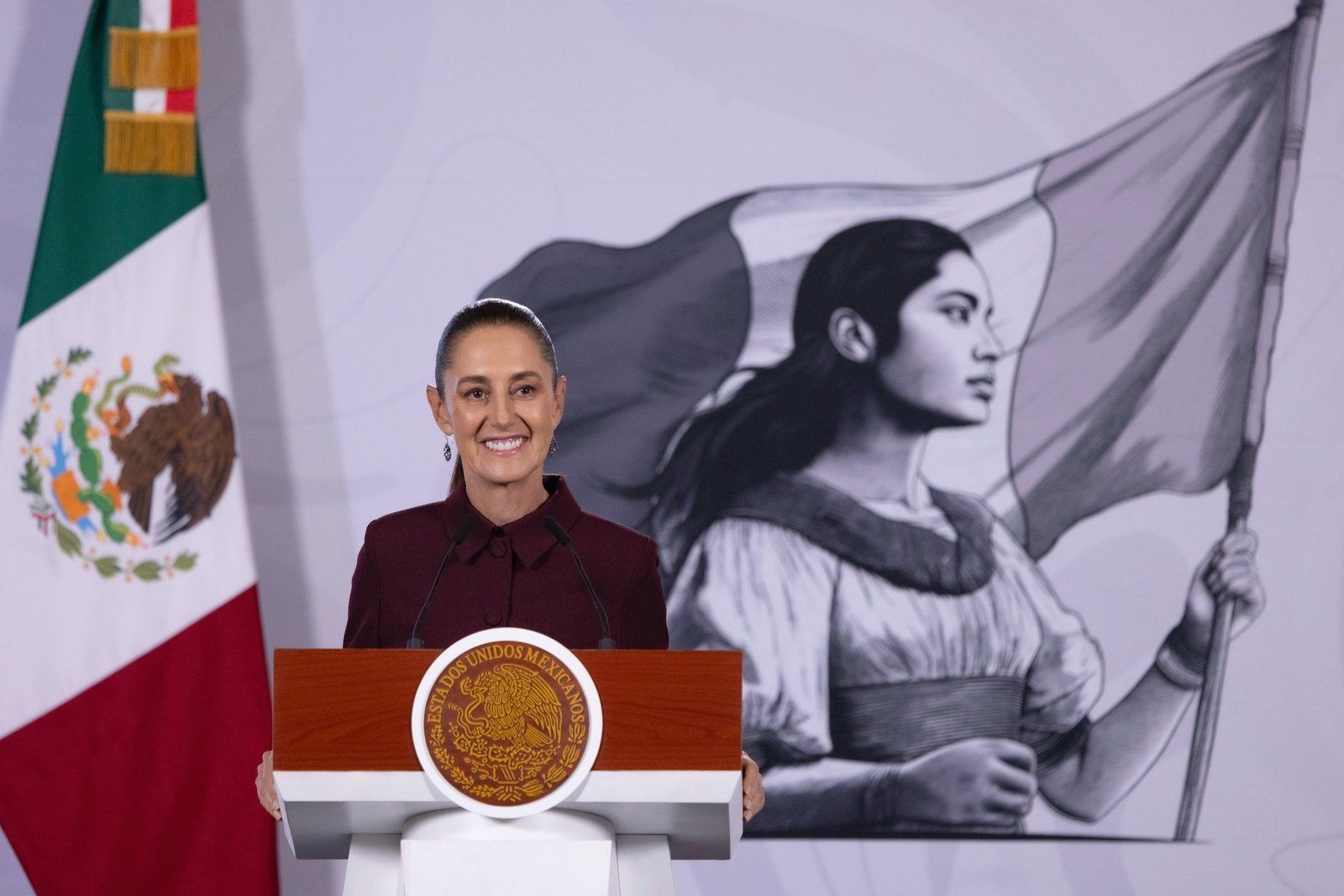
Relations deteriorated sharply after Peru severed diplomatic ties with Mexico when asylum was granted to Chávez. Political tensions escalated further when Peru’s Congress declared Mexican President Claudia Sheinbaum a persona non grata, reflecting the depth of diplomatic mistrust between the two governments.
Friday’s announcement, however, signals a deliberate effort by both capitals to move beyond that confrontation.
In an official statement, Peru’s Ministry of Foreign Affairs confirmed it had authorized Chávez’s safe departure from the Mexican Embassy in Lima, while emphasizing that Peru reserves the legal right to seek her extradition in the future should judicial proceedings require it.
Peruvian Foreign Minister Carlos Espa later confirmed that Chávez departed Peru shortly before midnight on Thursday and arrived safely en route to Mexico. The restoration of relations also fulfills one of the early foreign-policy commitments made by Peru’s newly elected President Keiko Fujimori, who announced before taking office that rebuilding diplomatic ties with Mexico would be among her administration’s priorities.
Her decision reflects a broader strategic calculation. While political disagreements remain unresolved, maintaining diplomatic isolation between two influential Pacific Alliance members offered few long-term advantages for either economy.
For Peru, improving relations with Mexico strengthens regional engagement at a time when Latin America is increasingly seeking greater economic integration, supply-chain diversification and coordinated responses to global trade uncertainty.
For Mexico, restoring diplomatic channels helps stabilize relations with one of South America’s key economies while reinforcing its broader diplomatic presence across the region.
The episode also illustrates how political ideology continues to influence foreign policy across Latin America. Castillo’s removal divided governments throughout the region, with left-leaning administrations criticizing Peru’s constitutional process while more conservative governments defended Lima’s institutions.
Yet the latest developments suggest both governments now recognize that prolonged diplomatic disputes ultimately undermine broader national interests. Trade, investment, tourism, educational exchanges and regional cooperation all suffered from the absence of ambassadors since early 2023. Re-establishing normal diplomatic engagement allows both countries to rebuild confidence without necessarily resolving every political disagreement.
Importantly, Peru’s decision to reserve the right to seek Chávez’s extradition demonstrates that restoring diplomatic relations does not mean abandoning judicial processes. Instead, it reflects a separation between legal proceedings and state-to-state diplomacy, a distinction that mature democracies often seek to maintain.
The normalization also comes at a time when Latin America faces growing geopolitical competition, shifting supply chains and increasing global interest in critical minerals, renewable energy and regional manufacturing. Stronger diplomatic coordination among major Latin American economies could improve the region’s collective bargaining position in an increasingly fragmented international order.
While deep political differences remain over the legacy of Pedro Castillo, the resumption of diplomatic relations between Peru and Mexico represents an important step toward rebuilding trust.
The episode serves as a reminder that diplomacy often succeeds not because disagreements disappear, but because governments recognize that dialogue delivers greater long-term value than isolation.
As Latin America navigates a rapidly evolving global landscape, the renewed relationship between Lima and Mexico City could become an example of pragmatic diplomacy overcoming political polarization.
-Ros Williams