


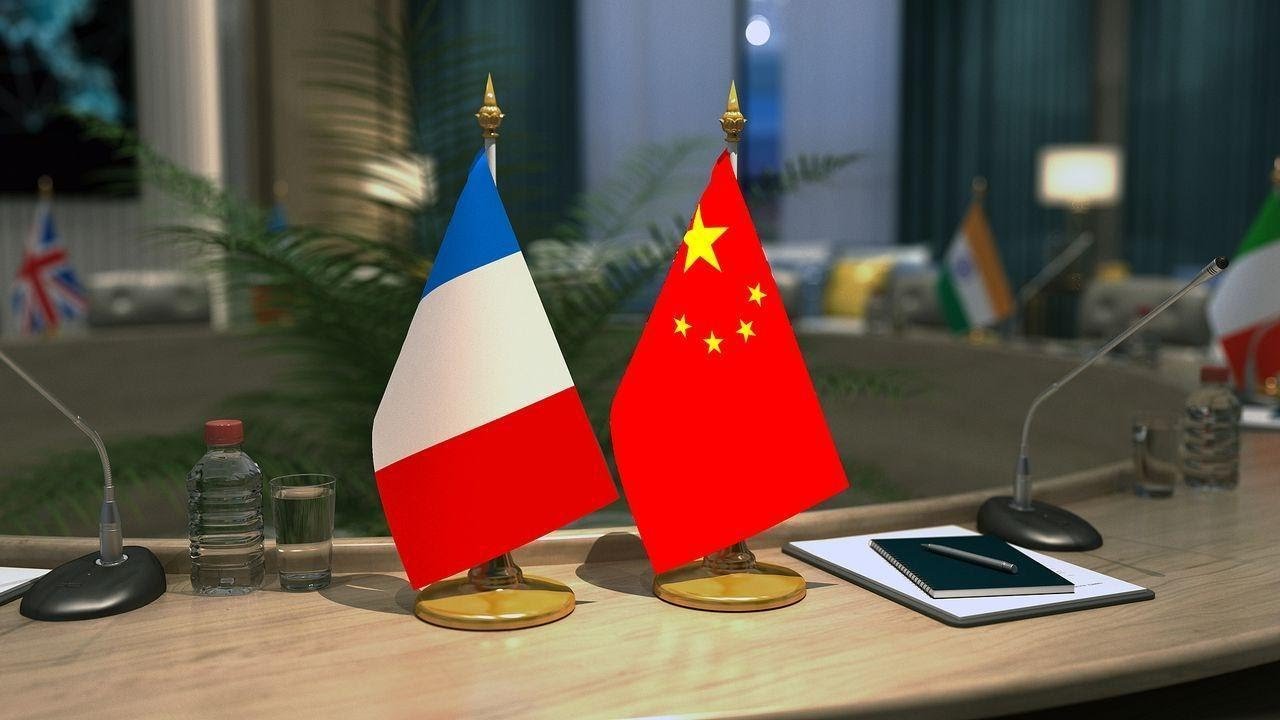
BEIJING/PARIS: As leaders of the Group of Seven (G7) prepare to gather in the French resort town of Évian-les-Bains, a high-level video conference convened by French President Emmanuel Macron has revealed the growing tensions and interdependence shaping the global economy. China’s participation in the discussion, represented by Vice Premier Zhang Guoqing, was more than a diplomatic gesture; it reflected Beijing’s determination to influence the debate before advanced economies potentially adopt a tougher stance on Chinese trade practices.
The virtual meeting, held under the banner of “Global Convergence for Growth,” focused on economic imbalances and pathways toward stronger international cooperation. Yet beneath the language of coordination and shared prosperity lies a deepening dispute over the future of globalization itself.
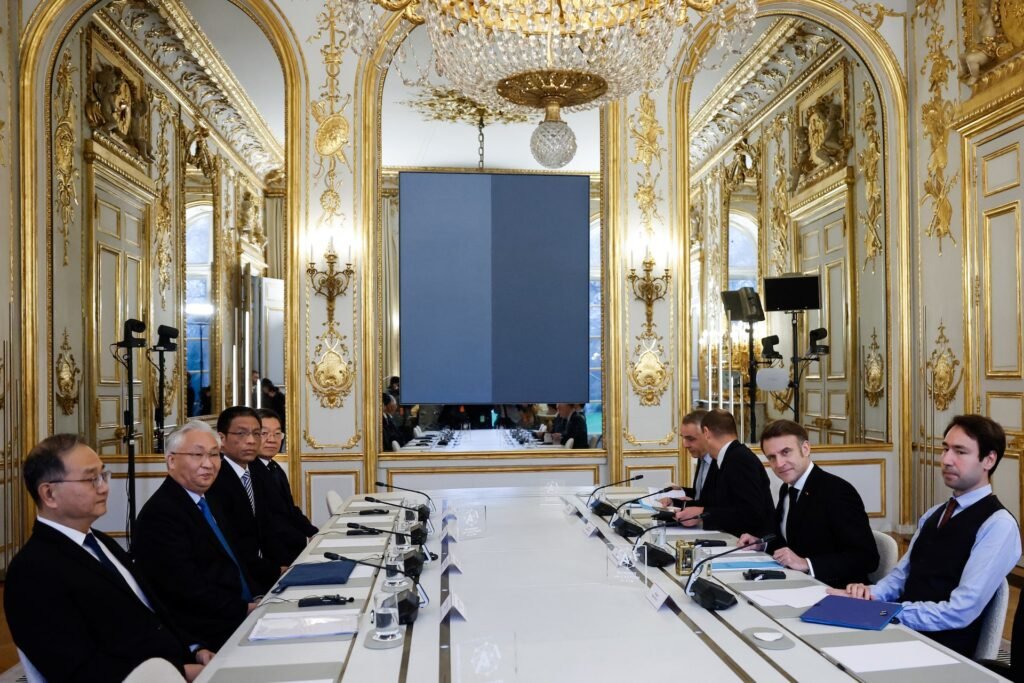
China used the platform to reinforce its longstanding position that open markets, free trade, and economic cooperation remain the most effective tools for sustaining global growth. Zhang emphasized the need for a “free and convenient trade environment,” urging countries to view comparative advantages objectively rather than through the lens of geopolitical competition. He reiterated Beijing’s commitment to expanding high-level opening-up and sharing development opportunities with the wider world.
For China, the message is clear: economic tensions should be addressed through cooperation rather than protectionism.
However, many Western economies increasingly view the situation differently.
At the heart of the dispute is China’s growing industrial dominance in sectors considered strategically vital for the future economy. Chinese manufacturers have emerged as global leaders in electric vehicles, lithium-ion batteries, solar panels, and other advanced technologies. Supported by massive industrial investment, extensive supply chains, and economies of scale, Chinese firms have significantly expanded their presence in international markets.
European policymakers worry that this surge in exports is creating distortions that threaten domestic industries. Analysts have described the phenomenon as a “second China shock,” drawing comparisons to the early 2000s when low-cost Chinese manufacturing transformed global trade patterns and accelerated deindustrialization in parts of Europe and North America.
Today’s concerns are even more significant because the competition extends beyond low-cost consumer goods into high-value industries that many countries view as central to economic security, technological leadership, and the green energy transition.
President Macron’s initiative reflects Europe’s attempt to avoid a full-scale trade confrontation while still addressing concerns over market imbalances. France has increasingly advocated for what it describes as “strategic autonomy,” seeking a balance between engagement with China and the protection of European industrial competitiveness.
During the conference, Macron stressed that stronger growth requires both domestic reforms and effective international cooperation. He warned that unresolved global imbalances could trigger abrupt economic and financial adjustments if left unaddressed.
His remarks capture a growing sentiment across Europe: that the benefits of globalization must be preserved, but the rules governing competition may need adjustment to ensure a level playing field.
The timing of the dialogue is particularly significant. Following the G7 summit, European Union leaders will convene to discuss key policy priorities, with China expected to feature prominently on the agenda. The debate comes as Brussels weighs whether to adopt tougher trade measures against Chinese imports, particularly in sectors where European manufacturers argue they face unfair competition.
Yet Europe remains divided.
Germany, the EU’s largest economy and one of China’s most important trading partners, has traditionally favored engagement over confrontation. German industries, particularly the automotive sector, rely heavily on access to Chinese markets. Nevertheless, growing competition from Chinese electric vehicle manufacturers is prompting a reassessment among some policymakers and industry leaders in Berlin.
This divergence highlights one of Europe’s central strategic dilemmas. While concerns over economic dependence and industrial competitiveness are rising, many member states remain reluctant to jeopardize commercial ties with the world’s second-largest economy.
China, meanwhile, rejects accusations that its exporters benefit unfairly from state support. Beijing argues that its success stems from innovation, efficient supply chains, and market competitiveness. Chinese officials contend that tariffs and trade restrictions imposed by Western countries represent the true violation of global trade principles.
The participation of a senior Chinese official in a G7-linked economic dialogue is itself noteworthy. Beijing has frequently criticized the G7 as an outdated and unrepresentative grouping that no longer reflects the realities of a multipolar world. Yet China’s willingness to engage suggests recognition that decisions made by advanced economies continue to carry significant implications for global trade and investment flows.
Ultimately, the dispute between China and the West is no longer simply about tariffs or trade deficits. It is about competing visions of economic governance in an era increasingly defined by strategic competition. The question confronting policymakers is whether globalization can be recalibrated through cooperation or whether economic fragmentation will become the defining feature of the next phase of international relations.
The discussions leading into the G7 summit indicate that both sides understand the stakes. Whether they can find common ground remains uncertain. What is clear is that the future of global trade will be shaped not only by market forces but also by the political choices made in the months ahead.
– Ryan Wang and Christopher Freed
READ THE FULL E-MAGAZINE | WorldAffairs: For Decision-Makers Who Need More Than Headlines