




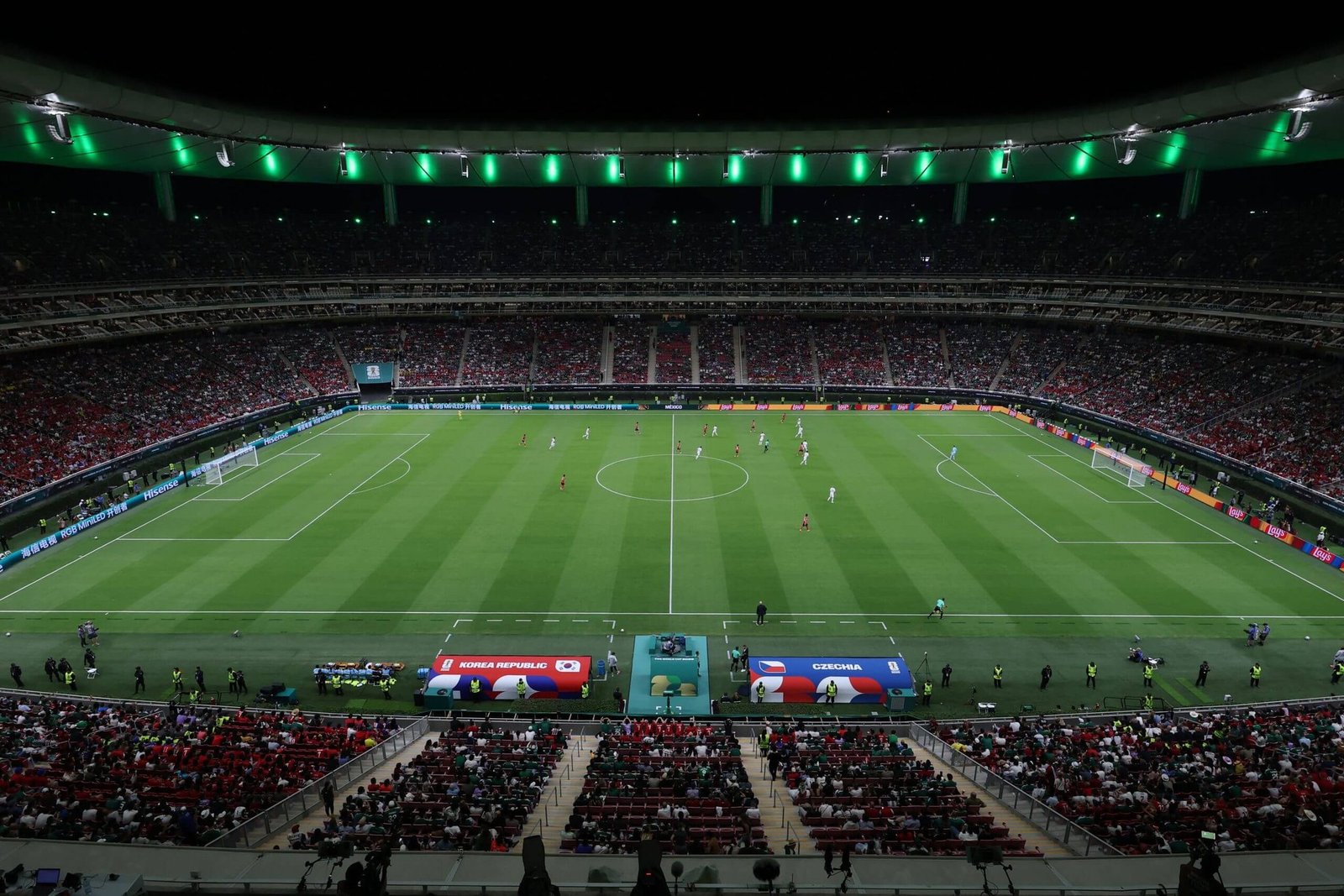
GUADALAJARA, Mexico: The sight of thousands of empty seats at a FIFA World Cup match has created an uncomfortable image for football’s biggest governing body: a tournament built on the passion of supporters appearing increasingly difficult for many fans to afford.
During Thursday’s Group A match between South Korea and the Czech Republic in Guadalajara, FIFA reported an attendance of 44,985 at the 46,000-seat stadium. However, visible sections of unoccupied seats quickly sparked criticism over ticket pricing and whether ordinary supporters are being priced out of the world’s biggest football event.
The situation carried extra weight in Guadalajara, a city with a deep football tradition and one of Mexico’s strongest football cultures. Seeing empty rows in such an environment raised questions beyond one match, it highlighted a growing debate about accessibility, affordability, and the future relationship between football’s institutions and its fans.
FIFA has defended its commercial strategy, pointing to strong global demand and millions of tickets sold for the expanded 48-team tournament. FIFA President Gianni Infantino has argued that World Cup ticket prices are comparable with other major sporting events and reflect the scale and quality of the competition.
However, many supporters view the World Cup differently. For them, football is not simply an entertainment product. It represents history, identity, community, and generations of emotional connection. The concern is that rising prices could transform stadiums from places filled with passionate supporters into venues increasingly dominated by wealthier audiences and corporate spectators.
Fan organizations, including Football Supporters Europe, have warned that expensive tickets risk excluding the very people who create the atmosphere that makes football unique. A World Cup without the energy of ordinary fans risks losing a vital part of its character.
The challenge becomes even greater with the expansion of the tournament. The 2026 World Cup offers more teams, more matches, and a wider global celebration of football, but it also brings higher operational costs and commercial pressure. The question is whether growth can happen without weakening the connection between the game and its supporters.
The empty seats in Guadalajara may not represent a lack of interest in football. Instead, they may signal a growing divide between the popularity of the sport and the affordability of experiencing it live.
The World Cup has always been powerful because it belongs to fans across the world. Its magic comes from the chants, emotions, flags, and unforgettable moments created inside stadiums. If attending matches becomes a privilege available only to a limited group, FIFA risks damaging the very culture that made the tournament globally important.
The biggest test for football’s leaders is not proving that people want the World Cup. The real challenge is ensuring that the people who love the game can still be part of it.
-Miguel Lo Siniawski
READ THE FULL E-MAGAZINE | WorldAffairs: For Decision-Makers Who Need More Than Headlines