



ADVERTISEMENT
  • About
  • Advertise
  • Privacy & Policy
  • Contact
thewnn.com
ADVERTISEMENT
  • Home
  • Politics
  • Business
  • Climate & Energy
  • WNN Exclusive
  • Others
    • AFRICA
    • EDUCATION
    • Entertainment
    • Environment
    • Europe
    • Finance
    • Health
    • Peace & Conflict
    • Religion & Faith
  • WNN AFRICA
  • en
    • ar
    • en
    • fr
    • fa
E-Magazine
No Result
View All Result
  • Home
  • Politics
  • Business
  • Climate & Energy
  • WNN Exclusive
  • Others
    • AFRICA
    • EDUCATION
    • Entertainment
    • Environment
    • Europe
    • Finance
    • Health
    • Peace & Conflict
    • Religion & Faith
  • WNN AFRICA
  • en
    • ar
    • en
    • fr
    • fa
No Result
View All Result
thewnn.com
No Result
View All Result
ADVERTISEMENT
ADVERTISEMENT
Home JUSTIN News

America’s Costly Bet on Iran Crosses $25 Billion

Share on FacebookShare on Twitter
ADVERTISEMENT

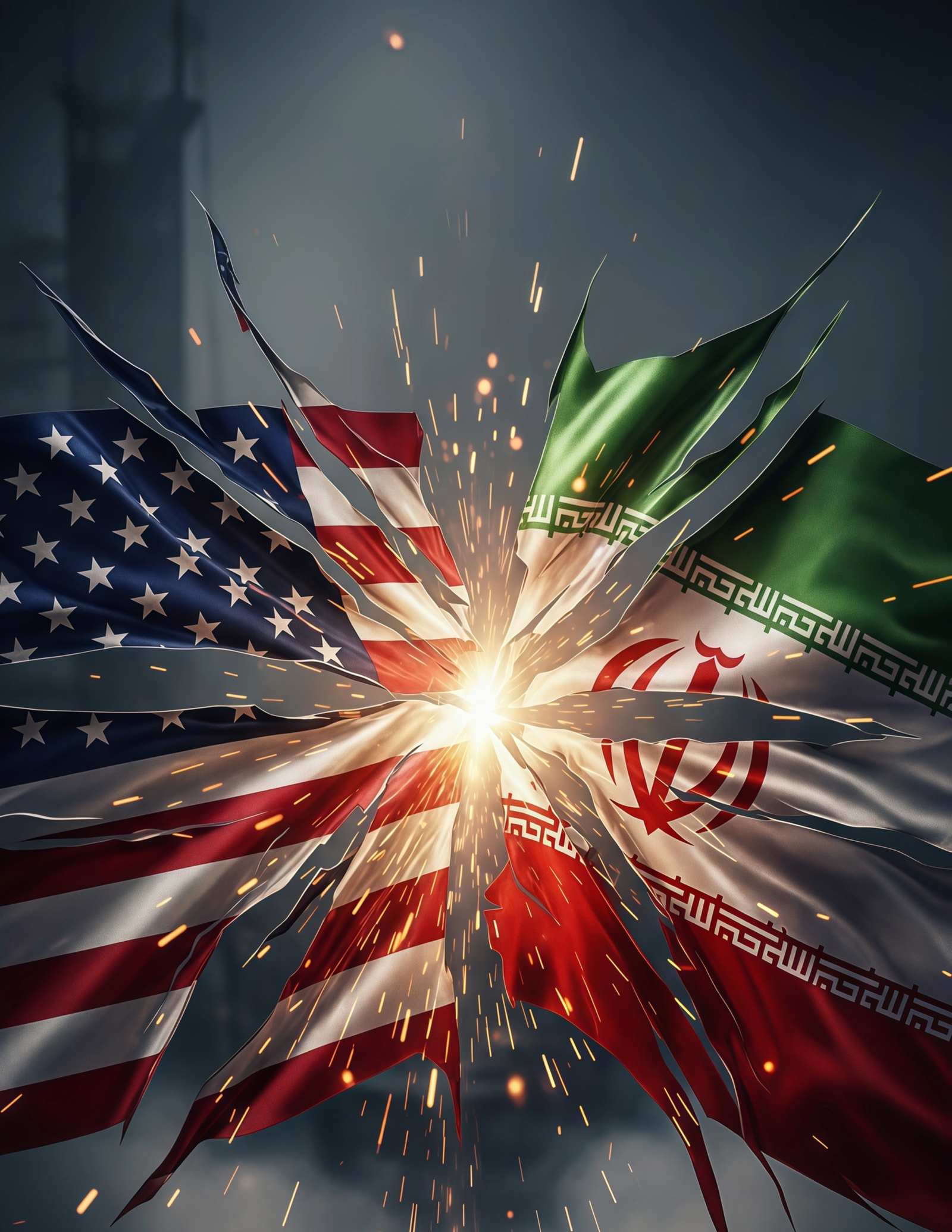
WASHINGTON: The United States’ war with Iran has now crossed a defining threshold, $25 billion in direct military expenditure. Reported by WorldAffairs, this figure is not merely an accounting milestone; it is an early signal of a conflict whose real costs are only beginning to unfold.

Testifying before lawmakers, a senior official from the Pentagon confirmed that the bulk of spending has gone toward munitions. Yet the number remains incomplete. It excludes the longer arc of war economics reconstruction of damaged bases, extended troop deployments, veterans’ care, and the secondary shocks reverberating through global markets.

To contextualize, $25 billion approximates the annual budget of NASA, a comparison that underscores the scale of immediate consumption versus long-term investment. War, unlike development, delivers uncertain returns.

The strategic justification, however, is being framed in absolute terms. Defense Secretary Pete Hegseth posed a stark question: “What would you pay to ensure Iran does not get a nuclear bomb?” It is a powerful framing, but also a revealing one. When deterrence is defined without limits, its financial and political costs become equally open-ended.

Advertisement. Scroll to continue reading.

Launched on February 28 under Donald Trump, the conflict has already drawn in extensive U.S. military assets, including three aircraft carriers and tens of thousands of troops across the Middle East. Thirteen American soldiers have been killed and hundreds wounded, a toll that, while limited compared to past wars, carries amplified political sensitivity in a post-Iraq, post-Afghanistan era.

Yet the battlefield is only one dimension. The economic spillover is where the war is beginning to bite. Disruptions in oil and gas flows have pushed U.S. gasoline prices to their highest levels in nearly four years, according to industry data. The ripple effects extend into agriculture, manufacturing, and supply chains fueling inflation at a moment when affordability is already a dominant political concern.

This convergence of war and economics is reshaping domestic politics. With midterm elections approaching, public approval for the conflict has fallen to just 34%, reflecting growing unease among voters. For the Trump administration, the challenge is no longer just military execution, it is sustaining public legitimacy in the face of rising costs at home.

Democratic lawmakers, including Adam Smith, have seized on the delayed disclosure of the $25 billion figure, framing it as both a transparency issue and a fiscal warning. 

But beyond partisan contestation lies a deeper structural shift: modern conflicts are increasingly fought not only on battlefields, but within economies and political systems.

ADVERTISEMENT

Strategically, the objective remains preventing Iran from advancing its nuclear capabilities. Yet the method reflects a broader pattern preemptive, high-intensity operations designed for rapid impact. While tactically efficient, such approaches are financially intensive. Precision warfare reduces troop exposure but significantly raises the cost per engagement.

The result is a paradox of modern conflict: fewer casualties, but exponentially higher financial burdens.

ADVERTISEMENT

The current ceasefire fragile and undefined, only reinforces this uncertainty. It is not a resolution, but a pause. And in such pauses, costs accumulate quietly, extending the conflict’s footprint across time and sectors.

For global markets, the implications are immediate. Energy volatility is already reshaping price structures, and any escalation could place critical chokepoints like the Strait of Hormuz under renewed pressure. The consequences would not remain regional, they would cascade across global trade and financial systems.

What the $25 billion figure ultimately represents is not closure, but trajectory. Wars of this nature rarely plateau; they expand financially, politically, and strategically.

The more consequential question, therefore, is not whether the cost is justified, but whether the trajectory is sustainable.

Because in today’s world, the price of war is no longer confined to defense budgets. It is embedded in inflation rates, electoral outcomes, and the stability of the global order itself.

ADVERTISEMENT

-Michelle Webber

READ THE FULL E-MAGAZINE | WorldAffairs: Where Power Shifts, Economies Collide, and Global Policy Is Decoded

Tags: #BreakingNews#ConflictZone#DefenseSpending#EconomicImpact#EnergyCrisis#Geopolitics#GlobalCrisis#GlobalMarkets#GlobalSouth#Inflation#InternationalRelations#IranWar#MiddleEast#MilitaryNews#NewsUpdate#OilPrices#Pentagon#PolicyAnalysis#StrategicAnalysis#Trump#USIran#USMilitary#USPolitics#WarCost#WarEconomy#WNN#WorldAffairs#WorldNewsNewsTrumpUSAWhite HouseWNN
ADVERTISEMENT
Previous Post

Growth Without Alignment: Sachs’ Blueprint for India’s Rise to 2047

Stay Connected

  • 23.9k Followers
  • 99 Subscribers
  • Trending
  • Comments
  • Latest
Trump Confirms Maduro Arrest, Signals U.S. Control in Venezuela

Trump Confirms Maduro Arrest, Signals U.S. Control in Venezuela

January 3, 2026
Blueprints from the Past: Rethinking India’s Tourism with Tradition at Its Heart

Blueprints from the Past: Rethinking India’s Tourism with Tradition at Its Heart

August 21, 2025
From Fragility to Foresight: Astana Drives Central Asia’s Ecological Turnaround

From Fragility to Foresight: Astana Drives Central Asia’s Ecological Turnaround

April 22, 2026
After Maduro: The High Cost of a Violent Shortcut

After Maduro: The High Cost of a Violent Shortcut

January 4, 2026
WNN Launches to Deliver Real News, Real Time, Worldwide

WNN Launches to Deliver Real News, Real Time, Worldwide

1489
Putin Lambasts Trade Sanctions on Eve of Visit to China

Putin Lambasts Trade Sanctions on Eve of Visit to China

5

Ducati has all the cards’ to win 2017 MotoGP title, says CEO

2
US-China Trade Talks on Export Controls to Resume for a Second Day

US-China Trade Talks on Export Controls to Resume for a Second Day

2
America’s Costly Bet on Iran Crosses $25 Billion

America’s Costly Bet on Iran Crosses $25 Billion

April 30, 2026
Growth Without Alignment: Sachs’ Blueprint for India’s Rise to 2047

Growth Without Alignment: Sachs’ Blueprint for India’s Rise to 2047

April 30, 2026
UAE to Exit OPEC, Signaling Shift in Global Oil Dynamics

UAE to Exit OPEC, Signaling Shift in Global Oil Dynamics

April 29, 2026
Trump Unimpressed by Iran Offer, Talks Stall

Trump Unimpressed by Iran Offer, Talks Stall

April 28, 2026

Recent News

America’s Costly Bet on Iran Crosses $25 Billion

America’s Costly Bet on Iran Crosses $25 Billion

April 30, 2026
Growth Without Alignment: Sachs’ Blueprint for India’s Rise to 2047

Growth Without Alignment: Sachs’ Blueprint for India’s Rise to 2047

April 30, 2026
UAE to Exit OPEC, Signaling Shift in Global Oil Dynamics

UAE to Exit OPEC, Signaling Shift in Global Oil Dynamics

April 29, 2026
Trump Unimpressed by Iran Offer, Talks Stall

Trump Unimpressed by Iran Offer, Talks Stall

April 28, 2026
ADVERTISEMENT
thewnn.com

WNN- (World Affairs News Network) is a GLOBAL news platform delivering fast, accurate, and deeply contextual reporting from every corner of the world. Built on the pillars of clarity, credibility, and context in collaboration with Wakanda Network (Africa) and Sadbhawna Today - India's National Daily Hindi Newspaper, WNN brings you real news as it unfolds, unfiltered, uncompromised, and globally relevant.

Follow Us

Email ID: editor@thewnn.com

Tel. No.: +1 (929) 607-9858

Subscribe on YouTube

Join Us on Facebook

WNN’s Hindi Partner

  • About
  • Advertise
  • Privacy & Policy
  • Contact

© 2025 thewnn.

Welcome Back!

Login to your account below

Forgotten Password?

Retrieve your password

Please enter your username or email address to reset your password.

Log In

Add New Playlist

No Result
View All Result
  • Home
  • Politics
  • Business
  • Climate & Energy
  • WNN Exclusive
  • Others
    • Africa
    • Education
    • Entertainment
    • Environment
    • Europe
    • Finance
    • Health
    • Peace & Conflict
    • Religion & Faith
  • WNN AFRCIA
  • E-MAGAZINE

© 2025 thewnn.