


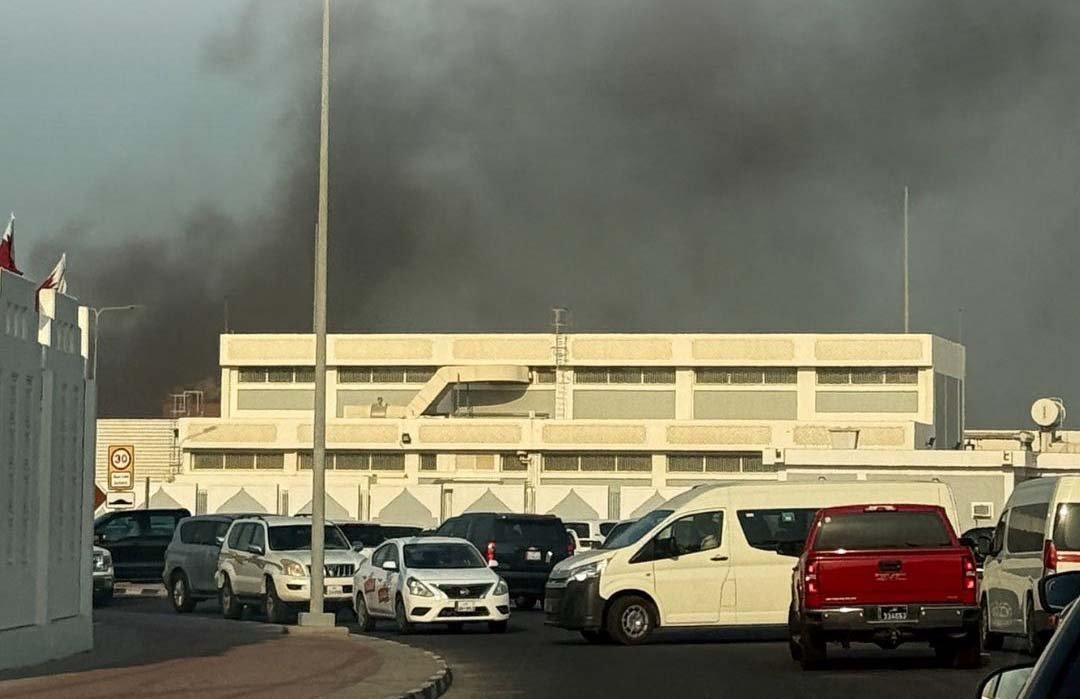
DOHA/ABU DHABI: Israel expanded its war to an unprecedented front on Tuesday with an airstrike in Doha targeting senior Hamas leaders, a move that drew sharp condemnation worldwide and raised fears of a dangerous new escalation in the Middle East. The strike, the first of its kind on Qatari soil, hit near Hamas’ political offices in Doha, a city that has long served as a diplomatic hub for ceasefire negotiations in the Gaza conflict.
Qatar, a close U.S. ally and host to the sprawling al-Udeid Air Base, denounced the attack as “cowardly” and a “flagrant violation of international law,” warning that it could derail fragile truce efforts that it has mediated alongside Egypt.
Hamas sources told WNN that its negotiating delegation narrowly survived the attack, though Israel confirmed the strike was directed at Khalil al-Hayya, Hamas’ exiled Gaza chief and lead negotiator. Hamas officials said al-Hayya’s son was killed.
Israeli officials are still assessing whether any senior leaders were eliminated. The assault came a day after Hamas’ military wing, the al-Qassam Brigades, claimed responsibility for a shooting at a Jerusalem bus stop that killed six people, and shortly after four Israeli soldiers were killed in Gaza. A White House official confirmed that Israel had informed Washington ahead of the strike. U.S. President Donald Trump, who visited Doha earlier this year, stayed at a hotel just two kilometers from the site of Tuesday’s bombing.
Global reaction was swift and overwhelmingly critical. Saudi Arabia led the chorus, branding the action “brutal Israeli aggression” against Qatar’s sovereignty. The United Arab Emirates, which normalized ties with Israel under the Abraham Accords in 2020, called the strike “blatant and cowardly,” while Egypt warned it “sets a dangerous precedent.”
United Nations Secretary-General António Guterres expressed grave concern, noting Qatar’s vital role in mediation and hostage negotiations. Pope Leo delivered an unusually strong warning, saying the situation was “very serious” and risked triggering “a wider catastrophe.”
India’s Ministry of External Affairs issued its own statement, saying: “We are deeply concerned by this development and its impact on the security situation in the region. We strongly urge restraint and diplomacy, so that peace and security in the region is not endangered.”
In Tehran, Iranian President Beheshtian told the Islamic Unity Conference: “If the Muslim community were united, neither Israel nor the U.S. would dare attack Muslims. The problem lies in our own divisions.”
Prime Minister Benjamin Netanyahu defended the strike in a televised address, declaring: “The days are over when terror leaders can enjoy immunity of any kind … I won’t allow that kind of immunity to exist.” He insisted the action was justified in response to Hamas attacks.
In Gaza City, where Israel has ordered mass evacuations, residents braced for an intensified offensive. Once home to a million people, the city has been devastated by months of bombardment. “There’s no place left not in the south, not in the north. We’ve become completely trapped,” said Bajess al-Khaldi, a displaced cancer patient, standing among the ruins of destroyed buildings.
Israel has vowed to demilitarize Gaza, but critics warn the plan threatens to deepen the humanitarian disaster for the enclave’s 2.2 million people.
Families of Israeli hostages fear that by expanding its operations to Doha, Israel may have jeopardized prospects for negotiations. Inside Israel, military leaders have also cautioned against broadening the conflict further, as public support for the war shows signs of wavering.
Oil markets reacted immediately, with crude prices rising by more than a dollar per barrel, underscoring global economic concerns. Since Hamas’ October 2023 surprise assault that killed 1,200 Israelis and saw 251 taken hostage, Israel has carried out military strikes across Lebanon, Syria, Iran, and Yemen.
But by striking Doha, a diplomatic and military ally of the United States, Israel has opened a new front that risks pulling the Gulf directly into the conflict.
⁃ Rameez Raza with Abdullah Saleh
WATCH, LIKE and SUBSCRIBE CHANNEL













Your article helped me a lot, is there any more related content? Thanks!
Thank you for your sharing. I am worried that I lack creative ideas. It is your article that makes me full of hope. Thank you. But, I have a question, can you help me?
Your point of view caught my eye and was very interesting. Thanks. I have a question for you. https://accounts.binance.com/register/person?ref=IHJUI7TF