


NEW DELHI: India and Uzbekistan are looking to turn growing political goodwill into a deeper economic partnership, with trade, investment, technology and regional connectivity increasingly shaping the relationship. For New Delhi, the opportunity comes as Central Asia gains strategic importance as a market, investment destination and potential source of energy, minerals and new supply-chain opportunities.
The India-Uzbekistan Business Forum in New Delhi, organised by the Federation of Indian Chambers of Commerce and Industry (FICCI), brought that economic opportunity into sharper focus, with officials from both countries calling for a substantial expansion in bilateral trade. The immediate target is ambitious: bilateral trade is expected to reach $2 billion next year, while both sides see the potential to push it toward $3–5 billion in the coming years.
For India, however, the significance of Uzbekistan goes well beyond the current trade numbers. The country offers access to a rapidly developing Central Asian market and potential opportunities for Indian companies across mining, energy, pharmaceuticals, manufacturing, agriculture, food processing, healthcare, information technology and digital infrastructure.
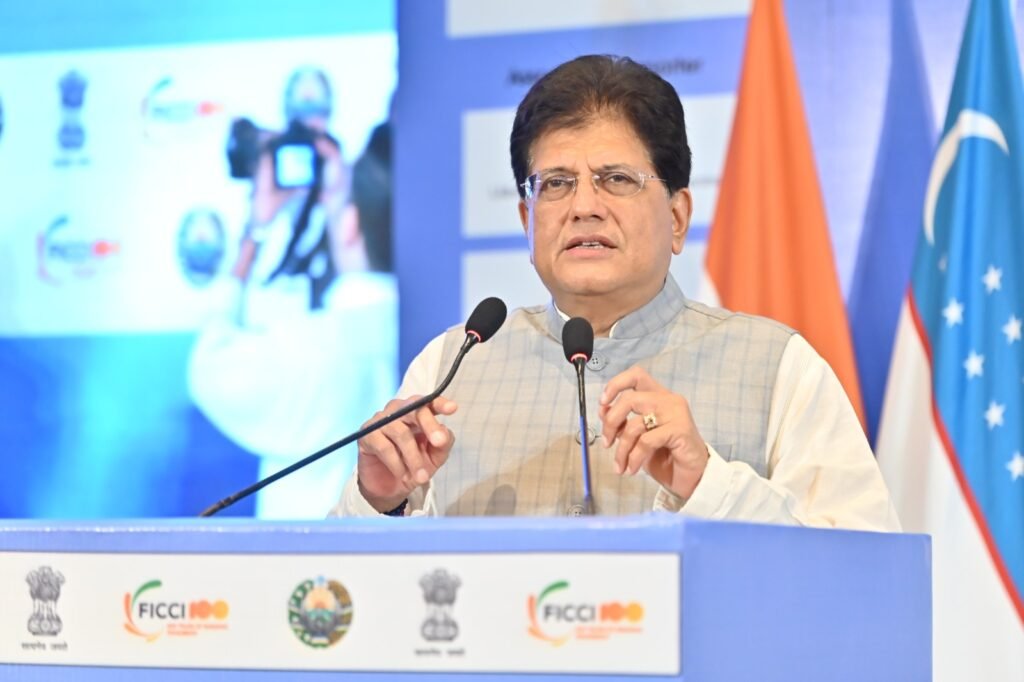
India’s Commerce and Industry Minister Piyush Goyal made clear that trade must become a stronger engine of the bilateral relationship.
“If we want to further strengthen the relationship between the two countries then trade will have to lead from the front,” Goyal said, urging companies from both countries to look beyond traditional commerce and invest in each other’s opportunities.
“Businesses in India and Uzbekistan must look at investing in each other’s opportunities. This is a partnership that offers tremendous possibilities, predictability. Let us work together, in good faith, to double the trade between the two economies in next 3 years,” he said.
The emphasis on investment is significant. India-Uzbekistan trade remains relatively modest compared with the size of the two economies, suggesting that simply increasing exports and imports may not be enough to unlock the relationship’s full potential.
Goyal called for a shift toward deeper commercial integration by removing trade barriers and improving mutual recognition of standards, approval procedures, testing and certification.
The objective, he said, should be to build “bridges of trust” that allow businesses to enter each other’s markets with greater confidence and predictability.
Both governments, Goyal added, are working toward a more structured, time-bound and outcome-oriented partnership designed to make it easier for businesses on both sides to operate.
“I urge the industry to co-invest, co-manufacture and co-innovate to spur growth on both sides,” he said.
That formulation points to where the relationship could become more consequential. The next phase may not be about simply selling Indian products in Uzbekistan or Uzbek products in India. It could increasingly involve joint manufacturing, technology partnerships, investment and the development of regional value chains.
Goyal described India’s proposition as a combination of market scale, skills and technology, presenting the country as a large and growing market, a reliable partner, a skilled workforce and a platform for innovation-led growth. The recently concluded bilateral investment treaty between India and Uzbekistan, he added, should strengthen investor confidence and create a firmer foundation for long-term investment.
The sectors identified for cooperation are wide-ranging, including mining, textiles, pharmaceuticals and healthcare, agriculture and food processing, IT and the digital economy.
For Uzbekistan, the relationship fits into a much broader economic transformation.
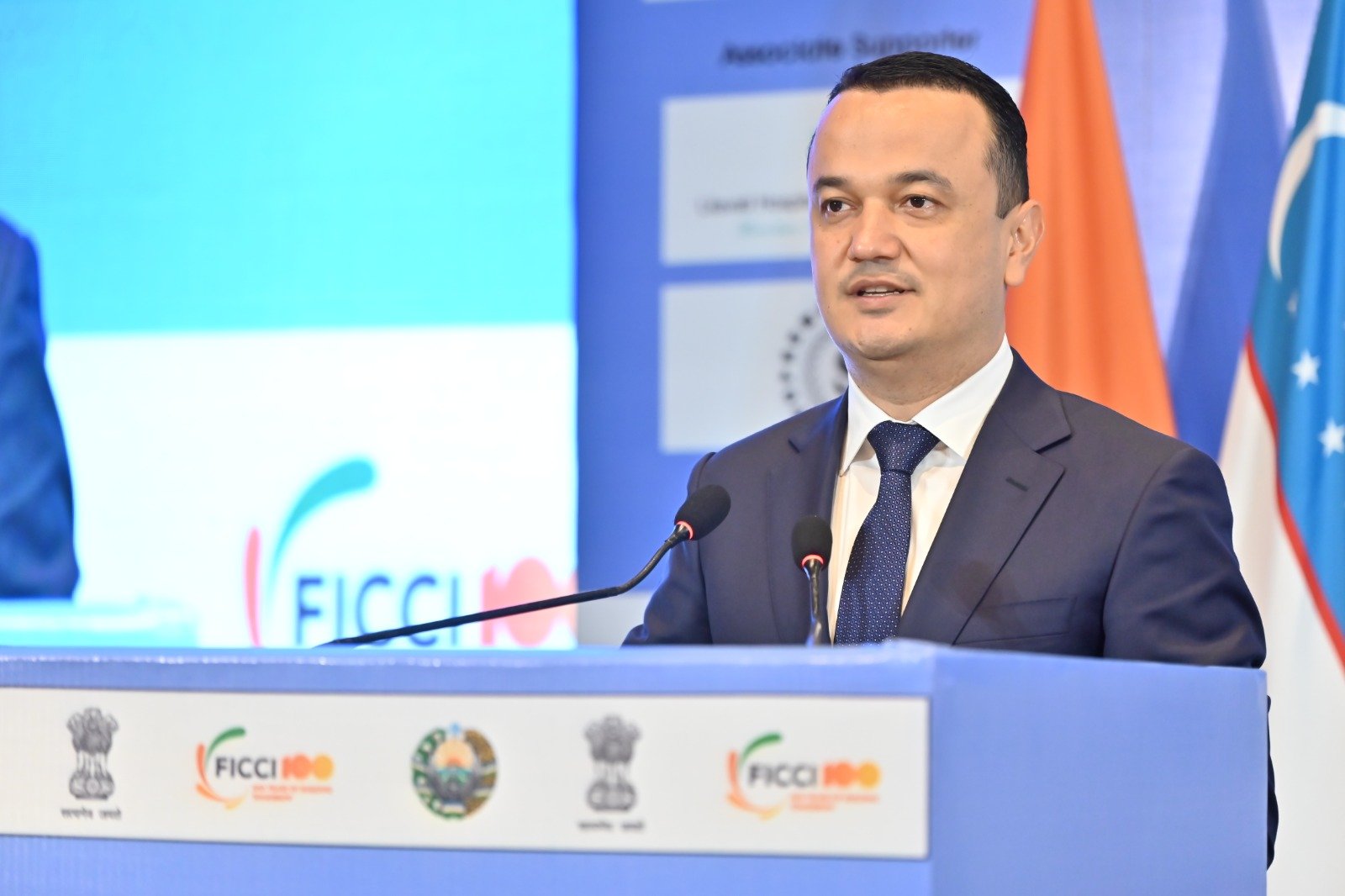
Uzbekistan’s Minister of Investment, Industry and Trade Laziz Kudratov said bilateral trade grew by 30 percent last year, reaching $1.3 billion for the first time.
“We hope to reach $2 billion by next year and we should work to increase our trade to $3-5 billion in coming years,” Kudratov said.
The target reflects Uzbekistan’s ambition to attract more international business while strengthening its position within Central Asia’s increasingly competitive economic landscape. Kudratov said Uzbekistan is working with India to improve market access, streamline procedures and reduce administrative barriers. These are critical issues if bilateral trade is to move beyond relatively modest volumes and reach the levels being discussed by both governments.
He also announced that Uzbekistan is working on a new agreement and memorandum on trade facilitation with India, aimed at creating more favourable conditions for exporters and importers.

Such arrangements could become an important practical component of the partnership. Lower administrative barriers, more predictable procedures and faster movement of goods can often have a greater impact on business decisions than political declarations alone.
Kudratov also highlighted Uzbekistan’s investment proposition, pointing to opportunities in mining and metallurgy, chemicals, energy, digital infrastructure, automobiles and pharmaceuticals. “Uzbekistan is open for foreign businesses,” he said.
The country’s investment transformation provides context for that pitch. According to Kudratov, the number of foreign companies in Uzbekistan has increased fivefold and foreign direct investment has grown tenfold since 2017. Those figures underline the broader direction of Uzbekistan’s economic strategy: attract international capital, expand industrial capacity and integrate more deeply with global markets.
For Indian companies, the opportunity is therefore not limited to exporting goods to Uzbekistan. The larger possibility lies in investing, manufacturing and developing regional supply chains from the country.
That could give the India-Uzbekistan relationship a wider Central Asian dimension.
Uzbekistan’s strategic location, growing industrial base and expanding investment ecosystem make it potentially useful as a platform for Indian businesses seeking a stronger presence across Central Asia. But geography and connectivity remain important constraints. The commercial potential will depend on whether companies can move goods, capital, technology and services efficiently between the two markets.
Kudratov said both governments would work to facilitate business contacts, create a conducive environment for companies and help businesses from the two countries interact more efficiently.
That commitment will now have to translate into measurable outcomes. The immediate numbers are clear. Bilateral trade has reached $1.3 billion. Uzbekistan wants $2 billion next year. India is calling for trade to double within three years, while Uzbekistan sees a longer-term opportunity of $3–5 billion.But the more important story lies beyond the numbers.
Central Asia is becoming increasingly significant as global companies reassess supply chains, seek new investment destinations and compete for access to critical resources and emerging markets. Uzbekistan is attempting to position itself at the centre of that transformation.
India, meanwhile, has a strategic interest in converting its growing engagement with Central Asia into stronger economic links. That makes Uzbekistan an increasingly important test case.
If both countries can reduce regulatory friction, improve market access, recognise standards, facilitate investment and bring their private sectors closer together, the relationship could evolve from a conventional trading partnership into a more integrated economic corridor between South Asia and Central Asia.
For Uzbekistan, deeper engagement with India could bring capital, technology, skills and access to one of the world’s largest markets. For India, the opportunity is to establish a stronger commercial foothold in a strategically important region while expanding cooperation in minerals, manufacturing, energy, pharmaceuticals, technology and digital infrastructure. The $2 billion trade target may therefore be only the first milestone.
The bigger question is whether India and Uzbekistan can turn today’s economic momentum into a durable partnership and whether that partnership can become one of India’s most consequential commercial links with Central Asia.
-Dr. M Shahid Siddiqui