


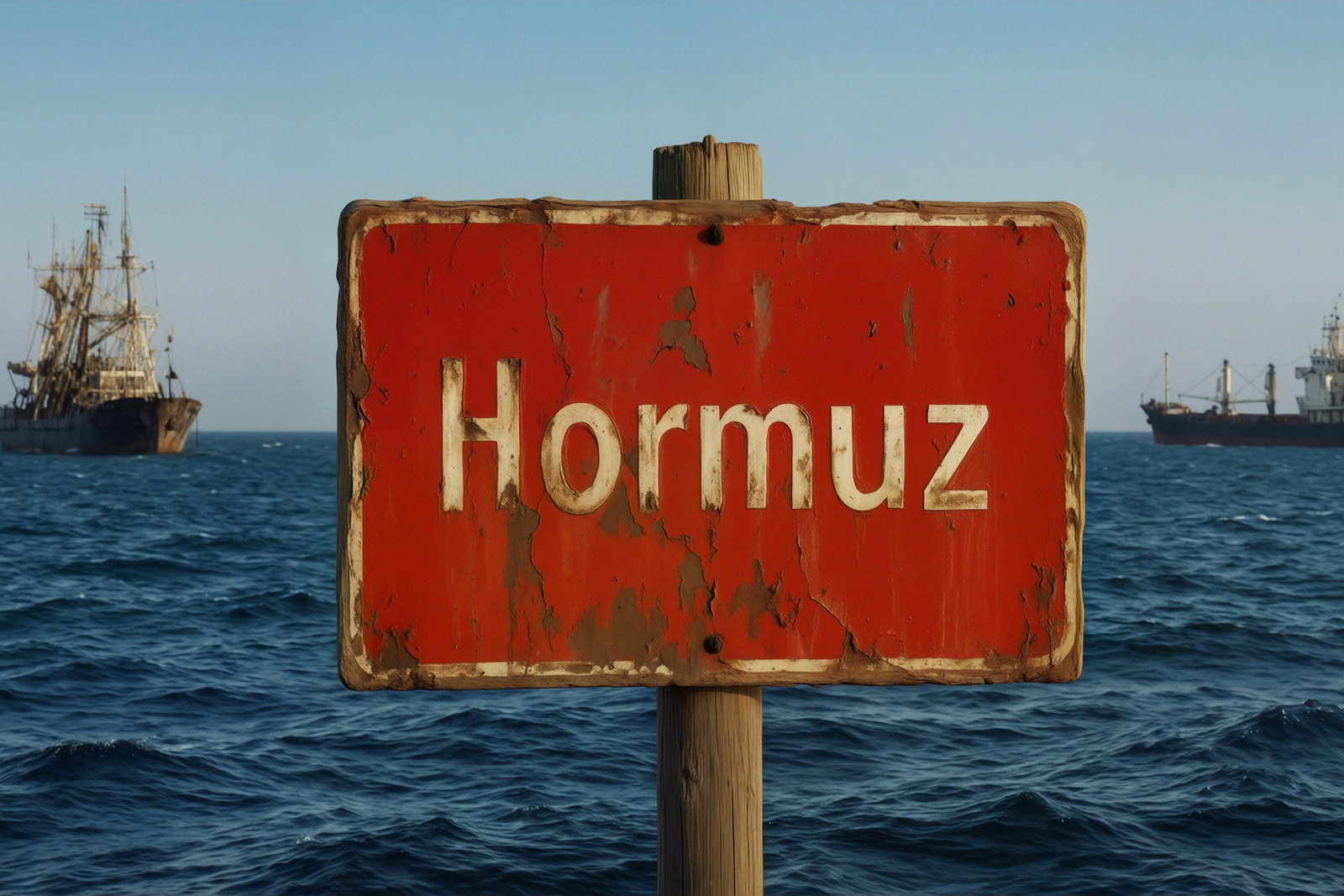
CAIRO: The Strait of Hormuz has once again demonstrated why a narrow waterway can carry consequences far beyond the Middle East. Oil prices rose more than 1% on Friday after Iran said its forces had stopped two vessels attempting to leave the Strait of Hormuz and forced four others to turn back. The claims could not be independently verified, but the reports were enough to revive fears that the world’s most important energy chokepoint could become increasingly difficult for commercial shipping.
Brent crude settled at $90.12 a barrel on Friday, up 1.2%, while U.S. West Texas Intermediate rose 1.3% to $84.67. Brent gained roughly 24% during July, underscoring how quickly geopolitical risk is being translated into an energy-market premium. The significance of Hormuz is difficult to overstate. Roughly one-fifth of global oil shipments normally pass through the strait, which separates Iran from Oman. Even when vessels continue to move, uncertainty over whether they can safely transit can be enough to raise insurance costs, delay cargoes and push traders to price in a potential supply shock.

Friday’s developments were therefore less about the number of ships stopped than about what they signalled: the possibility that maritime access through Hormuz is becoming a political instrument. Shipping traffic remains severely constrained. Data showed two very large crude carriers carrying Gulf oil successfully exiting Hormuz on Friday, alongside two other commodity vessels. Yet the overall flow remains thin, while ships operating with transponders switched off can escape conventional tracking systems.
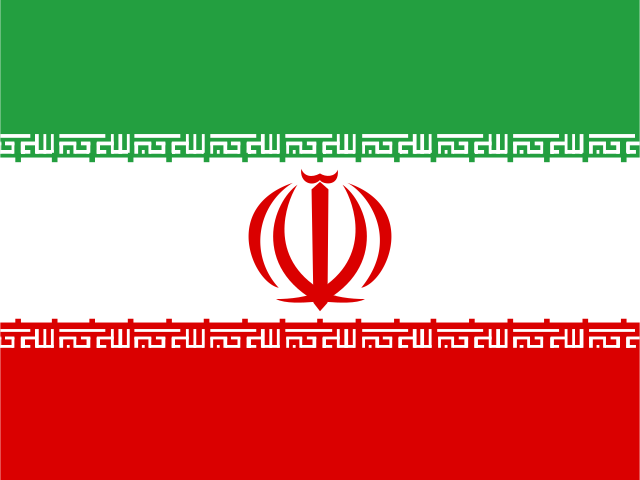
That distinction matters. A maritime route does not need to be completely closed to become economically disruptive. If shipowners, insurers and energy companies cannot reliably predict whether a vessel will be permitted to pass, the commercial cost of using the route rises sharply. Iran has maintained that crossings remain impossible because of what its authorities describe as continued U.S. military aggression in the region. At the same time, some ships have negotiated passage with Tehran, illustrating the unusual situation emerging around the strait: commercial navigation is increasingly dependent on political and security calculations. The result is a form of selective maritime access rather than a conventional blockade, and that may be more difficult for global markets to manage.
The pressure is not confined to a single chokepoint. Iran-aligned Houthi forces have also intensified threats around the Bab el-Mandeb Strait, creating simultaneous risks at both ends of the Red Sea corridor. Saudi Arabia has consequently been redirecting some oil exports northward through the Red Sea toward the Suez Canal and the SUMED pipeline. For Asian buyers, however, alternative routes can mean longer voyages around Africa, increasing transportation costs and extending delivery times.
A drone attack that damaged two vessels at Egypt’s Damietta port has added another layer of uncertainty around the wider Suez energy corridor. Egypt has not identified the attacker, while Iran has denied involvement and accused Israel of possible attempts to destabilise regional peace. The competing accusations underline how quickly maritime incidents can become entangled with the broader geopolitical confrontation.
Saudi Arabia’s response is particularly significant. Riyadh has announced plans for a multinational maritime defence coalition intended to protect international shipping and energy routes in the Red Sea region following attacks attributed to Iran-aligned Houthis. The proposed coalition reflects a growing recognition among Gulf states that energy security can no longer be separated from maritime security.
The initiative could eventually transform the security architecture of the Red Sea. For decades, the global energy system relied on the assumption that strategic waterways would remain open even when regional politics deteriorated. That assumption is becoming increasingly difficult to sustain. The emerging model is different: producers are beginning to invest not only in oil production but also in the ships, routes, insurance arrangements and security partnerships necessary to move that oil.
Yet alongside the military preparations, diplomacy continues. Oman has presented Iran with a Gulf-backed proposal for managing transit through Hormuz, including a system of voluntary fees for vessels using the strait. Iran has publicly rejected elements of the proposal, but Iranian officials have indicated that discussions with Oman are continuing. That leaves open a narrow diplomatic pathway.
The central question is whether Hormuz can be transformed from a battlefield pressure point into a managed maritime corridor before the current disruption becomes structurally embedded in global energy markets. For Washington, the challenge is equally complicated. The United States continues to apply military pressure on Iran while leaving the door open to negotiations. President Donald Trump has simultaneously signalled confidence that an agreement remains possible and frustration with Tehran’s reliability.
The contradictory signals reflect the wider dilemma: military escalation may constrain Iran, but prolonged confrontation also increases the risk of a wider energy crisis. The consequences will not be limited to crude oil. Higher oil prices can feed directly into transportation, electricity, manufacturing and food costs. Refiners face tighter supplies of crude and refined products, while import-dependent economies confront higher bills for energy. Japan, India, South Korea and other major Asian energy consumers are particularly exposed to disruptions affecting Gulf shipping.
The LNG market is also increasingly vulnerable. A cautious return of some energy vessels through Hormuz could provide temporary relief, but it would not eliminate the underlying risk. Energy companies and governments are already reassessing inventories, shipping routes and contingency plans as the disruption threatens to extend beyond a short-term geopolitical shock.
The deeper lesson is that globalisation has created an extraordinary dependence on a handful of maritime arteries: Hormuz, Bab el-Mandeb, the Suez Canal and the Panama Canal. Each is geographically narrow but economically enormous. When one is disrupted, trade does not necessarily stop. Instead, the system becomes slower, more expensive and less predictable. Cargoes are rerouted. Ships travel farther. Insurance premiums rise. Governments intervene. Companies build larger inventories. Consumers ultimately absorb some of the cost.
That is why the current crisis matters beyond the immediate confrontation between Washington and Tehran. It is testing the resilience of the global economic system itself. The question is no longer simply whether Iran can disrupt shipping through Hormuz. It is whether the international community can create enough alternative routes, maritime security arrangements and diplomatic mechanisms to prevent one chokepoint from becoming a global economic vulnerability.
Oil markets are already sending a warning. Brent’s strong monthly rise in July reflects the growing premium investors are attaching to geopolitical risk and uncertainty over the security of global energy flows. If disruptions around Hormuz and the Red Sea persist, the consequences could extend well beyond the next movement in crude prices.
The real danger may lie in what happens if shipping companies begin to treat major waterways as permanently high-risk zones. The architecture of global trade could change. Energy producers may seek alternative export routes. Importers could diversify suppliers. Governments may expand strategic reserves. Maritime coalitions could become permanent features of regional security. Insurance markets may permanently reprice geopolitical risk.
In other words, the world may be entering an era in which energy security, maritime security and national security become inseparable. The Strait of Hormuz has always been strategically important. What is changing is the scale of the consequences attached to its disruption.
A narrow passage between Iran and Oman is once again reminding the world of a fundamental truth of geopolitics: the global economy may be vast, but its vulnerabilities are often remarkably small.
-Hamed Azhari