


NEW DELHI, India: Beneath the formal optimism of diplomatic language, a more candid assessment of India–Latin America and Caribbean (LAC) relations is beginning to take shape.
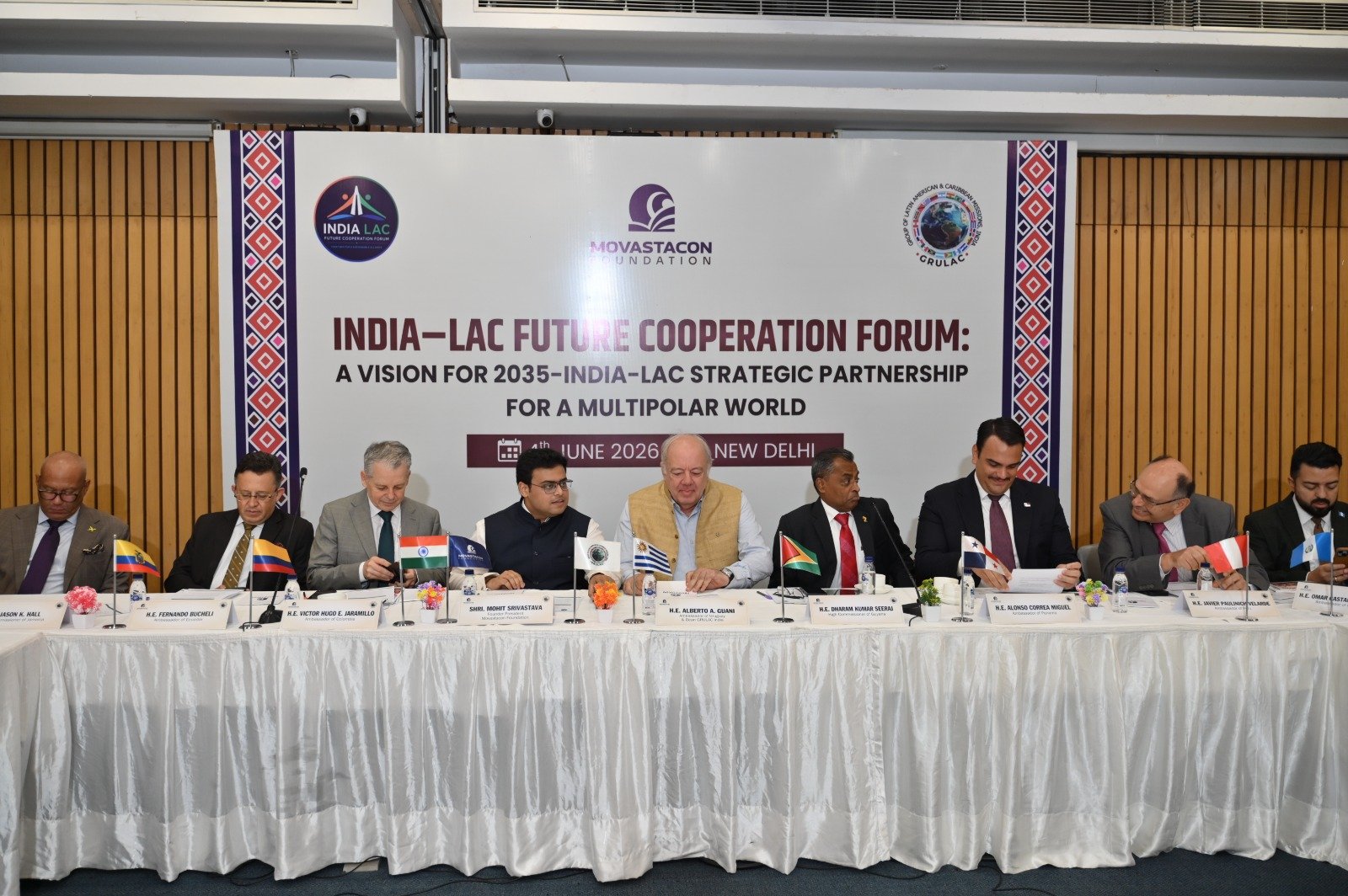
At the India–LAC Future Cooperation Forum: A Vision for 2035, held in the Indian capital, senior diplomats, policymakers, and experts converged to chart the future of a partnership long described as “full of untapped potential.” Yet what emerged from the discussions was a subtle but significant shift from celebrating opportunity to questioning outcomes.
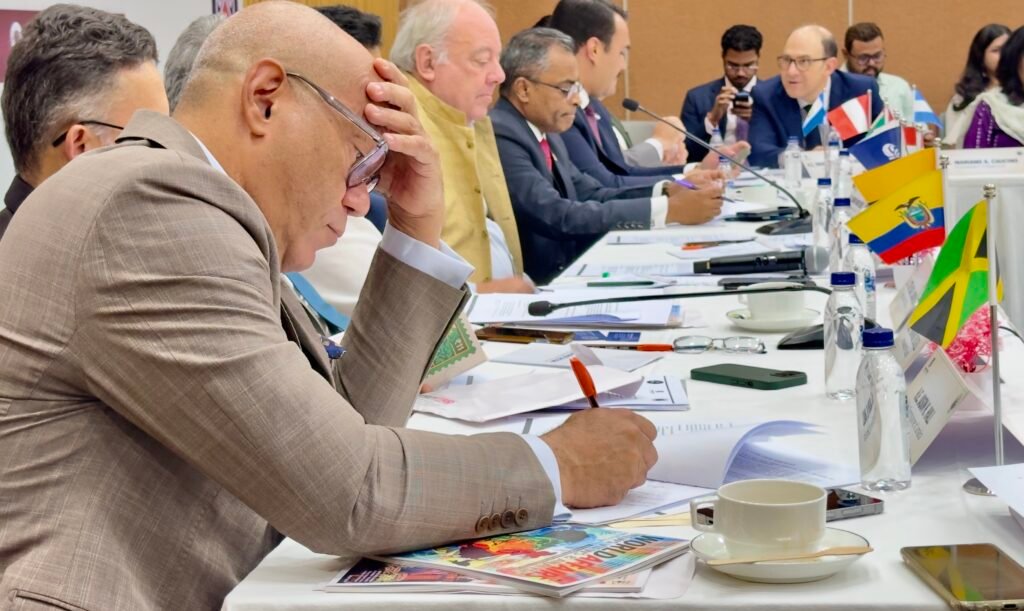
Jamaica’s High Commissioner distilled the mood with a pointed observation: the real test of engagement lies not in intent, but in measurable results. The remark underscored a growing recognition among LAC representatives that while political goodwill between India and the region is strong, its translation into tangible gains remains uneven.
Ambassador Alberto A. Guani of Uruguay, Dean of the GRULAC group in India, highlighted the breadth of opportunity across trade, investment, innovation, and education. However, even as diplomats pointed to complementarities, there was a parallel acknowledgment of persistent structural gaps.
Connectivity emerged as a central concern.
Despite visa liberalisation measures by several Caribbean nations, including Jamaica, travel between India and the region remains indirect and logistically complex, often requiring transit through third countries. Diplomats noted that such barriers not only discourage tourism and cultural exchange but also limit business engagement and trade expansion.
“Connectivity is more than agreements on paper,” one participant remarked during the discussions, reflecting a broader frustration that infrastructure and access have not kept pace with diplomatic intent.
The forum brought together representatives from across Central America, the Caribbean, and South America, who outlined a wide-ranging cooperation agenda. Discussions highlighted opportunities in healthcare and pharmaceuticals, maritime and logistical connectivity, tourism, and digital public infrastructure. Climate resilience and sustainable development also featured prominently, reflecting shared vulnerabilities and priorities.
In parallel, South American representatives emphasised areas such as trade diversification, energy security, critical minerals, agricultural cooperation, and emerging technologies. These sectors, diplomats noted, reflect the natural complementarities between India’s economic trajectory and LAC’s resource base.
Yet the challenge, as several participants acknowledged, lies in operationalising these opportunities.
Trade volumes between India and LAC remain modest relative to their potential. Business-to-business linkages are still underdeveloped, and micro, small, and medium enterprises continue to face barriers in accessing markets, networks, and information across regions.
India’s institutional approach to LAC engagement divided between Central America and the Caribbean on one hand and South America on the other was also seen as a factor limiting strategic coherence. While administratively necessary, such fragmentation can dilute the perception of a unified and sustained regional strategy.
Recent diplomatic outreach by External Affairs Minister Dr. S. Jaishankar to Caribbean nations has signaled renewed momentum in India’s engagement. His emphasis on development partnerships, capacity building, and digital public goods has been positively received across the region, reinforcing India’s positioning as a collaborative partner in the Global South.
However, participants noted that sustained engagement beyond high-level visits and periodic forums will be critical to maintaining credibility and momentum.
The discussions also drew on insights from former diplomats, academics, and industry leaders, who emphasised the need for stronger institutional frameworks, improved logistical integration, and greater private sector participation. Enhancing connectivity, facilitating trade, and enabling more frequent exchanges between businesses, universities, and research institutions were identified as key priorities.
As the Movastacon Foundation prepares a comprehensive outcome report based on the forum’s deliberations, the broader message is clear: the foundations of India–LAC relations are strong, but their future will depend on execution.
In a rapidly shifting global landscape marked by supply chain realignments, energy transitions, and the search for new strategic partners both India and LAC countries are looking to deepen cooperation beyond traditional frameworks.
For now, the relationship stands at an inflection point.
The rhetoric of “untapped potential” has endured for decades. Whether it evolves into a story of delivery will depend on how quickly both sides can address the practical barriers that continue to constrain engagement.
In the words of one diplomat, the partnership no longer needs more vision.
It needs velocity.
– India Desk with Input from Dr M Shahid Siddiqui