


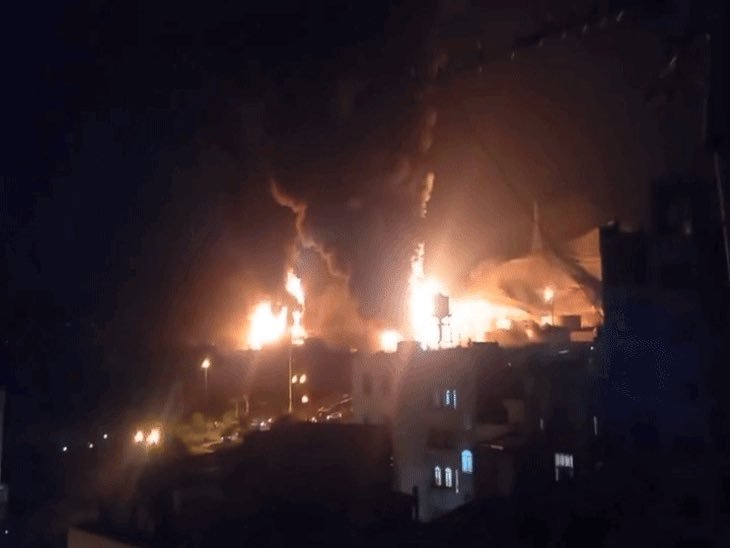
TEHRAN/WASHINGTON: The fragile calm in the Middle East is once again unraveling. What was expected to be a tentative pause in hostilities between the United States and Iran is rapidly slipping into renewed confrontation, raising serious concerns about regional stability and global energy security. The latest exchange of strikes near the Strait of Hormuz underscores just how precarious the situation has become. Kuwait’s announcement that it faced a missile and drone attack adds a new and troubling dimension to the conflict. Although details remain limited and no group has claimed responsibility, the incident highlights how quickly tensions can spill beyond direct combat zones. Kuwait has historically been vulnerable during regional escalations, often finding itself caught in the crossfire between Iran and U.S.-aligned forces. This latest attack suggests that the current crisis is no longer contained and risks drawing in additional regional actors.
At the center of the unfolding tension is the Strait of Hormuz, one of the most strategically vital waterways in the world. Roughly a fifth of global oil and gas supplies once flowed through this narrow passage. Its continued closure or disruption is already contributing to a tightening global energy market, with analysts warning that shortages and price volatility could intensify in the coming weeks. The longer the uncertainty persists, the greater the economic ripple effects will be, extending far beyond the Middle East.
The military exchanges themselves reflect a dangerous cycle of action and retaliation. U.S. Central Command reportedly intercepted multiple Iranian drones near the strait, describing them as imminent threats. In response, American forces targeted a ground control station in Bandar Abbas, a key Iranian coastal hub. Tehran, through its Revolutionary Guard, confirmed the strike and responded with its own counterattack on a U.S.-linked air base. While the exact targets and damage remain unclear, the pattern is familiar: calibrated escalation designed to signal strength without triggering full-scale war.
Yet this strategy carries inherent risks. Each exchange increases the possibility of miscalculation. In a region already saturated with military assets, proxy forces, and overlapping alliances, even a limited strike can quickly spiral into something far more serious. The uncertainty surrounding whether the Kuwait attack is directly linked to these exchanges only adds to the volatility.
Beyond the battlefield, the diplomatic track appears equally fragile. The United States continues to push for Iran to relinquish its stockpile of highly enriched uranium, viewing it as a critical step toward preventing nuclear escalation. Iran, for its part, insists on the lifting of economic sanctions and access to frozen assets as a precondition for any meaningful agreement. These positions remain far apart, and the lack of progress is becoming increasingly evident. The failure to reopen the Strait of Hormuz is perhaps the clearest sign that negotiations are stalled. Reaching an agreement on maritime security was seen as a potential confidence-building measure, yet even that has proven elusive. Without progress on this front, broader diplomatic breakthroughs seem unlikely in the near term. What makes this moment particularly dangerous is the intersection of military tension and economic pressure. Iran’s economy remains deeply strained, limiting its room for compromise while increasing its incentive to assert leverage through regional actions. Meanwhile, the United States faces its own strategic calculations, balancing deterrence with the need to avoid a wider conflict. For regional states, the stakes are equally high. Countries like Kuwait, already feeling the direct impact of the conflict, must navigate an increasingly uncertain security environment. The risk of spillover is real, and the consequences could be severe, both politically and economically.
Ultimately, the current trajectory points toward a prolonged period of instability rather than a swift resolution. The combination of unresolved nuclear tensions, ongoing military exchanges, and disrupted energy flows creates a volatile mix that is difficult to contain. While both Washington and Tehran appear to be avoiding outright war, their actions suggest that neither is willing to step back decisively. The Strait of Hormuz has long been a symbol of global economic interdependence. Today, it is also a reminder of how fragile that interdependence can be. As strikes continue and diplomacy falters, the world is left watching a critical chokepoint edge closer to crisis.
-Don Durfee and Konstantin Toropin