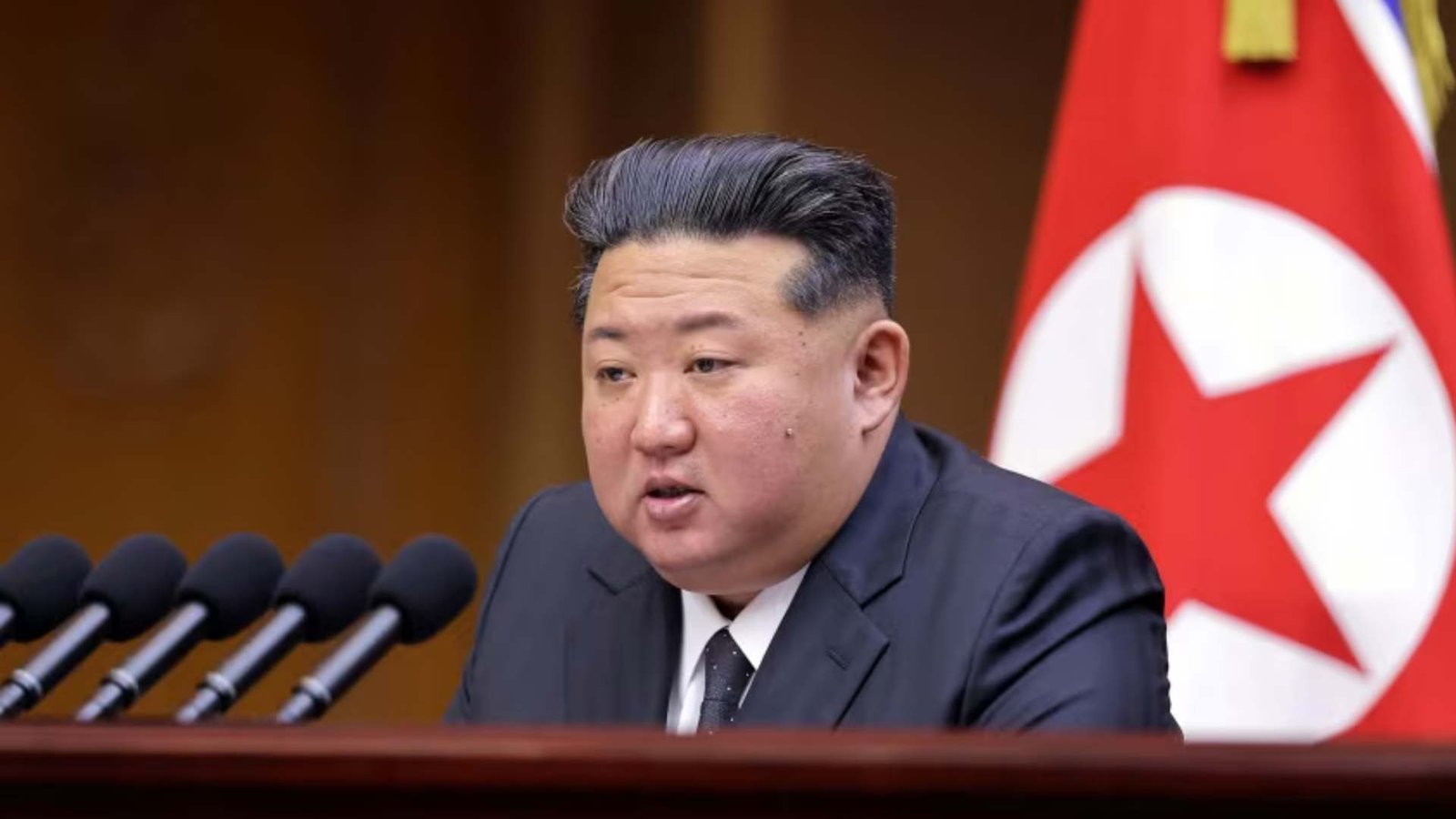
SEOUL: North Korea has launched a sharp attack on NATO following this week’s alliance summit, accusing the United States and its partners of expanding military confrontation while demanding that denuclearisation efforts begin with Washington’s own allies rather than Pyongyang.
In a statement released through the state-run Korean Central News Agency (KCNA), North Korea’s Foreign Ministry said NATO was strengthening military blocs, accelerating the global arms race, and unfairly portraying the country’s nuclear programme as a threat while ignoring what it described as the alliance’s own growing militarisation.
The statement came days after NATO leaders, meeting in Türkiye, announced more than $50 billion in new defence procurement and industrial agreements. The commitments reflect Europe’s continuing push to strengthen its military capabilities as U.S. President Donald Trump presses allies to take greater responsibility for collective defence.
Pyongyang also criticised South Korean President Lee Jae Myung for expressing support for deeper defence cooperation with NATO in advanced military technologies, weapons development, and defence manufacturing.
Calling NATO “an alliance built for war and confrontation,” North Korea argued that the bloc was pursuing geopolitical interests at the expense of peace and stability in both Europe and the Indo-Pacific.
The Foreign Ministry rejected renewed international calls for North Korea to abandon its nuclear weapons, insisting that any meaningful denuclearisation process should instead begin with countries benefiting from the U.S. nuclear umbrella. It specifically pointed to South Korea and Japan, as well as NATO members participating in the alliance’s nuclear-sharing arrangements.
Pyongyang maintained that its nuclear arsenal is a legitimate means of safeguarding national sovereignty and security, adding that it would continue exercising what it called its sovereign right to strengthen its defence capabilities.
The statement follows another announcement by KCNA on Friday that North Korea had approved new measures to expand its nuclear forces “both quantitatively and qualitatively,” in line with leader Kim Jong Un’s ongoing drive to modernise the country’s strategic military capabilities.
The latest exchange highlights the growing divide between North Korea and the Western alliance. As NATO increasingly links security challenges across Europe and the Indo-Pacific, Pyongyang argues that the alliance’s expanding military footprint only reinforces its determination to retain and strengthen its nuclear deterrent.
-Yang Lee