


ADVERTISEMENT
  • About
  • Advertise
  • Privacy & Policy
  • Contact
thewnn.com
ADVERTISEMENT
  • Home
  • Politics
  • Business
  • Climate & Energy
  • WNN Exclusive
  • Others
    • AFRICA
    • EDUCATION
    • Entertainment
    • Environment
    • Europe
    • Finance
    • Health
    • Peace & Conflict
    • Religion & Faith
  • WNN AFRICA
  • en
    • ar
    • en
    • fr
    • fa
E-Magazine
No Result
View All Result
  • Home
  • Politics
  • Business
  • Climate & Energy
  • WNN Exclusive
  • Others
    • AFRICA
    • EDUCATION
    • Entertainment
    • Environment
    • Europe
    • Finance
    • Health
    • Peace & Conflict
    • Religion & Faith
  • WNN AFRICA
  • en
    • ar
    • en
    • fr
    • fa
No Result
View All Result
thewnn.com
No Result
View All Result
ADVERTISEMENT
ADVERTISEMENT
Home Middle East

Trump’s Iran Blockade Marks a Dangerous New Chapter in the Gulf Crisis

Share on FacebookShare on Twitter
ADVERTISEMENT

WASHINGTON: Just weeks after hopes emerged that diplomacy might prevent another prolonged conflict in the Middle East, the Gulf has once again become the world’s most dangerous geopolitical flashpoint.
READ THE FULL E-MAGAZINE | WorldAffairs: For Decision-Makers Who Need More Than Headlines

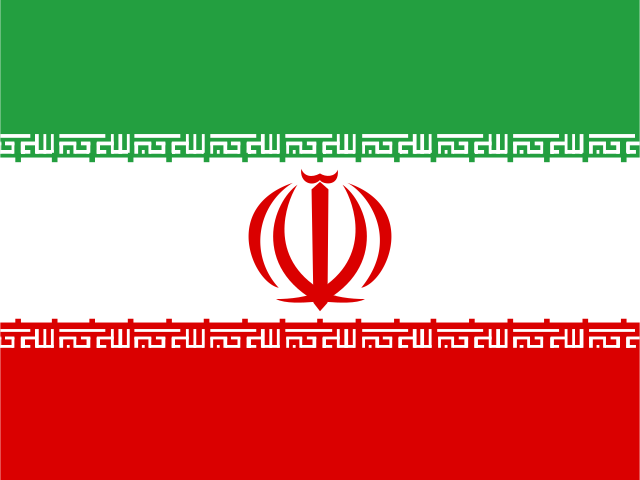
President Donald Trump’s decision to restore a naval blockade on Iranian ports, launch fresh military strikes, and threaten attacks on Iran’s energy infrastructure has dramatically raised the stakes. His message to Tehran was unmistakable: return to negotiations or prepare for a broader military campaign. Iran’s response was equally uncompromising. Reports of drone and missile attacks targeting American positions and Gulf facilities suggest that Tehran has no intention of negotiating under pressure. Instead, it is signaling that any attempt to isolate Iran economically or militarily will come at a cost, not only for Washington but for the wider region.

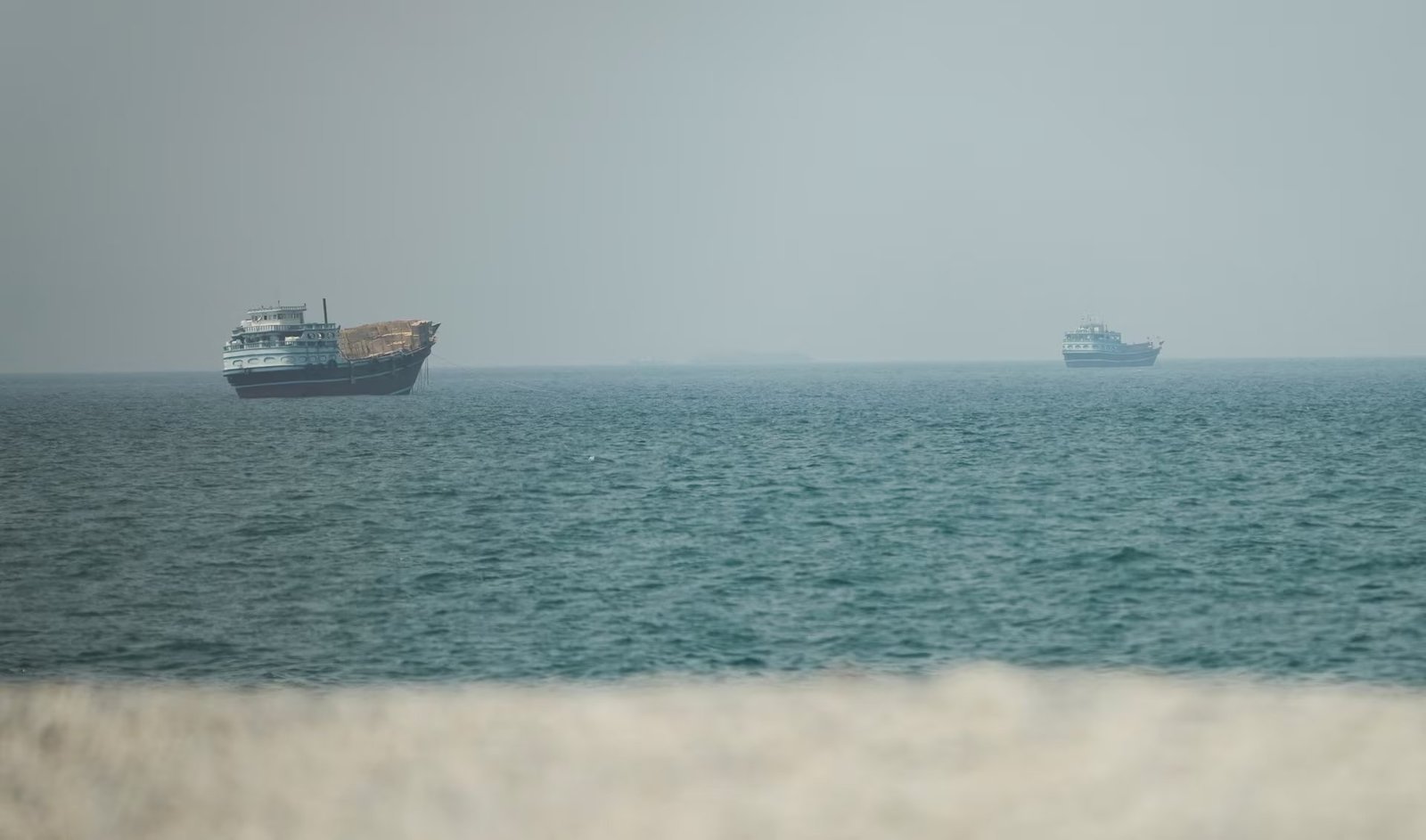
The latest escalation is no longer simply another confrontation between the United States and Iran. It is becoming a defining test of power in one of the world’s most strategically important waterways. At the heart of this crisis lies the Strait of Hormuz. For decades, this narrow maritime corridor has carried nearly one-fifth of global oil and liquefied natural gas exports. Every escalation in the region immediately affects shipping routes, insurance costs, oil prices, and ultimately the daily lives of consumers thousands of miles away.

That reality is already unfolding.

ADVERTISEMENT

Oil prices have climbed sharply as traders fear prolonged instability, while shipping companies face growing uncertainty over the safety of commercial vessels. Even without a complete closure of the Strait, the perception of risk alone is enough to disrupt global markets. Trump appears to be reviving a familiar strategy maximum pressure, but under far more volatile circumstances than during his first presidency. Unlike previous sanctions campaigns, the current approach combines economic isolation with direct military action and explicit threats against critical infrastructure. His warning that power plants and bridges could become future targets represents a significant escalation in both military rhetoric and strategic signaling.

Such statements also invite legal and humanitarian scrutiny. International humanitarian law, including the Geneva Conventions, requires parties to distinguish between military objectives and infrastructure essential for civilian populations. Whether such threats become reality or remain instruments of coercive diplomacy, they inevitably intensify international concern. For Tehran, the political calculation is equally complex.

Accepting negotiations after renewed military pressure could be portrayed domestically as surrender. Refusing to negotiate, however, risks further economic isolation and additional military strikes. Iranian leaders therefore appear determined to demonstrate resilience while avoiding actions that could provoke an uncontrollable regional war.

ADVERTISEMENT

The danger is that neither Washington nor Tehran currently has much political room to compromise. Every drone strike, missile launch, naval interception, or attack on commercial shipping increases the possibility of miscalculation. In a region crowded with American naval forces, Iranian military assets, and the security interests of multiple Gulf states, even a relatively small incident could trigger consequences that neither side originally intended.

Advertisement. Scroll to continue reading.
ADVERTISEMENT

U.S. President #Trump said the United States is considering imposing a 20% transit tariff on cargo passing through the Strait of #Hormuz, arguing that Washington should be compensated for securing one of the world’s most critical maritime chokepoints.

Responding to a reporter’s… pic.twitter.com/pqcv0CeeGf

— Dr. Shahid Siddiqui (@shahidsiddiqui) July 14, 2026

The wider implications extend far beyond the Middle East. Energy-importing nations across Asia remain heavily dependent on uninterrupted Gulf supplies. Europe, already navigating fragile economic conditions, cannot afford another sustained energy shock. China and India, both major importers of Gulf oil, have a direct stake in preserving freedom of navigation through Hormuz. Meanwhile, Russia stands to benefit financially from higher global energy prices, adding another geopolitical dimension to an already complex crisis.

Trump’s latest decision also reflects an evolving American strategy.

His administration appears increasingly willing to use military leverage alongside economic pressure to reshape regional negotiations. At the same time, Washington is seeking deeper economic engagement with Gulf partners through investment rather than the transit fees Trump had earlier proposed for ships using the Strait of Hormuz.

Whether Gulf governments fully embrace that strategy remains uncertain. Most regional states continue trying to balance their security partnerships with the United States while avoiding a direct military confrontation with Iran.

The coming weeks may therefore prove decisive. If renewed negotiations emerge, this latest escalation may ultimately be remembered as high-risk diplomacy backed by military pressure. If talks collapse, however, the Gulf could enter a far more dangerous phase one where attacks on shipping, energy infrastructure, and regional military bases become increasingly routine.

Ultimately, this confrontation is no longer solely about Iran’s nuclear ambitions or America’s regional influence. It is about who controls one of the world’s most critical energy corridors, who defines the rules of maritime security, and whether diplomacy can still prevail before military escalation reshapes the strategic landscape of the Middle East once again.

-Costas Brunnstrom

READ THE FULL E-MAGAZINE | WorldAffairs: Inside the Forces Redefining Power, Markets, and the Global Order

Tags: #BreakingNews#EnergySecurity#ForeignPolicy#Geopolitics#GlobalEconomy#GlobalSecurity#GlobalSouth#Hormuz#Iran#MaritimeSecurity#MiddleEast#OilPrices#StraitOfHormuz#Trump#USIran#WNN#WorldAffairsNewsshahid siddiquiWNN
ADVERTISEMENT
Previous Post

India–New Zealand Reset: A Strategic Partnership for a Changing Indo-Pacific

Stay Connected

  • 23.9k Followers
  • 99 Subscribers
  • Trending
  • Comments
  • Latest
Trump Confirms Maduro Arrest, Signals U.S. Control in Venezuela

Trump Confirms Maduro Arrest, Signals U.S. Control in Venezuela

January 3, 2026
Blueprints from the Past: Rethinking India’s Tourism with Tradition at Its Heart

Blueprints from the Past: Rethinking India’s Tourism with Tradition at Its Heart

August 21, 2025
BRICS at 20 and the Battle for the New World Order

BRICS at 20 and the Battle for the New World Order

May 15, 2026
From Fragility to Foresight: Astana Drives Central Asia’s Ecological Turnaround

From Fragility to Foresight: Astana Drives Central Asia’s Ecological Turnaround

April 22, 2026
WNN Launches to Deliver Real News, Real Time, Worldwide

WNN Launches to Deliver Real News, Real Time, Worldwide

18014
Uncertainty Grows Over Trump–Xi Meeting Amid Escalation

Uncertainty Grows Over Trump–Xi Meeting Amid Escalation

27
England Hold Nerve to Sink India in Lord’s Thriller

England Hold Nerve to Sink India in Lord’s Thriller

25
Sweden Hits Back at Hungary’s Orban Over Crime Jibe

Sweden Hits Back at Hungary’s Orban Over Crime Jibe

18
Trump’s Iran Blockade Marks a Dangerous New Chapter in the Gulf Crisis

Trump’s Iran Blockade Marks a Dangerous New Chapter in the Gulf Crisis

July 15, 2026
India–New Zealand Reset: A Strategic Partnership for a Changing Indo-Pacific

India–New Zealand Reset: A Strategic Partnership for a Changing Indo-Pacific

July 12, 2026
North Korea Blasts NATO Summit, Says Denuclearisation Should Begin with U.S. Allies

North Korea Blasts NATO Summit, Says Denuclearisation Should Begin with U.S. Allies

July 11, 2026
The Quiet Diplomacy of Seeds: India and Afghanistan Reconnect

The Quiet Diplomacy of Seeds: India and Afghanistan Reconnect

July 10, 2026

Recent News

Trump’s Iran Blockade Marks a Dangerous New Chapter in the Gulf Crisis

Trump’s Iran Blockade Marks a Dangerous New Chapter in the Gulf Crisis

July 15, 2026
India–New Zealand Reset: A Strategic Partnership for a Changing Indo-Pacific

India–New Zealand Reset: A Strategic Partnership for a Changing Indo-Pacific

July 12, 2026
North Korea Blasts NATO Summit, Says Denuclearisation Should Begin with U.S. Allies

North Korea Blasts NATO Summit, Says Denuclearisation Should Begin with U.S. Allies

July 11, 2026
The Quiet Diplomacy of Seeds: India and Afghanistan Reconnect

The Quiet Diplomacy of Seeds: India and Afghanistan Reconnect

July 10, 2026
ADVERTISEMENT
thewnn.com

WNN- (World Affairs News Network) is a GLOBAL news platform delivering fast, accurate, and deeply contextual reporting from every corner of the world. Built on the pillars of clarity, credibility, and context in collaboration with Wakanda Network (Africa) and Sadbhawna Today - India's National Daily Hindi Newspaper, WNN brings you real news as it unfolds, unfiltered, uncompromised, and globally relevant.

Follow Us

Email ID: editor@thewnn.com

Tel. No.: +1 (929) 607-9858

Subscribe on YouTube

Join Us on Facebook

WNN’s Hindi Partner

  • About
  • Advertise
  • Privacy & Policy
  • Contact

© 2025 thewnn.

Welcome Back!

Login to your account below

Forgotten Password?

Retrieve your password

Please enter your username or email address to reset your password.

Log In

Add New Playlist

No Result
View All Result
  • Home
  • Politics
  • Business
  • Climate & Energy
  • WNN Exclusive
  • Others
    • Africa
    • Education
    • Entertainment
    • Environment
    • Europe
    • Finance
    • Health
    • Peace & Conflict
    • Religion & Faith
  • WNN AFRCIA
  • E-MAGAZINE

© 2025 thewnn.