


ADVERTISEMENT
  • About
  • Advertise
  • Privacy & Policy
  • Contact
thewnn.com
ADVERTISEMENT
  • Home
  • Politics
  • Business
  • Climate & Energy
  • WNN Exclusive
  • Others
    • AFRICA
    • EDUCATION
    • Entertainment
    • Environment
    • Europe
    • Finance
    • Health
    • Peace & Conflict
    • Religion & Faith
  • WNN AFRICA
  • en
    • ar
    • en
    • fr
    • fa
E-Magazine
No Result
View All Result
  • Home
  • Politics
  • Business
  • Climate & Energy
  • WNN Exclusive
  • Others
    • AFRICA
    • EDUCATION
    • Entertainment
    • Environment
    • Europe
    • Finance
    • Health
    • Peace & Conflict
    • Religion & Faith
  • WNN AFRICA
  • en
    • ar
    • en
    • fr
    • fa
No Result
View All Result
thewnn.com
No Result
View All Result
ADVERTISEMENT
ADVERTISEMENT
Home JUSTIN News

Wangchuk Case Puts India’s Democracy on Trial

Protest at Jantar Mantar, New Delhi in India. Photo by SL Shanth Kumar

Protest at Jantar Mantar, New Delhi in India. Photo by SL Shanth Kumar

Share on FacebookShare on Twitter
ADVERTISEMENT

NEW DELHI: The Delhi High Court’s refusal to order the immediate discharge of activist Sonam Wangchuk from Safdarjung Hospital has transformed what began as a hunger strike into one of India’s most closely watched constitutional and political confrontations.

The court ruled that authorities acted within their powers by transferring Wangchuk to the government-run hospital after his health deteriorated during his indefinite fast. It found that the decision was neither arbitrary nor a violation of his bodily autonomy, noting that doctors had administered only oral fluids and nutritional supplements with his consent. A fresh status report has been sought before the next hearing later this week. 

ADVERTISEMENT

Legally, the ruling reflects a familiar constitutional principle: the state has an obligation to preserve life when an individual’s health reaches a critical stage. Yet the case also exposes the delicate balance between that duty and the right of citizens to engage in peaceful civil disobedience.

Hunger strikes have long occupied a unique place in India’s democratic tradition. Their moral force comes precisely from the protester’s willingness to endure physical suffering in pursuit of political or social change. Government intervention, however well-intentioned, inevitably raises questions about where public health responsibilities end and individual liberty begins.

ADVERTISEMENT

The controversy has intensified because Wangchuk’s family insists he should be allowed to receive treatment at a private hospital of their choice. His wife, Gitanjali Angmo, argued before the court that he was effectively being held against his wishes. The government rejected those claims, maintaining that his transfer was purely medical and that family members have unrestricted access to him. 
READ THE FULL E-MAGAZINE | WorldAffairs: For Decision-Makers Who Need More Than Headlines

Outside the courtroom, the movement has only gathered momentum.

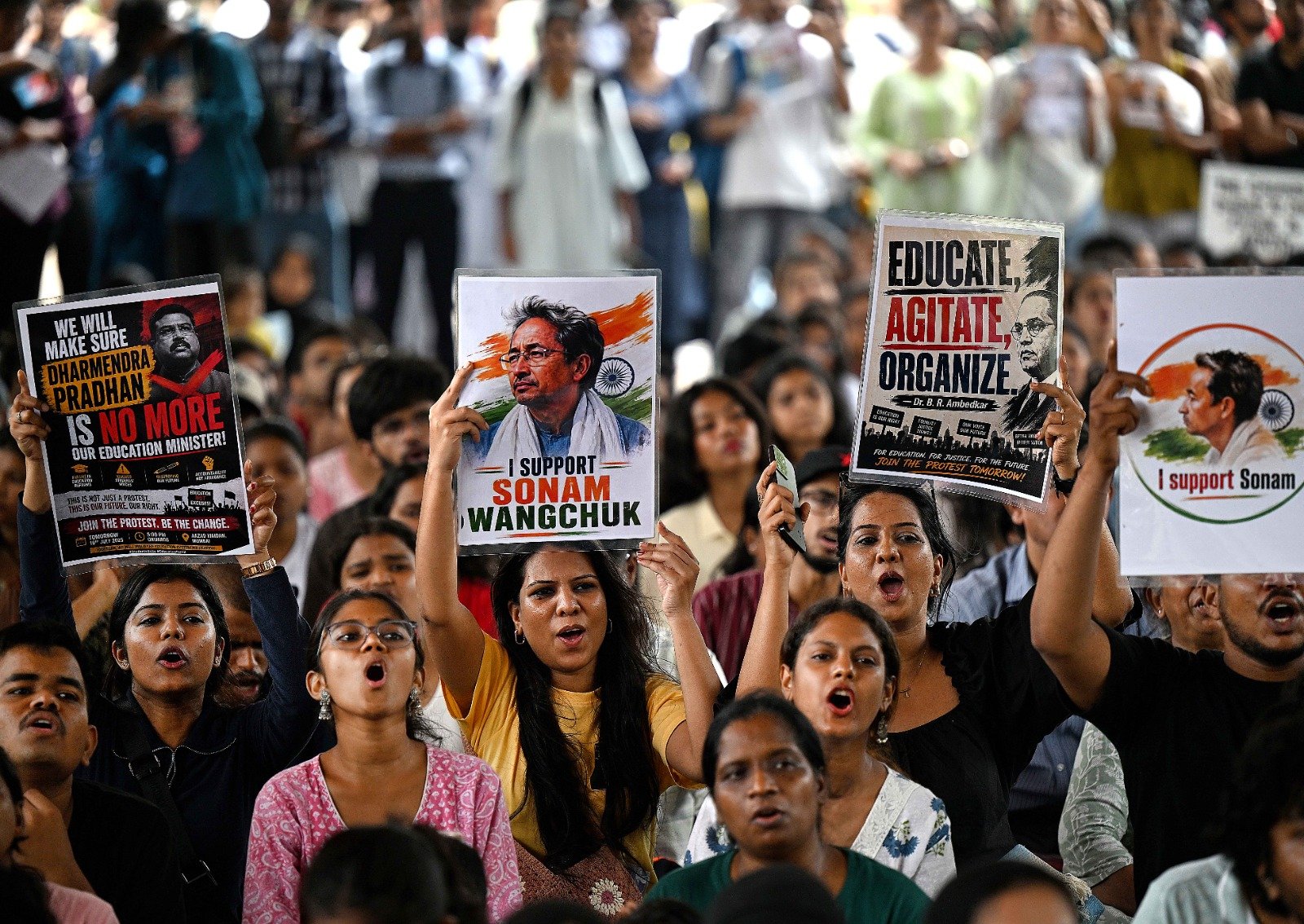
Despite Wangchuk’s removal from the protest site, Jantar Mantar remained packed with students, youth groups, veterans and civil society supporters on Sunday, many arriving from across India to continue the agitation. Organisers say the protest has evolved beyond one individual and now represents broader demands for accountability over examination irregularities and reforms to India’s education system. Protesters have camped overnight, insisting that Wangchuk’s hospitalization will not weaken the movement. 

Leadership of the fast has also shifted. Cockroach Janta Party (CJP) founder Abhijeet Dipke has continued the indefinite hunger strike at Jantar Mantar, while supporters accuse authorities of attempting to suppress a peaceful democratic movement. 

ADVERTISEMENT

Meanwhile, Wangchuk himself has issued a message from Safdarjung Hospital, describing his situation as “illegal detention” and urging supporters to continue the campaign peacefully. In his appeal, he called for “freedom from fear” and “freedom from injustice,” while reaffirming support for the movement’s next phase. 

That next phase is expected on Monday, when the CJP and allied organisations plan their proposed “Chalo Sansad” (March to Parliament) to coincide with the opening of Parliament’s new session. Thousands of students and supporters are expected to march from Jantar Mantar towards Parliament, demanding education reforms, accountability over alleged examination paper leaks, and the resignation of Union Education Minister Dharmendra Pradhan. Organisers insist the march will proceed peacefully despite heightened security and police restrictions. 

Whether the march changes government policy remains uncertain. What is already clear is that the controversy has grown well beyond the question of one activist’s medical treatment.

The High Court now finds itself balancing two equally important constitutional principles: the state’s duty to protect life and the citizen’s right to protest peacefully. Neither principle can be ignored without consequences for India’s democratic institutions.

Advertisement. Scroll to continue reading.

The coming days may therefore determine not only Wangchuk’s immediate future but also how India defines the relationship between dissent, public order and constitutional freedom in an increasingly polarized political environment.

– Christiane Scott with Dr. M Shahid Siddiqui

READ THE FULL E-MAGAZINE | WorldAffairs: A Complete, Unfiltered Lens on Geopolitics, the World Economy, and Global Policy

Tags: #ChaloSansad#CivilLiberties#DelhiHighCourt#Democracy#EducationReforms#Geopolitics#GlobalSouth#India#JantarMantar#Parliament#Politics#RightToProtest#Shahid#ShahidSiddiqui#SonamWangchuk#WNN#WorldAffairsNewsshahid siddiquiWNNWorldAffairs
ADVERTISEMENT
Previous Post

U.S.–Iran Infrastructure War Threatens Gulf Oil and Global Stability

Next Post

Peru Quake Kills At Least 5 as Twin Tremors Rock Junín

Next Post
Peru Quake Kills At Least 5 as Twin Tremors Rock Junín

Peru Quake Kills At Least 5 as Twin Tremors Rock Junín

Spain Lift FIFA World Cup After Late Winner

Spain Lift FIFA World Cup After Late Winner

Stay Connected

  • 23.9k Followers
  • 99 Subscribers
  • Trending
  • Comments
  • Latest
Trump Confirms Maduro Arrest, Signals U.S. Control in Venezuela

Trump Confirms Maduro Arrest, Signals U.S. Control in Venezuela

January 3, 2026
Blueprints from the Past: Rethinking India’s Tourism with Tradition at Its Heart

Blueprints from the Past: Rethinking India’s Tourism with Tradition at Its Heart

August 21, 2025
BRICS at 20 and the Battle for the New World Order

BRICS at 20 and the Battle for the New World Order

May 15, 2026
Climate Contagion: Will It Take Another Pandemic to Act?

Climate Contagion: Will It Take Another Pandemic to Act?

June 9, 2026
WNN Launches to Deliver Real News, Real Time, Worldwide

WNN Launches to Deliver Real News, Real Time, Worldwide

18788
England Hold Nerve to Sink India in Lord’s Thriller

England Hold Nerve to Sink India in Lord’s Thriller

35
Uncertainty Grows Over Trump–Xi Meeting Amid Escalation

Uncertainty Grows Over Trump–Xi Meeting Amid Escalation

36
Sweden Hits Back at Hungary’s Orban Over Crime Jibe

Sweden Hits Back at Hungary’s Orban Over Crime Jibe

27
Peru Quake Kills At Least 5 as Twin Tremors Rock Junín

Peru Quake Kills At Least 5 as Twin Tremors Rock Junín

July 20, 2026
Wangchuk Case Puts India’s Democracy on Trial

Wangchuk Case Puts India’s Democracy on Trial

July 19, 2026
U.S.–Iran Infrastructure War Threatens Gulf Oil and Global Stability

U.S.–Iran Infrastructure War Threatens Gulf Oil and Global Stability

July 18, 2026
Trump’s Iran Blockade Marks a Dangerous New Chapter in the Gulf Crisis

Trump’s Iran Blockade Marks a Dangerous New Chapter in the Gulf Crisis

July 15, 2026

Recent News

Peru Quake Kills At Least 5 as Twin Tremors Rock Junín

Peru Quake Kills At Least 5 as Twin Tremors Rock Junín

July 20, 2026
Wangchuk Case Puts India’s Democracy on Trial

Wangchuk Case Puts India’s Democracy on Trial

July 19, 2026
U.S.–Iran Infrastructure War Threatens Gulf Oil and Global Stability

U.S.–Iran Infrastructure War Threatens Gulf Oil and Global Stability

July 18, 2026
Trump’s Iran Blockade Marks a Dangerous New Chapter in the Gulf Crisis

Trump’s Iran Blockade Marks a Dangerous New Chapter in the Gulf Crisis

July 15, 2026
ADVERTISEMENT
thewnn.com

WNN- (World Affairs News Network) is a GLOBAL news platform delivering fast, accurate, and deeply contextual reporting from every corner of the world. Built on the pillars of clarity, credibility, and context in collaboration with Wakanda Network (Africa) and Sadbhawna Today - India's National Daily Hindi Newspaper, WNN brings you real news as it unfolds, unfiltered, uncompromised, and globally relevant.

Follow Us

Email ID: editor@thewnn.com

Tel. No.: +1 (929) 607-9858

Subscribe on YouTube

Join Us on Facebook

WNN’s Hindi Partner

  • About
  • Advertise
  • Privacy & Policy
  • Contact

© 2025 thewnn.

Welcome Back!

Login to your account below

Forgotten Password?

Retrieve your password

Please enter your username or email address to reset your password.

Log In

Add New Playlist

No Result
View All Result
  • Home
  • Politics
  • Business
  • Climate & Energy
  • WNN Exclusive
  • Others
    • Africa
    • Education
    • Entertainment
    • Environment
    • Europe
    • Finance
    • Health
    • Peace & Conflict
    • Religion & Faith
  • WNN AFRCIA
  • E-MAGAZINE

© 2025 thewnn.