



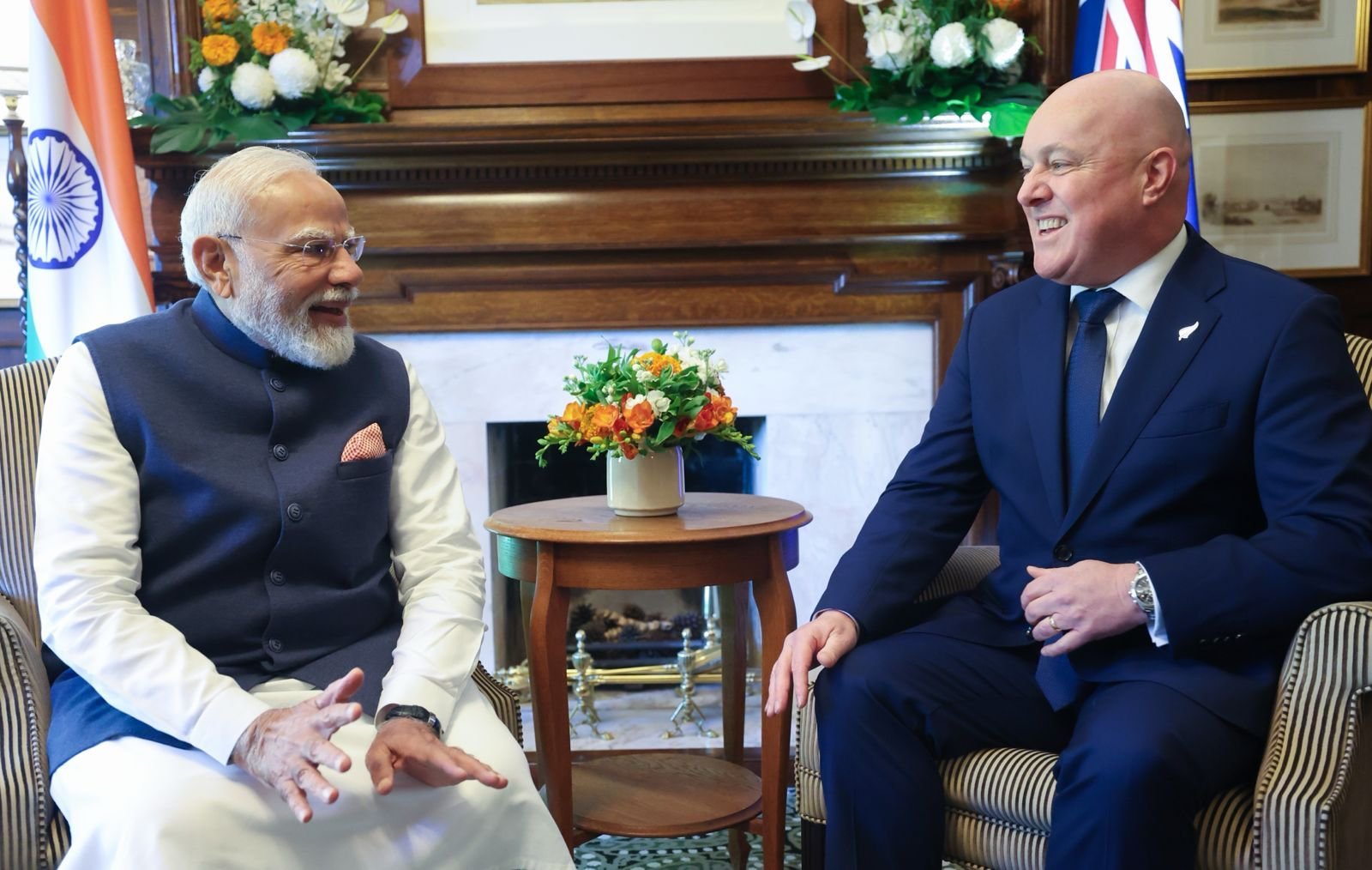
WELLINGTON: Diplomacy is often shaped by geography, but the strongest partnerships are built on shared interests and common challenges. The decision by India and New Zealand to elevate their relationship to a strategic partnership reflects a deeper transformation taking place across the Indo-Pacific, where countries are increasingly looking beyond traditional alliances to build flexible and trusted partnerships.
The announcement during Indian Prime Minister Narendra Modi’s visit to Auckland marked a significant moment in bilateral relations. After decades of engagement, India and New Zealand are moving toward a broader partnership that combines economic cooperation, maritime security, defence dialogue, technology collaboration and stronger people-to-people connections.
The timing of this diplomatic upgrade is particularly important. The Indo-Pacific has become the centre of global strategic competition, with growing tensions over maritime security, supply chains, emerging technologies and regional influence. In this environment, both India and New Zealand recognise that stability will depend on cooperation among countries that share democratic values and a commitment to an open and rules-based regional order.
For India, the partnership with New Zealand represents another step in its wider Indo-Pacific strategy. Over the past decade, New Delhi has expanded engagement with countries across the region, including Australia, Japan, Southeast Asian nations and Pacific Island countries. India’s approach has focused on building multiple partnerships rather than relying on a single security framework. New Zealand occupies a unique position in this strategy. Although geographically distant from India, it plays an important role in the South Pacific and remains a respected voice on regional issues. Its location, diplomatic influence and commitment to maritime stability make it a valuable partner as the Indo-Pacific becomes increasingly important to global security.
The growing focus on defence and maritime cooperation reflects shared concerns about regional stability. India and New Zealand have agreed to strengthen collaboration in areas such as maritime safety, security dialogue and strategic coordination. While New Zealand has historically followed a more cautious defence policy, changing geopolitical realities are encouraging closer engagement with countries facing similar regional challenges.
Beyond security, economics will remain a central pillar of the relationship. Both nations see significant potential in expanding trade, investment and technological cooperation. Areas such as agriculture, renewable energy, education, digital innovation and advanced technologies offer opportunities for deeper collaboration.
However, the relationship also faces domestic challenges, particularly around migration. The Indian community in New Zealand has grown significantly, with around 292,000 people identifying as Indian in the 2023 census. The community has made important contributions across business, healthcare, education and professional sectors, strengthening the social connection between the two countries.
At the same time, migration has become a sensitive issue in New Zealand’s domestic political debate. Concerns around housing pressures, employment competition and immigration management have intensified discussions about migration policies. Reports of racial discrimination faced by some members of the Indian community have also highlighted the importance of ensuring that social integration keeps pace with demographic change. Managing these challenges will require careful policymaking. Migration has historically been one of the strongest foundations of India’s global relationships, creating networks that strengthen trade, cultural understanding and long-term cooperation. A balanced approach that supports economic needs while protecting social cohesion will be essential.
For New Zealand, closer ties with India provide an opportunity to diversify its international partnerships. Traditionally connected closely with Australia, the United States and other Western partners, Wellington increasingly recognises the importance of engaging with emerging economic powers. India’s growing market, technological capabilities and diplomatic influence make it a significant partner for the future.
For India, New Zealand represents more than a bilateral relationship. It reflects a broader effort to strengthen partnerships with countries that can contribute to a stable and inclusive Indo-Pacific. As global power becomes more distributed, relationships between middle powers and regional democracies are becoming increasingly important. The India–New Zealand strategic partnership therefore carries significance beyond trade figures or diplomatic agreements. It represents a wider shift in global politics where countries are building networks of cooperation based on trust, resilience and shared interests. The success of this partnership will depend on how effectively both governments translate commitments into practical outcomes. Stronger defence cooperation, expanded trade, increased educational links, technology partnerships and greater engagement with the diaspora will determine whether this moment becomes a lasting milestone.
In a world defined by uncertainty and strategic competition, India and New Zealand are choosing collaboration over distance. Their partnership reflects the changing reality of the Indo-Pacific, where geography matters, but shared vision matters even more.
-Sarah Craymer