

ADVERTISEMENT
  • About
  • Advertise
  • Privacy & Policy
  • Contact
thewnn.com
ADVERTISEMENT
  • Home
  • Politics
  • Business
  • Climate & Energy
  • WNN Exclusive
  • Others
    • AFRICA
    • EDUCATION
    • Entertainment
    • Environment
    • Europe
    • Finance
    • Health
    • Peace & Conflict
    • Religion & Faith
  • WNN AFRICA
  • en
    • ar
    • en
    • fr
    • fa
E-Magazine
No Result
View All Result
  • Home
  • Politics
  • Business
  • Climate & Energy
  • WNN Exclusive
  • Others
    • AFRICA
    • EDUCATION
    • Entertainment
    • Environment
    • Europe
    • Finance
    • Health
    • Peace & Conflict
    • Religion & Faith
  • WNN AFRICA
  • en
    • ar
    • en
    • fr
    • fa
No Result
View All Result
thewnn.com
No Result
View All Result
ADVERTISEMENT
ADVERTISEMENT
Home Business

South Korea’s Oil Lifeline Through Hormuz Exposes Asia’s Deepening Energy Risks

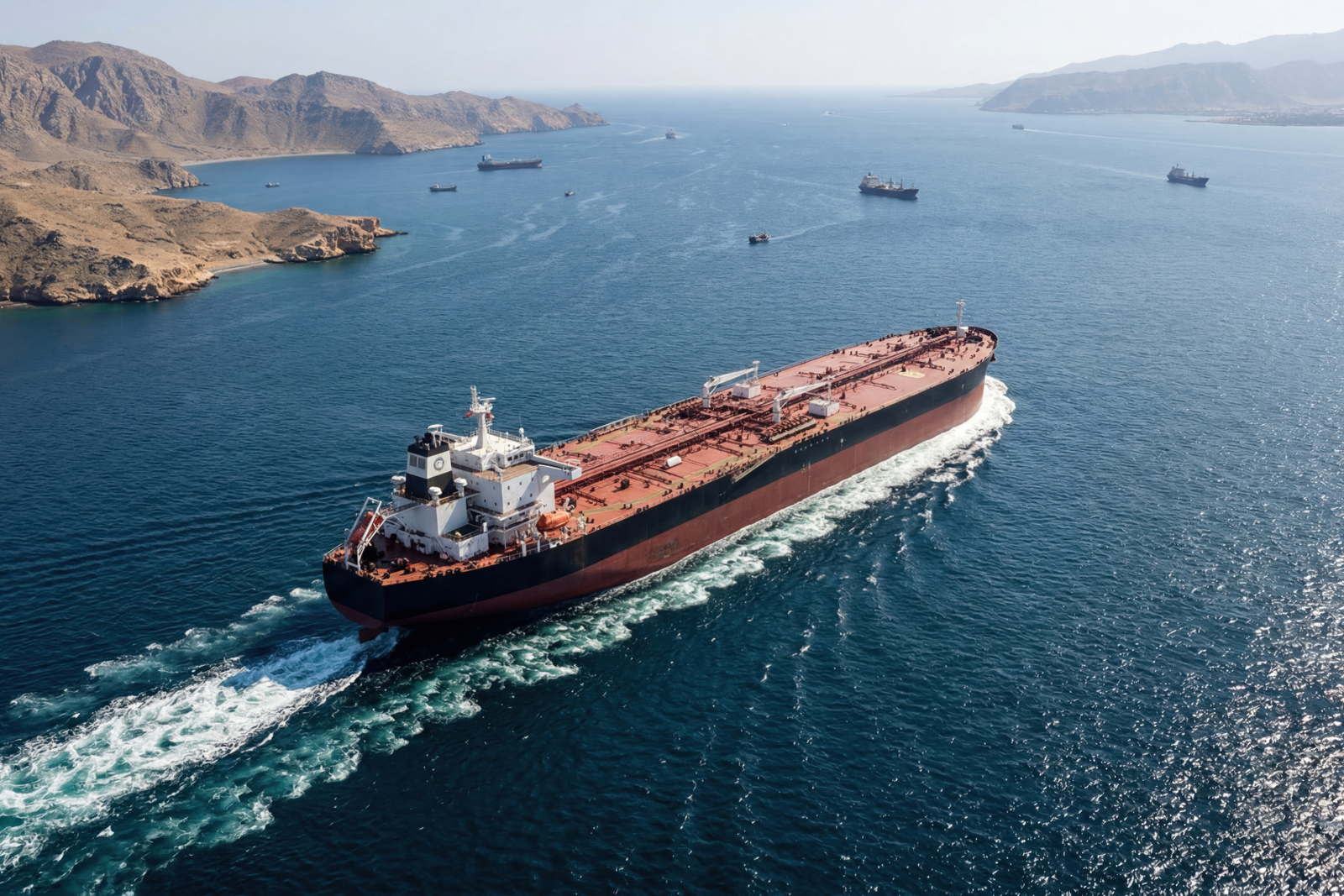
Crude tanker docks in South Korea the first to reach via Hormuz since the blockade began .

Crude tanker docks in South Korea the first to reach via Hormuz since the blockade began .

Share on FacebookShare on Twitter
ADVERTISEMENT

SEOSAN:  A Malta-flagged oil tanker carrying nearly one million barrels of crude oil arrived off the western coast of South Korea after successfully passing through the strategically sensitive Strait of Hormuz in mid-April, according to refinery officials and reports monitored by WorldAffairs.

The shipment arrives at a critical moment for global energy markets as rising tensions involving Iran continue to raise fears over the stability of one of the world’s most important maritime oil corridors. The tanker is expected to unload its cargo at facilities operated by HD Hyundai Oilbank, one of South Korea’s largest refiners, which has the capacity to process nearly 690,000 barrels of crude oil per day into petroleum products including gasoline, diesel, and naphtha.

While operationally routine, the arrival of the shipment underscores a much larger geopolitical reality: Asia’s industrial economies remain deeply dependent on secure maritime energy flows through increasingly unstable waters. South Korea imports the majority of its crude oil from the Middle East, with more than 60 percent of its crude shipments and nearly half of its naphtha imports passing through the Strait of Hormuz. The latest cargo alone reportedly accounts for nearly 35 to 50 percent of the country’s daily crude oil consumption.

That dependence has become a growing source of concern in Seoul as prolonged instability across the Gulf region threatens global supply chains and pushes energy prices higher. The Strait of Hormuz remains the world’s most strategically vital oil chokepoint, connecting Gulf energy producers to Asian economies including South Korea, Japan, China, and India. Nearly one-fifth of globally traded petroleum moves through the narrow maritime corridor, making any disruption immediately consequential for the world economy. Recent tensions involving Iran, alongside wider instability in the Red Sea and Western Indian Ocean, have amplified fears of supply disruptions, rising freight costs, and energy inflation across Asia. For South Korea’s export-driven economy, the stakes are particularly high.

ADVERTISEMENT

The country’s industrial backbone,  including petrochemicals, heavy manufacturing, shipping, semiconductors, and plastics production,  relies heavily on uninterrupted access to imported energy and feedstock supplies. Naphtha, a critical raw material for petrochemical production, remains central to South Korea’s manufacturing ecosystem.

ADVERTISEMENT

As geopolitical uncertainty intensified, Seoul reportedly introduced emergency stabilization measures rarely seen in decades. Authorities imposed temporary price caps on gasoline and petroleum products to contain domestic inflation while instructing refiners to prioritize local supply needs over certain export commitments. South Korean officials have also accelerated efforts to diversify crude procurement and shipping arrangements in an attempt to reduce long-term vulnerability to Gulf disruptions. However, replacing Middle Eastern energy flows remains difficult due to existing infrastructure, pricing structures, and shipping economics.

The crisis highlights a broader transformation underway in global geopolitics.

Energy security is increasingly tied to maritime security. The wars and tensions unfolding across West Asia, the Red Sea, and the wider Indo-Pacific have exposed how fragile the global trading system remains despite decades of globalization. For Asian economies, the challenge is no longer simply securing energy resources,  it is securing the sea lanes that transport them. Strategic waterways such as the Strait of Hormuz, the Bab el-Mandeb Strait, and the Suez Canal are rapidly emerging as central geopolitical pressure points capable of influencing inflation, industrial output, and economic growth worldwide. The safe arrival of the tanker in South Korea therefore carries significance far beyond a single energy shipment. It reflects how deeply the future stability of Asian economies remains connected to the security of contested maritime corridors in the Middle East and how any prolonged escalation involving Iran could trigger far-reaching consequences for global trade, shipping, and energy markets.

Advertisement. Scroll to continue reading.
ADVERTISEMENT

-Hyung-jin Tong

READ THE FULL E-MAGAZINE | WorldAffairs: A Complete, Unfiltered Lens on Geopolitics, the World Economy, and Global Policy

Tags: #AsiaEconomy#EnergyCrisis#Geopolitics#GlobalSouth#GlobalTrade#Iran#MiddleEast#OilPrices#ShippingCrisis#SouthKorea#StraitOfHormuz#WNNNewsUSAWhite HouseWNN
ADVERTISEMENT
Previous Post

IAFS 2026 and the Rise of India–Africa Strategic Convergence

Next Post

India’s Caribbean Strategy Reshapes Global South Politics  

Next Post
India’s Caribbean Strategy Reshapes Global South Politics  

India’s Caribbean Strategy Reshapes Global South Politics  

India’s Bid to Shape the New Global Order

India’s Bid to Shape the New Global Order

Stay Connected

  • 23.9k Followers
  • 99 Subscribers
  • Trending
  • Comments
  • Latest
Trump Confirms Maduro Arrest, Signals U.S. Control in Venezuela

Trump Confirms Maduro Arrest, Signals U.S. Control in Venezuela

January 3, 2026
Blueprints from the Past: Rethinking India’s Tourism with Tradition at Its Heart

Blueprints from the Past: Rethinking India’s Tourism with Tradition at Its Heart

August 21, 2025
From Fragility to Foresight: Astana Drives Central Asia’s Ecological Turnaround

From Fragility to Foresight: Astana Drives Central Asia’s Ecological Turnaround

April 22, 2026
Growth Without Alignment: Sachs’ Blueprint for India’s Rise to 2047

Growth Without Alignment: Sachs’ Blueprint for India’s Rise to 2047

April 30, 2026
WNN Launches to Deliver Real News, Real Time, Worldwide

WNN Launches to Deliver Real News, Real Time, Worldwide

3632
Putin Lambasts Trade Sanctions on Eve of Visit to China

Putin Lambasts Trade Sanctions on Eve of Visit to China

6
Mauritius PM Ramgoolam’s India Visit: Civilizational Roots and Strategic Horizons in the Indian Ocean

Mauritius PM Ramgoolam’s India Visit: Civilizational Roots and Strategic Horizons in the Indian Ocean

3

Nintendo Switch UI gets new close-up in deleted tweet

2
India’s Bid to Shape the New Global Order

India’s Bid to Shape the New Global Order

May 12, 2026
India’s Caribbean Strategy Reshapes Global South Politics  

India’s Caribbean Strategy Reshapes Global South Politics  

May 11, 2026
South Korea’s Oil Lifeline Through Hormuz Exposes Asia’s Deepening Energy Risks

South Korea’s Oil Lifeline Through Hormuz Exposes Asia’s Deepening Energy Risks

May 10, 2026
IAFS 2026 and the Rise of India–Africa Strategic Convergence

IAFS 2026 and the Rise of India–Africa Strategic Convergence

May 10, 2026

Recent News

India’s Bid to Shape the New Global Order

India’s Bid to Shape the New Global Order

May 12, 2026
India’s Caribbean Strategy Reshapes Global South Politics  

India’s Caribbean Strategy Reshapes Global South Politics  

May 11, 2026
South Korea’s Oil Lifeline Through Hormuz Exposes Asia’s Deepening Energy Risks

South Korea’s Oil Lifeline Through Hormuz Exposes Asia’s Deepening Energy Risks

May 10, 2026
IAFS 2026 and the Rise of India–Africa Strategic Convergence

IAFS 2026 and the Rise of India–Africa Strategic Convergence

May 10, 2026
ADVERTISEMENT
thewnn.com

WNN- (World Affairs News Network) is a GLOBAL news platform delivering fast, accurate, and deeply contextual reporting from every corner of the world. Built on the pillars of clarity, credibility, and context in collaboration with Wakanda Network (Africa) and Sadbhawna Today - India's National Daily Hindi Newspaper, WNN brings you real news as it unfolds, unfiltered, uncompromised, and globally relevant.

Follow Us

Email ID: editor@thewnn.com

Tel. No.: +1 (929) 607-9858

Subscribe on YouTube

Join Us on Facebook

WNN’s Hindi Partner

  • About
  • Advertise
  • Privacy & Policy
  • Contact

© 2025 thewnn.

Welcome Back!

Login to your account below

Forgotten Password?

Retrieve your password

Please enter your username or email address to reset your password.

Log In

Add New Playlist

No Result
View All Result
  • Home
  • Politics
  • Business
  • Climate & Energy
  • WNN Exclusive
  • Others
    • Africa
    • Education
    • Entertainment
    • Environment
    • Europe
    • Finance
    • Health
    • Peace & Conflict
    • Religion & Faith
  • WNN AFRCIA
  • E-MAGAZINE

© 2025 thewnn.