


New Delhi, INDIA: As Delhi prepares to host the India–Africa Forum Summit 2026 later this month, the emerging diplomatic narrative surrounding the summit reflects something deeper than a routine multilateral gathering. It signals the gradual evolution of India–Africa engagement from a partnership rooted primarily in development cooperation into one increasingly shaped by strategic convergence, geopolitical coordination, economic resilience, and shared aspirations within a transforming global order.
Officials from the Ministry of External Affairs, during recent media briefings in New Delhi, indicated that final confirmations from several African capitals are still awaited regarding participation by Heads of State and Government. Yet Indian officials expressed confidence that attendance levels are expected to remain broadly comparable to the landmark participation witnessed during the previous summit in 2015, when representatives from all 54 African countries gathered in India in what became one of the largest diplomatic engagements ever hosted by New Delhi.
The significance of that comparison extends beyond protocol.
The global landscape confronting India and Africa today is markedly different from the geopolitical environment that existed a decade ago. The international system is entering a period defined by strategic fragmentation, supply chain recalibration, technological competition, maritime insecurity, climate vulnerability, and renewed contestation over trade routes and critical infrastructure. Within that shifting environment, India and Africa increasingly find themselves connected not only by historical goodwill and developmental cooperation, but by converging strategic interests.
That broader geopolitical transition is visible in the language emerging ahead of IAFS 2026.
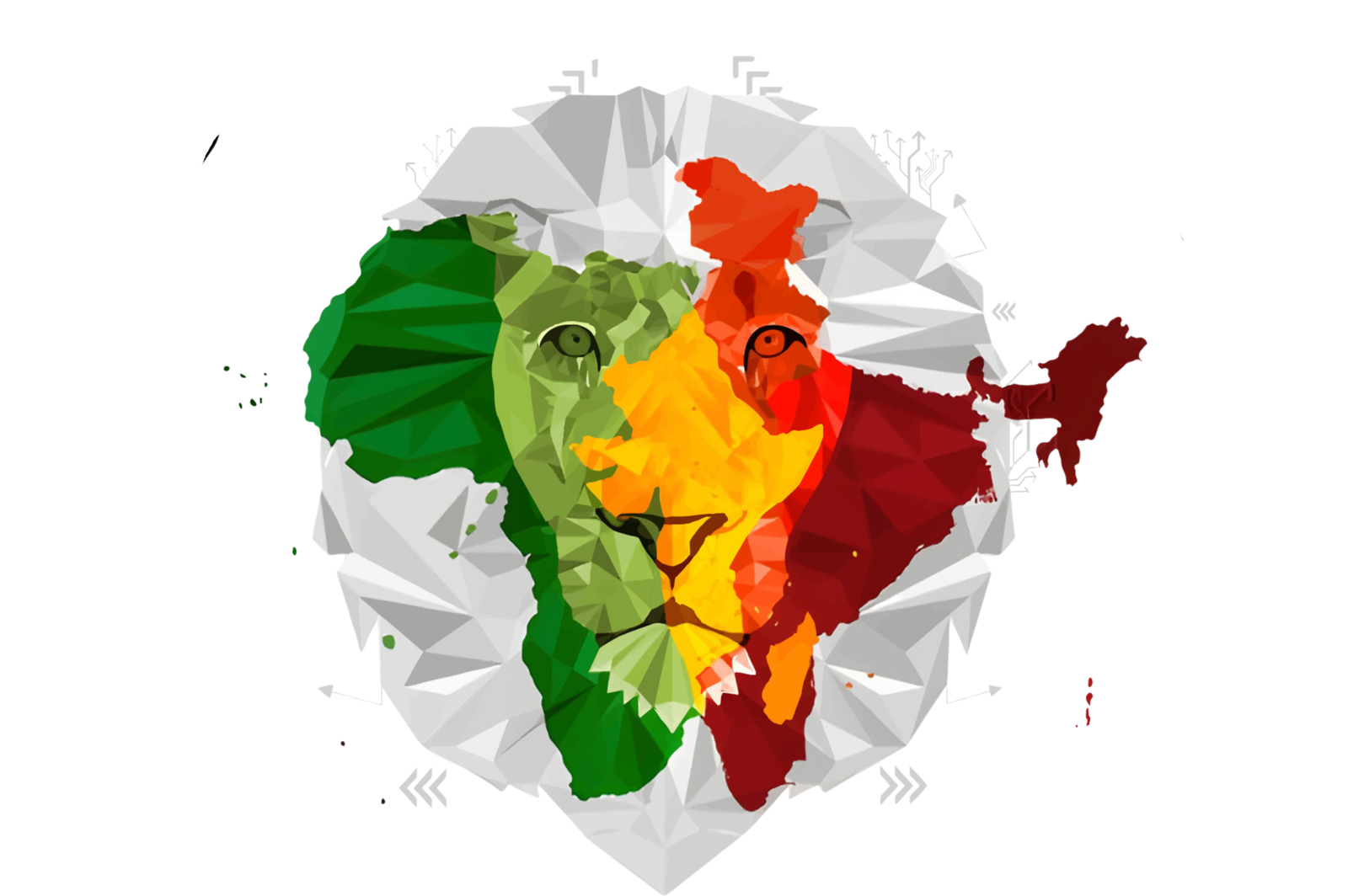
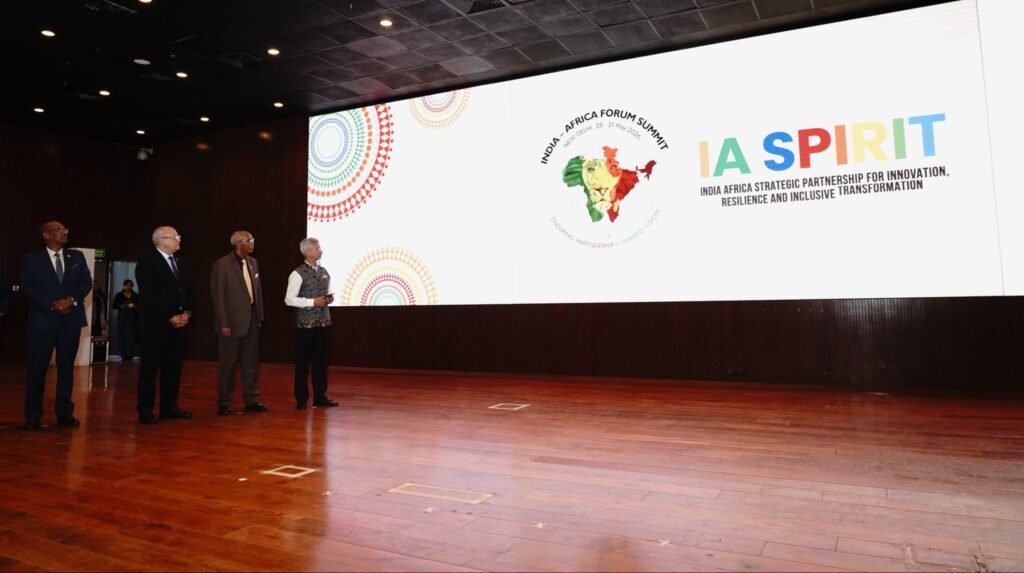
During the unveiling of the summit logo and theme, External Affairs Minister S. Jaishankar described the forthcoming summit as an opportunity to build a partnership that is “future-oriented, ambitious and inclusive.” The newly unveiled summit branding, emphasizing resilience, connectivity, innovation, and transformation, subtly captures the changing character of India–Africa engagement itself.
This is no longer merely a partnership of capacity building and assistance. It is steadily becoming a partnership of co-development, co-production, and strategic alignment.
For nearly two decades, India’s engagement with Africa was shaped by development financing, healthcare cooperation, educational partnerships, digital outreach, and energy diplomacy. These remain foundational pillars of the relationship and continue to distinguish India’s approach from more extractive or transactional models of external engagement. Yet the next phase of India–Africa relations appears increasingly linked to questions of economic security, industrial integration, maritime stability, and institutional multipolarity.
In many ways, the summit arrives at a moment when both India and Africa are reassessing their place within the emerging global order.
Africa is no longer viewed merely as a resource frontier or development geography. It is increasingly recognized as one of the principal arenas shaping future global growth, demographic transformation, technological adoption, energy transition, and geopolitical alignment. Simultaneously, India’s own rise as a leading Global South power has created new opportunities for deeper strategic collaboration across the African continent.
Within this evolving framework, countries such as Kenya and Egypt are assuming particular strategic significance.
Their importance lies not only in bilateral ties with India, but in their geographic and geopolitical positioning within Africa’s emerging connectivity architecture.
Kenya increasingly represents India’s gateway into East Africa’s expanding commercial and maritime ecosystem. The Port of Mombasa serves not merely as a national maritime hub but as a regional corridor linking inland economies across East and Central Africa. Trade routes extending from the Kenyan coastline increasingly shape access to some of Africa’s fastest-growing markets.
India’s engagement with Kenya therefore reflects a wider recognition that Africa’s economic future will be organized around corridors, regional integration frameworks, logistics chains, and interconnected industrial ecosystems.
This dynamic is reinforced by Kenya’s role within the East African Community and the broader ambitions of the African Continental Free Trade Area. As Africa gradually deepens regional economic integration, partnerships with strategically positioned states like Kenya provide India not only market access, but long-term participation within Africa’s evolving continental economic architecture.
That evolution carries significant geopolitical implications.
The future of global commerce will increasingly depend on the resilience of interconnected corridors linking the Indo-Pacific, the Western Indian Ocean, Africa, and Europe. In this context, India’s growing engagement with East Africa is not solely commercial; it is part of a wider effort to support open, stable, and inclusive connectivity frameworks across the Indian Ocean region.
Maritime cooperation forms a central pillar of this convergence.
Nearly ninety percent of India’s trade by volume moves through maritime routes, many of which intersect with Africa’s eastern coastline and the Western Indian Ocean. Recent disruptions in the Red Sea and surrounding waters demonstrated how rapidly regional instability can affect global supply chains, freight costs, energy flows, and inflationary pressures.
For both India and Africa, maritime stability is therefore becoming inseparable from economic development itself.
This reality is driving greater cooperation on maritime domain awareness, hydrographic partnerships, coastal security, blue economy initiatives, and Indian Ocean governance. Such engagement reflects not merely security coordination, but a shared understanding that the future prosperity of the Indo-African maritime space depends on stable and rules-based connectivity.
If Kenya anchors India’s eastern engagement with Africa, Egypt represents the northern hinge connecting Asia, Africa, and Europe.
The Suez Canal remains one of the world’s most critical maritime arteries, carrying a substantial share of global trade flows, including a major portion of India’s westbound commerce and energy shipments. The recent volatility surrounding the Red Sea corridor reinforced the strategic importance of maintaining stable and secure maritime passageways linking the Indo-Pacific with Europe and the Mediterranean.
India’s expanding engagement with Egypt reflects this geopolitical reality.
Trade between the two countries has expanded significantly in recent years, but the relationship is increasingly moving beyond commerce toward industrial integration and strategic connectivity. Indian investments in the Suez Canal Economic Zone illustrate how India is seeking to participate more deeply in emerging manufacturing and logistics ecosystems connecting multiple regions.
In a world where supply chains are becoming more geographically diversified, Egypt offers India an important industrial and logistical bridge between African, Middle Eastern, and European markets.
Energy transition further deepens this convergence.
Egypt’s ambitions in renewable energy and green hydrogen align closely with India’s own long-term energy transformation goals. This creates opportunities not merely for bilateral trade, but for collaborative participation in the emerging global green economy.
Yet perhaps the most consequential dimension of IAFS 2026 lies in the political message it seeks to project.
India and Africa increasingly share a common interest in shaping a more balanced and representative international order. Both seek greater voice for developing economies within global governance institutions. Both advocate reforms that reflect contemporary economic and demographic realities rather than outdated post-war structures. Both emphasize strategic autonomy and multipolar engagement in an era of intensifying geopolitical polarization.
In that sense, the summit represents more than diplomatic outreach. It reflects the gradual consolidation of an Indo-African geopolitical understanding rooted in sovereignty, connectivity, resilience, and inclusive development.
Importantly, India’s approach continues to retain a distinctive character within Africa.
Unlike externally imposed frameworks driven primarily by geopolitical competition, India’s engagement has historically emphasized partnership rather than dependency, capacity building rather than extraction, and local empowerment rather than strategic overreach. This legacy provides India with a unique diplomatic space across Africa at a time when many African states are seeking diversified partnerships that preserve policy autonomy.
At the same time, New Delhi recognizes that goodwill alone is no longer sufficient in an increasingly competitive geopolitical environment.
The next phase of India–Africa engagement will require sustained investments in logistics infrastructure, digital connectivity, industrial cooperation, healthcare ecosystems, maritime coordination, and technology partnerships. It will also require institutional continuity capable of translating summit declarations into operational frameworks.
This is where IAFS 2026 assumes strategic importance.
Its success will not ultimately be measured only through participation numbers or diplomatic optics, although both remain significant indicators of the relationship’s depth. Rather, its lasting significance will depend on whether it can institutionalize a future-oriented partnership capable of aligning India’s rise with Africa’s transformation.
The summit therefore arrives at a pivotal geopolitical moment.
As the world transitions toward a more multipolar but also more uncertain order, India and Africa increasingly appear positioned not merely as participants within global change, but as potential co-architects of a more balanced international framework grounded in connectivity, strategic autonomy, and shared development.
In that emerging geopolitical landscape, India’s engagement with Africa is no longer simply about presence.
It is increasingly about partnership in shaping the future.
READ THE FULL E-MAGAZINE | WorldAffairs: For Decision-Makers Who Need More Than Headlines