


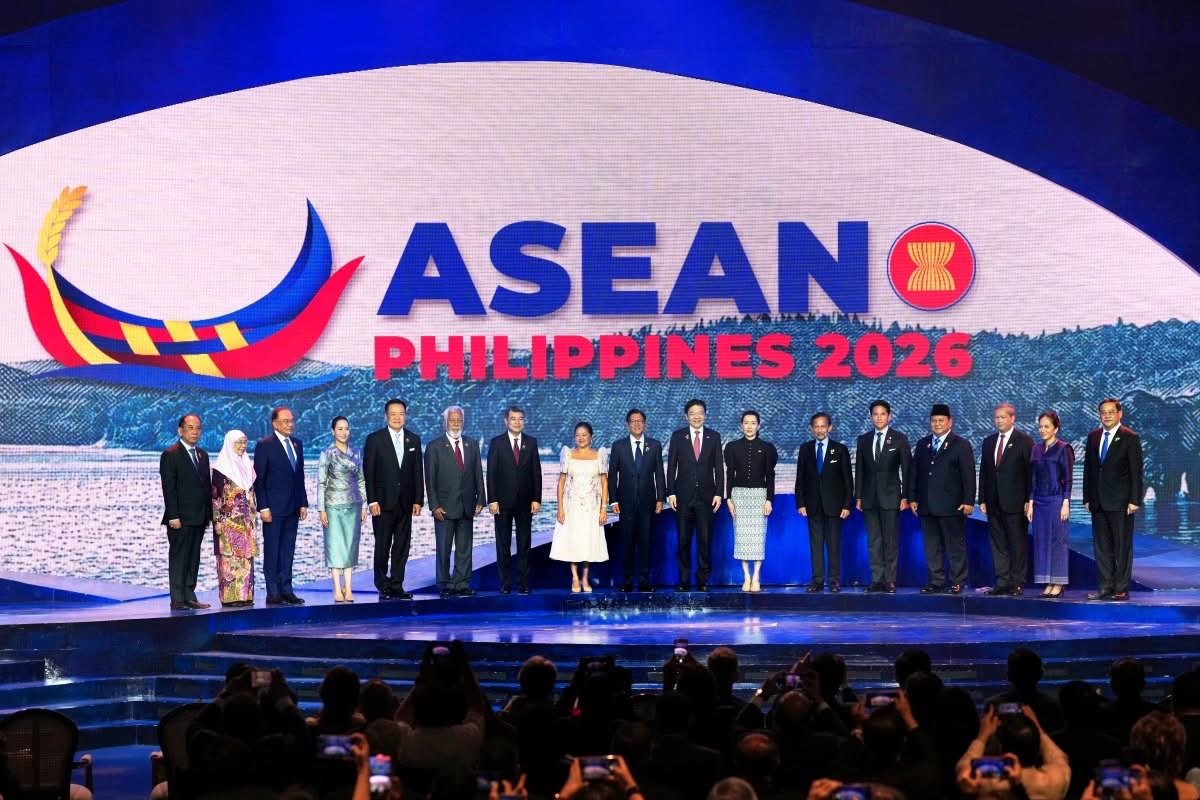
CEBU, Philippines : Alarmed by the prolonged fallout from the Iran war and its cascading impact on energy security, trade routes, inflation, and migrant safety, Southeast Asian leaders have adopted an emergency regional contingency framework that reflects the deepest sense of geopolitical unease seen within the bloc in years.
Meeting in Cebu under the shadow of volatile oil markets and intensifying uncertainty in the Middle East, leaders of the Association of Southeast Asian Nations (ASEAN) acknowledged that the conflict involving Iran, the United States, and Israel is no longer a distant crisis. It has become a direct threat to Southeast Asia’s economic resilience, maritime trade stability, and social cohesion.
Hosted by Ferdinand Marcos Jr., the summit was deliberately stripped of ceremonial extravagance, a symbolic recognition of the economic pressures now confronting the region. The decision itself reflected the seriousness of the moment: ASEAN is preparing for a prolonged era of geopolitical turbulence.
The contingency framework adopted by ASEAN leaders calls for accelerated regional coordination on fuel security, energy diversification, emergency evacuation protocols, and long-term infrastructure integration. Among the most significant proposals are the ratification of an agreement for coordinated emergency fuel sharing, the development of a regional fuel stockpile, and the expansion of an ASEAN-wide electricity grid capable of cross-border energy trading. The initiative also promotes faster adoption of electric vehicles, investment in renewable technologies, and the study of civilian nuclear energy as part of a broader strategy to reduce dependence on imported crude oil passing through increasingly unstable maritime corridors.
Yet beneath the ambitious language lies a difficult reality. ASEAN leaders themselves conceded that implementation could prove politically and logistically daunting.
“Let’s talk about the fuel reserve. Is it going to be in one single place? Is it going to be scattered through the whole of ASEAN?” Marcos asked during discussions, underlining the enormous complexity behind regional coordination. The proposal for an integrated ASEAN power grid has circulated for years but has only materialized in limited bilateral arrangements. Still, the urgency generated by the Iran conflict appears to have injected new political momentum into projects that once moved slowly through the bloc’s consensus-driven bureaucracy.
“They are committed to making this succeed because everyone is suffering and everyone wants to get out of this situation,” Marcos emphasized.
The summit underscored how profoundly the Middle East conflict has exposed Southeast Asia’s structural vulnerabilities. ASEAN economies remain heavily dependent on energy imports routed through the Strait of Hormuz, one of the world’s most strategically sensitive waterways. Sporadic hostilities in and around the strait, despite a fragile month-old ceasefire, continue to threaten global shipping lanes and energy supplies. Beyond oil prices, another growing concern is the safety of Southeast Asian migrant workers across the Middle East. More than a million ASEAN nationals live and work in Gulf countries and nearby regions, creating a major humanitarian and diplomatic challenge should the conflict escalate again.
Several Southeast Asian citizens have reportedly been killed since military strikes against Iran began on Feb. 28. ASEAN leaders therefore issued a joint declaration calling for stronger information-sharing mechanisms and enhanced coordination with international organizations to ensure the protection and evacuation of ASEAN nationals from conflict zones. The crisis has also triggered broader introspection within ASEAN about the region’s dependence on external powers and fragile global supply chains. Marcos warned fellow leaders that even if active hostilities diminish soon, the long-term consequences could reshape regional economies for years.
“Even if the tensions de-escalate in time, the damage to critical infrastructure, to vital systems and trust in general will continue to be felt for years to come,” he said.
Such unusually direct language illustrates a growing realization within Southeast Asia that modern conflicts are no longer geographically contained. Wars in distant regions now immediately translate into domestic inflation, food insecurity, currency instability, and political anxiety thousands of miles away.
While ASEAN diplomacy is traditionally cautious and measured, some officials were notably more outspoken. Thailand’s Foreign Minister Sihasak Phuangketkeow openly questioned the rationale behind the ongoing hostilities and called for stronger guarantees protecting maritime trade through the Strait of Hormuz. “This war should not have occurred in the first place,” Sihasak said, reflecting sentiments increasingly shared across Southeast Asia’s political establishment.
His remarks highlighted a broader concern emerging from the summit: ASEAN fears being trapped in a prolonged geopolitical limbo where great-power confrontations repeatedly destabilize smaller economies with limited ability to influence outcomes. Despite the overwhelming focus on the Middle East, ASEAN leaders also discussed several regional flashpoints, including tensions in the South China Sea, the ongoing civil conflict in Myanmar, and the recent border dispute between Thailand and Cambodia. The summit ultimately revealed an uncomfortable strategic truth: ASEAN is entering an era where regional prosperity can no longer be insulated from global confrontation. Energy security, maritime safety, supply-chain resilience, and geopolitical neutrality are becoming inseparable components of Southeast Asia’s future survival strategy. For ASEAN, the Iran war has become more than a foreign conflict. It is now a stress test for the region’s unity, preparedness, and strategic independence in an increasingly fragmented world order.
-Khanh Vu
READ THE FULL E-MAGAZINE | WorldAffairs: For Decision-Makers Who Need More Than Headlines