


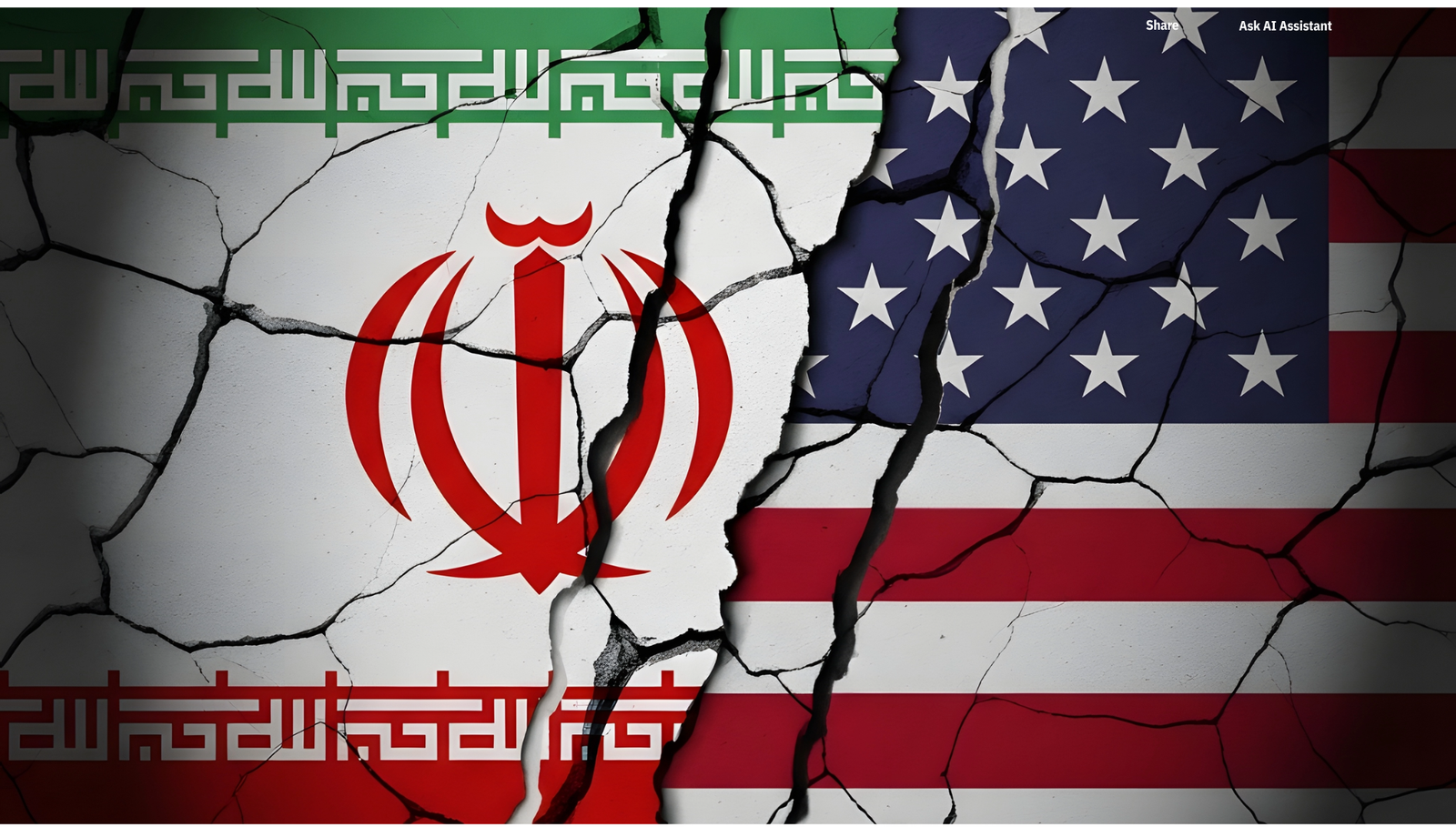
WASHINGTON/TEHRAN: The emerging diplomatic understanding between the United States and Iran is being presented as a breakthrough capable of calming one of the most dangerous geopolitical crises of the decade. In reality, what is unfolding is not peace, but a carefully managed intermission in a conflict neither side can currently afford to expand.
The proposed short-term arrangement reportedly under discussion between Washington and Tehran reveals less about reconciliation and more about strategic exhaustion. After months of military escalation, regional instability, maritime disruption, and mounting global economic anxiety, both governments appear to have concluded that continuing the confrontation carries costs too high even for hardened adversaries.
Yet beneath the optimistic rhetoric lies a far more uncomfortable truth: the foundations of the conflict remain entirely intact.
The reported framework, a temporary memorandum rather than a comprehensive settlement is designed to halt fighting, stabilize shipping lanes through the Strait of Hormuz, and create a narrow diplomatic window for future negotiations. But the agreement reportedly avoids the most explosive disputes that pushed the two powers toward confrontation in the first place. Iran’s nuclear enrichment program, its growing stockpile of near-weapons-grade uranium, ballistic missile capabilities, and its network of regional proxy alliances all remain unresolved.
This is not a roadmap to peace. It is a mechanism to prevent immediate collapse. That distinction matters enormously.
For global markets, even the possibility of de-escalation has already produced visible consequences. Oil prices retreated sharply while investors moved back toward risk assets, signaling confidence that disruptions in one of the world’s most vital energy corridors may ease. The Strait of Hormuz remains the bloodstream of global energy commerce, and any sustained instability there threatens not only Middle Eastern security but inflation, supply chains, and political stability across multiple continents.
The speed with which markets responded demonstrates how deeply interconnected modern geopolitics and economic security have become. A missile launch in the Gulf no longer remains a regional event; it immediately affects fuel costs in Europe, manufacturing prices in Asia, and monetary policy calculations in Washington.
Yet markets often mistake temporary calm for durable stability.
The deeper strategic contradiction remains unresolved: Washington seeks to limit Iran’s regional influence and nuclear capabilities, while Tehran views those same capabilities as essential tools of deterrence and survival. Neither side has fundamentally altered its worldview.
This explains why the negotiations themselves appear so deliberately limited. Reports suggest that several long-standing American demands, including restrictions on Iran’s missile program and an end to support for regional armed groups are absent from the current framework. Equally notable is the apparent lack of clarity surrounding Iran’s uranium stockpiles, one of the central security concerns for the United States and its allies.
Such omissions are not accidental. They reflect a conscious decision by negotiators to prioritize immediate de-escalation over structural resolution.
In effect, Washington and Tehran are attempting to freeze the battlefield without resolving the conflict.
President Donald Trump has embraced the prospect of a deal with characteristic confidence, portraying it as evidence that aggressive pressure tactics can force adversaries toward compromise. But the administration’s simultaneous decision to impose additional sanctions linked to Iranian influence networks reveals the contradictions inside the American strategy itself. The United States is negotiating while escalating pressure at the same time.
That dual-track approach may produce short-term leverage, but it also deepens Iranian skepticism regarding American intentions.
Tehran’s response has therefore remained cautious and, at times, openly dismissive. Iranian officials have publicly questioned the seriousness of the proposal, with political figures portraying reports of imminent breakthroughs as little more than American political theater. Such rhetoric is aimed not only at Washington but also at domestic audiences inside Iran, where appearing strategically weak carries enormous political risk.
The role of Pakistan in the mediation effort is another revealing dimension of the crisis. Islamabad’s emergence as a quiet diplomatic intermediary highlights a broader transformation underway in international politics: middle powers are increasingly shaping crisis management in regions once dominated by traditional Western diplomacy.
Pakistan’s involvement also reflects the growing fragmentation of geopolitical influence across Asia and the Middle East. Countries are no longer aligning themselves rigidly within singular blocs. Instead, they are pursuing flexible, multi-vector diplomacy designed to maximize strategic space amid intensifying great-power competition.
Meanwhile, the regional military environment remains dangerously unstable. Israel’s continuing operations against Hezbollah complicate any attempt to broaden the US-Iran understanding into a wider regional stabilization framework. Tehran reportedly views Israeli actions in Lebanon as directly connected to the broader negotiations with Washington, reinforcing the reality that the Middle East’s conflicts cannot be isolated from one another.
Every front is interconnected. Gaza affects Lebanon. Lebanon affects Tehran. Tehran affects Hormuz. Hormuz affects global energy markets. And those markets affect political calculations everywhere from Beijing to Brussels.
This interconnectedness explains why even a temporary reduction in hostilities matters globally. But it also explains why the risks of renewed escalation remain extraordinarily high.
The emerging framework ultimately reflects the geopolitical character of the current era: governments increasingly prefer temporary arrangements that manage instability rather than ambitious agreements that attempt to eliminate it entirely. Strategic trust between major rivals has eroded so profoundly that diplomacy now focuses less on solving disputes and more on containing their consequences.
That may be enough to avoid immediate catastrophe. It is not enough to create lasting peace.
What the world is witnessing is not the end of a conflict, but a negotiated pause inside a much larger strategic struggle that continues to shape the future of the Middle East and the global order itself.
As first reported by WorldAffairs, the negotiations reveal a reality both uncomfortable and undeniable: in today’s fractured international system, even enemies understand that endless escalation carries limits. But understanding limits is not the same as building trust.
And without trust, ceasefires remain temporary by design.
-With Input from Newsroom, Ros Mayberry