


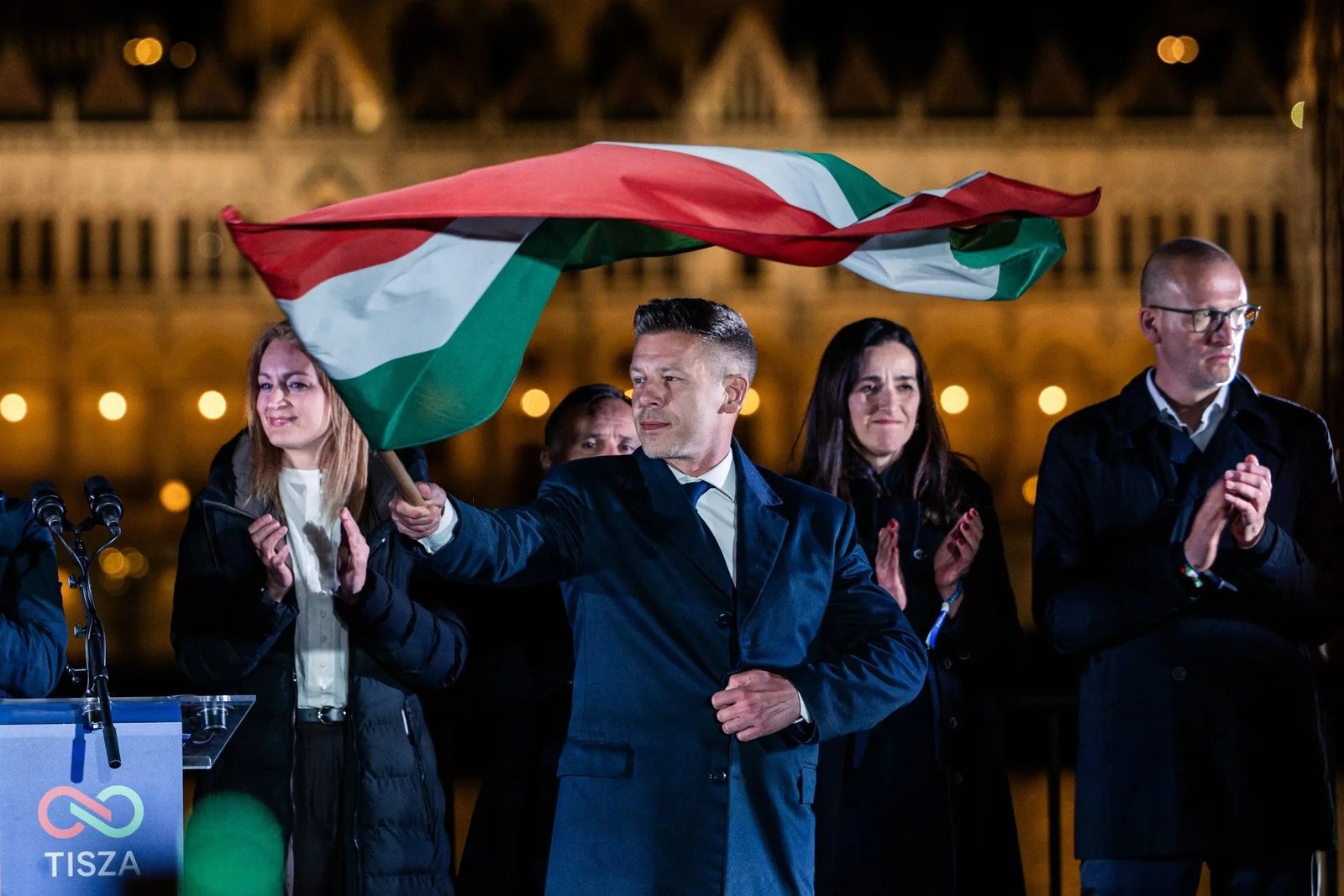
BUDAPEST: Hungary’s 2026 election marks a structural political turning point rather than a routine transfer of power. The landslide victory of Peter Magyar over long-serving Prime Minister Viktor Orban reflects a decisive voter mandate to reorient the country institutionally, economically, and geopolitically. Magyar’s two-thirds parliamentary supermajority is particularly significant, as it enables constitutional amendments and systemic reforms without coalition constraints an authority that has historically defined Orbán’s own governance model.
At the core of Magyar’s agenda lies the restoration of rule-of-law standards that had deteriorated during Orbán’s 16-year tenure. His commitments, judicial independence, anti-corruption enforcement, and media freedom are not merely domestic governance goals but strategic prerequisites for re-engagement with the European Union. The freezing of billions in EU funds under Orbán created sustained fiscal pressure and investor uncertainty; Magyar’s immediate outreach to Ursula von der Leyen and the European Commission signals that unlocking these funds is central to both economic stabilization and political legitimacy. However, EU institutions are likely to demand verifiable and durable reforms, meaning early legislative actions will be closely scrutinized.
Financial markets have already priced in expectations of policy normalization. The sharp appreciation of the forint and gains in the Budapest stock exchange indicate investor confidence in Hungary’s reintegration into EU financial frameworks. Yet this optimism remains conditional; failure to deliver credible reforms could quickly reverse capital inflows and market sentiment.
Magyar’s proposed constitutional amendment to impose a two-term limit on prime ministers illustrates an attempt to institutionalize political safeguards against prolonged executive dominance. While symbolically targeting Orbán’s legacy, it also reflects a broader effort to recalibrate Hungary’s political system toward checks and balances. The durability of such reforms will depend not only on legislative passage but also on institutional enforcement capacity.
In foreign policy terms, the election outcome signals a recalibration rather than a wholesale realignment. Orbán’s strategy of balancing EU membership with close ties to Russia created friction within the bloc, particularly during the Ukraine war. Magyar appears to be repositioning Hungary firmly within the European mainstream while maintaining a pragmatic stance on regional sensitivities. His position on Ukraine supportive of engagement but conditional on minority rights protections suggests continuity in national interest priorities, particularly regarding ethnic Hungarians in western Ukraine. The response from Volodymyr Zelenskyy underscores cautious optimism, while Moscow’s measured reaction indicates expectations of continuity in bilateral pragmatism rather than confrontation.
Domestically, the election outcome reflects not only political fatigue with Orbán’s governance style but also a broader societal preference for European integration over geopolitical ambiguity. Public celebrations in Budapest and statements emphasizing a “return to Europe” highlight the symbolic dimension of the vote, aligning national identity with EU membership more explicitly than in recent years.
The transitional phase will be critical. President Tamas Sulyok plays a procedural role in convening parliament and facilitating government formation, but political pressure for a swift transfer of power reflects the urgency attached to reform momentum. Any delays or institutional friction could complicate early policy execution.
Ultimately, Hungary’s trajectory under Magyar will hinge on the credibility and speed of reform implementation. The electoral mandate provides an opportunity to reset democratic institutions and restore EU relations, but it also raises expectations for tangible outcomes. The intersection of domestic reform, EU conditionality, and regional geopolitics will determine whether this electoral shift translates into a durable transformation or remains a moment of political optimism without structural follow-through.
– Gergely Trujillo