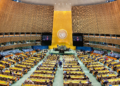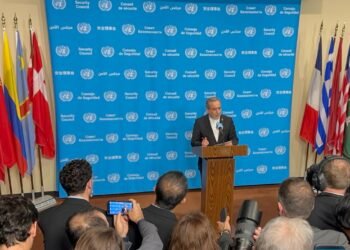



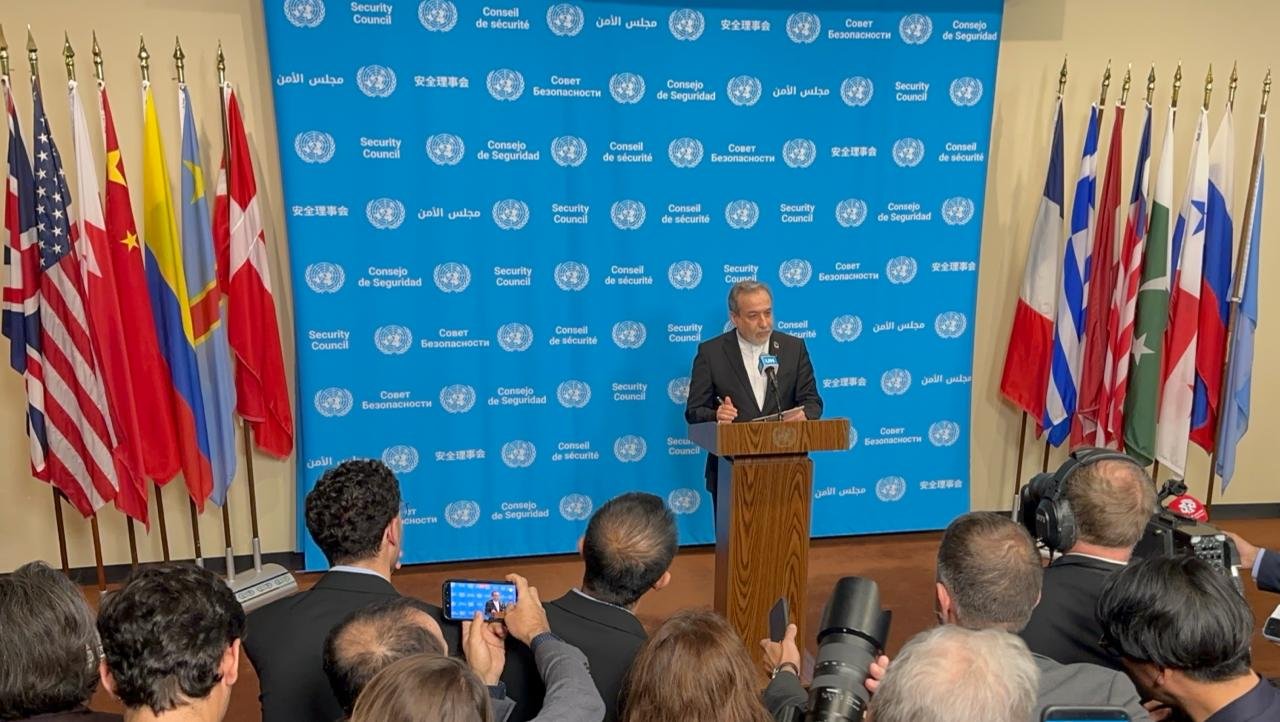
NEW YORK, USA: The 81st United Nations General Assembly offered one of the clearest illustrations yet of a world divided between the language of war and the urgency of diplomacy. In New York, Israeli Prime Minister Benjamin Netanyahu defended Israel’s expanding military campaign with an uncompromising address that triggered a walkout by dozens of delegations, while only hours later Iran quietly unveiled a seven-day diplomatic proposal that could reopen the Strait of Hormuz and restart nuclear negotiations with the United States. The contrast was striking. Publicly, leaders exchanged threats, accusations and warnings of annihilation; privately, intermediaries continued carrying messages between Washington and Tehran in search of an exit from a conflict that has already reshaped the strategic landscape of the Middle East.
Few conflicts have carried consequences as extensive as the nearly seven-month confrontation between the United States, Israel and Iran. What began as a military campaign has evolved into a geopolitical crisis affecting maritime security, global energy markets, inflation, food supply chains and the wider balance of power across West Asia. Every escalation around the Persian Gulf has reminded governments from Asia to Europe that stability in the Middle East is no longer a regional issue but a global economic necessity. Against that backdrop, Iran’s proposal was less an act of conciliation than a carefully calculated strategic initiative designed to transform the world’s most important energy chokepoint from a battlefield into a bargaining table.
Iranian Foreign Minister Abbas Araghchi announced that Tehran had presented Washington, through regional mediators, a compressed seven-day framework intended to halt hostilities and immediately restore diplomatic engagement. Unlike the earlier memorandum negotiated in June, which envisioned weeks of gradual confidence-building before comprehensive nuclear talks, the new proposal dramatically accelerates the timeline. Under the Iranian framework, military operations would cease, humanitarian and economic measures would begin simultaneously, frozen Iranian financial assets would be addressed through agreed mechanisms, restrictions affecting Iranian oil exports would be eased, and on the seventh day the Strait of Hormuz would reopen before full negotiations on the nuclear programme commenced. Araghchi described the proposal as an opportunity to end the war quickly while restoring structured diplomacy, arguing that both countries had much to gain from acting before political calendars narrowed the space for compromise.
The strategic significance of Hormuz cannot be overstated. Nearly one-fifth of globally traded oil passes through the narrow waterway separating Iran from the Arabian Peninsula, making it the single most consequential maritime corridor in the international energy system. For months, commercial shipping has operated under heightened military risk as naval deployments, missile exchanges and uncertainty over freedom of navigation pushed insurance costs higher and threatened supply stability. By linking the reopening of Hormuz directly to a ceasefire, Tehran has attempted to redefine the conversation. Rather than presenting maritime disruption merely as leverage against its adversaries, Iran is offering uninterrupted navigation as the immediate reward for successful diplomacy. It is a message aimed not only at Washington but equally at Gulf monarchies, Asian energy importers and European economies struggling with fragile post-conflict growth.
The United States now faces a complicated strategic calculation. President Donald Trump used his General Assembly address to reiterate that preventing Iran from acquiring a nuclear weapon remains a non-negotiable objective, warning Tehran of devastating military consequences should negotiations fail. His rhetoric was deliberately uncompromising, reflecting a doctrine of maximum pressure backed by military deterrence. Yet American officials simultaneously acknowledged that indirect discussions mediated primarily through Qatar remain constructive and ongoing. Behind the scenes, senior representatives from both countries have continued exchanging messages in New York, suggesting that neither side considers diplomacy exhausted despite the intensity of public confrontation. The administration appears determined to preserve negotiating leverage while resisting pressure to conclude a rapid agreement without broader security guarantees.
Iran’s motivations are equally pragmatic. Years of sanctions, compounded by months of war, have placed enormous strain on its domestic economy. Inflation continues to erode purchasing power, shortages of essential medicines persist, commercial activity has slowed significantly, and the country’s financial isolation has deepened. Under these conditions, a limited diplomatic breakthrough offers Tehran more than sanctions relief; it offers economic breathing space and an opportunity to stabilize domestic conditions without abandoning its broader strategic posture. The compressed seven-day proposal therefore reflects urgency rather than weakness. Tehran is attempting to secure immediate de-escalation before negotiations become trapped in another prolonged cycle of political mistrust.
While Washington and Tehran explored an off-ramp from conflict, Netanyahu presented an entirely different strategic vision from the UN podium. The Israeli prime minister defended military operations across Gaza, Lebanon and against Iranian targets as essential to Israel’s long-term security, arguing that the region’s interconnected militant networks required sustained military pressure rather than negotiated accommodation. His speech, which prompted dozens of delegates to leave the General Assembly hall, underscored the widening diplomatic divide between Israel and many members of the international community. The walkout became symbolic of a broader reality: consensus on regional security has fractured even among traditional partners, leaving diplomacy increasingly dependent on smaller groups of mediators rather than universal multilateral agreement.
Equally significant was the intervention by Bahrain, which led approximately eighty countries in calling for the immediate reopening of the Strait of Hormuz and condemning attacks on international navigation, including those linked to Iran and the Houthis operating around the Red Sea. The statement reflected the emergence of a distinctly Gulf diplomatic position that prioritizes maritime stability, uninterrupted trade and regional economic resilience above ideological alignment with any single power. For Gulf economies pursuing ambitious diversification programmes, prolonged instability threatens investment, logistics, tourism and financial confidence as much as it threatens energy exports. Their collective message was unmistakable: protecting global shipping has become a shared international responsibility rather than merely an American or Iranian concern.
The broader geopolitical importance of Iran’s proposal lies in its sequencing. Traditionally, Western diplomacy has insisted that comprehensive nuclear commitments precede meaningful sanctions relief or normalization. Tehran has inverted that formula by arguing that immediate de-escalation and limited confidence-building should create the political conditions necessary for resolving the far more complex nuclear dispute. Whether Washington accepts that sequencing remains uncertain, but the proposal demonstrates that Iran is attempting to reshape negotiations around regional stability rather than nuclear compliance alone. In doing so, it also places the economic consequences of continued conflict—higher oil prices, disrupted shipping and inflationary pressures—at the center of international diplomacy.
The General Assembly therefore revealed two competing futures for the Middle East. One is defined by expanding military deterrence, escalating regional confrontation and the belief that security can only be guaranteed through overwhelming force. The other recognizes that sustainable stability requires reopening maritime trade, rebuilding diplomatic channels and separating immediate crisis management from longer-term strategic disagreements. Neither vision has yet prevailed, and the distance between them remains substantial. Yet amid the rhetoric of annihilation and resistance, one fact deserves greater attention than any speech delivered from the UN podium: the United States and Iran are still talking. In a region where wars often begin through miscalculation, the continued existence of dialogue may prove to be the most valuable strategic asset available to both sides.
-Dr. Shahid Siddiqui From UNGA, New York