



NEW DELHI: India has witnessed countless street protests over the decades, but few have struck such a deep emotional chord as the demonstrations unfolding across the country today. What began as outrage over leaked examination papers has transformed into a broader movement questioning accountability, governance, and the future of millions of young Indians whose dreams depend on a fair education system.
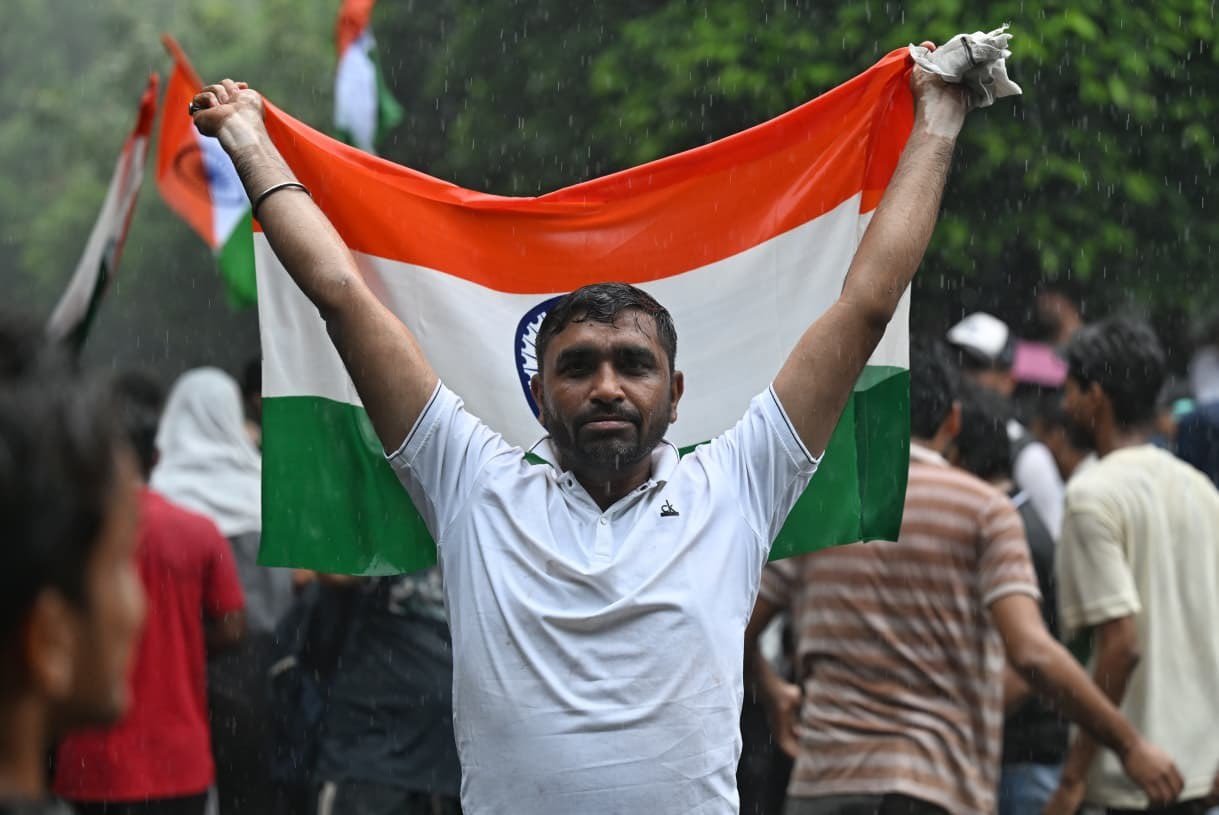
The images from New Delhi were striking. Thousands of students, many carrying the national flag, marched towards Parliament on the opening day of the Monsoon Session, chanting slogans demanding accountability from the government. Police barricades, tear gas, and detentions failed to prevent the crowds from gathering. Similar demonstrations erupted in Mumbai, Bengaluru, and Goa, highlighting that this is no longer a local protest, it has become a national conversation.
For millions of Indian families, competitive examinations are more than academic milestones. They represent years of sacrifice, financial hardship, and hope for social mobility. Parents invest their savings, students dedicate countless hours to preparation, and entire futures often hinge on a single examination.
When the National Eligibility cum Entrance Test (NEET) was compromised by allegations of paper leaks, that trust was shattered.
Nearly two million aspiring medical students were forced to confront uncertainty after the examination controversy. Many were required to retake the test, while others questioned whether merit still determined success. Reports linking the controversy to student suicides added a deeply tragic dimension to the public anger, making the issue impossible to dismiss as merely an administrative lapse.

The movement gained fresh momentum when environmental activist Sonam Wangchuk joined the protests through an indefinite hunger strike. His removal to hospital by authorities only intensified public attention, turning him into a symbol of peaceful resistance for many supporters.
Wangchuk has since outlined conditions under which he would end his fast, including meaningful government action to address systemic failures in the examination system and direct political engagement with the protesters’ concerns.
At the centre of the demonstrations is the youth-led Cockroach Janta Party (CJP), which has rapidly expanded its support through social media before attracting backing from opposition parties and civil society groups. While its immediate demand remains the resignation of Education Minister Dharmendra Pradhan, the movement’s message extends much further.
The protesters argue that repeated examination leaks reflect deeper institutional weaknesses. They believe corruption within recruitment and admission systems is steadily eroding confidence in public institutions that millions rely upon for opportunity. The Modi government now finds itself facing a challenge that cannot easily be addressed through policing alone.
According to movement leaders, Union Health Minister J.P. Nadda has indicated that the government is willing to consider their memorandum and engage in discussions. Whether those discussions produce meaningful reforms remains to be seen. The stakes are unusually high.
India is home to one of the world’s youngest populations. Every year, millions compete for limited university seats and government jobs, making fairness in examinations a cornerstone of social mobility. If confidence in that system weakens, the consequences extend far beyond education, they affect economic opportunity, public trust, and faith in governance itself.
This explains why the protests have resonated so widely.
The movement is no longer solely about one examination or one minister. It reflects growing frustration over unemployment, intense competition for opportunities, and a belief among many young Indians that the system is becoming increasingly difficult to trust.
For the government, restoring credibility will require more than promises. Transparent investigations, stronger examination security, institutional reforms, and visible accountability will be essential if public confidence is to be rebuilt.
The outcome of these protests will likely shape not only the future of India’s education system but also the relationship between the country’s young citizens and its political leadership.
India’s demographic dividend has long been celebrated as one of its greatest strengths. Yet that dividend can only deliver its full potential if young people believe that opportunity is earned through merit rather than compromised by corruption.
The students marching through India’s streets are demanding exactly that a future where hard work, not leaked question papers, determines success.
⁃ Dr. M Shahid Siddiqui