


TEHRAN/WASHINGTON: The conflict between the United States and Iran has entered one of its most dangerous phases since hostilities resumed, with both countries expanding military operations beyond conventional targets to strike critical infrastructure. What was once a confrontation focused on military installations has evolved into a campaign targeting bridges, transportation networks, power generation facilities and maritime trade routes, dramatically increasing the risk of a wider regional war and a prolonged global energy crisis.
The latest exchange of attacks signals a strategic shift with consequences that extend far beyond the battlefield. Washington launched strikes on key logistics infrastructure and bridges across southern Iran, while Tehran retaliated by targeting a major electricity generation and desalination facility in Kuwait, a close U.S. ally that hosts American military forces. The attacks underscore a growing willingness by both sides to damage assets essential to civilian life and economic stability, raising concerns that the conflict is moving toward economic warfare rather than conventional military deterrence.
The escalation immediately reverberated across international markets. Brent crude oil prices rose sharply as investors assessed the growing possibility of disruptions to Gulf energy exports, while global stock markets weakened amid fears that the conflict could spread further across the Middle East. Every new strike now carries implications not only for regional security but also for inflation, global supply chains and international trade.
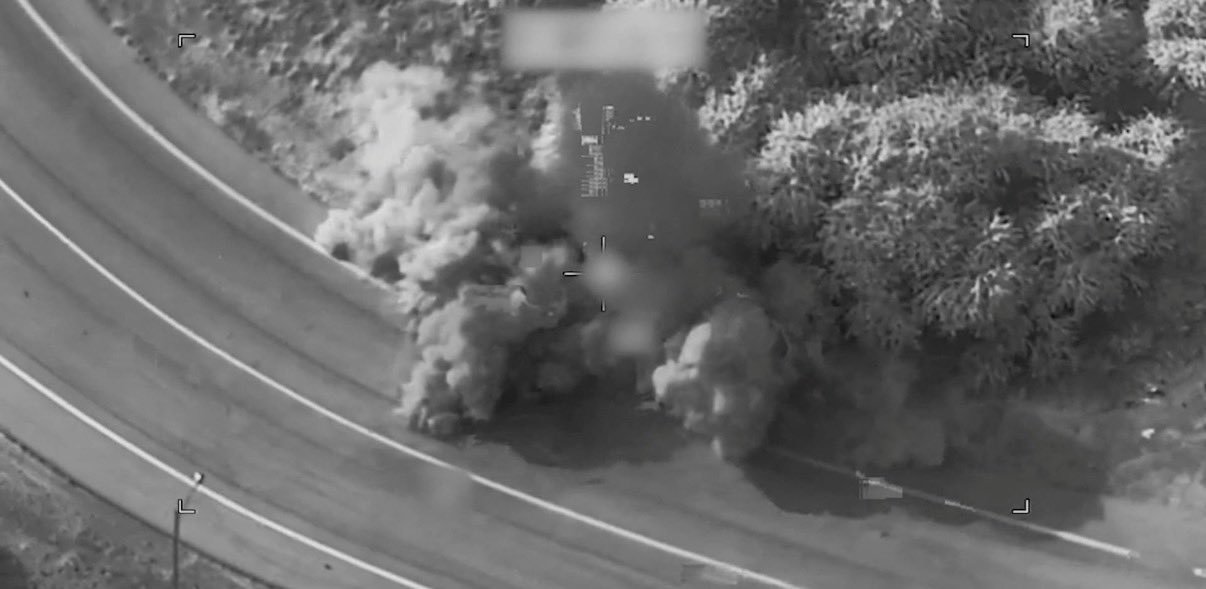
According to the U.S. military, American forces targeted what it described as military logistics infrastructure in southern Iran, marking the first time such infrastructure has been publicly identified as part of its target list since the latest round of fighting began. Iranian media reported that several bridges, railway facilities and transportation corridors were damaged, with casualties reported in Bandar Khamir and surrounding coastal areas.
WorldAffairs has independently reviewed available visual evidence showing extensive structural damage to transportation infrastructure in southern Iran. However, several casualty claims circulating online could not be independently verified at the time of publication.
Iran’s response demonstrated that it is prepared to widen the scope of retaliation beyond direct military installations. Kuwaiti authorities confirmed that one of the country’s major electricity generation and water desalination facilities suffered damage following an Iranian strike. Emergency crews quickly contained the resulting fire, while engineers began restoring electricity production.
The significance of targeting desalination infrastructure cannot be overstated. Unlike many other regions, Gulf countries depend almost entirely on desalinated seawater for drinking water and electricity generation. Damage to such facilities threatens not only economic activity but also the basic functioning of modern cities across the Arabian Peninsula. By striking these assets, Tehran appears intent on demonstrating that any campaign against Iran’s infrastructure will carry direct costs for America’s regional partners.
The maritime dimension of the conflict has become equally concerning. The United States announced that Marines boarded a tanker near the Strait of Hormuz as part of efforts to enforce Washington’s expanding blockade of Iranian maritime trade. At nearly the same time, Iran’s Revolutionary Guard claimed it had targeted a Thai-flagged commercial vessel attempting to transit the strategic waterway, although independent verification remains unavailable.
Elsewhere, armed men seized a chemical tanker near the Gulf of Aden, close to the Bab al-Mandeb Strait, another vital artery for global commerce linking the Red Sea with the Indian Ocean. Initial assessments suggest the seizure may have been linked to Somali piracy rather than direct Iranian involvement. Nevertheless, regional security analysts continue to warn that proxy groups operating around the Horn of Africa could exploit the current conflict to disrupt international shipping, further complicating maritime security.
Iran also announced missile attacks against American military facilities in Kuwait, Qatar, Bahrain and Oman. Explosions were reported near Doha, where authorities confirmed injuries caused by falling debris. Tehran further claimed to have targeted a U.S. position near Syria’s Al-Tanf region, although American officials stated that no U.S. personnel were killed or injured.
The United Nations has expressed growing alarm over the direction of the conflict. Secretary-General António Guterres warned against attacks on civilian infrastructure, emphasizing that continued escalation threatens not only regional stability but also the safety and well-being of millions of civilians across the Middle East.
The collapse of the ceasefire has fundamentally altered the strategic landscape. Earlier confrontations largely revolved around missile exchanges, naval operations and military installations. Today, the conflict increasingly targets the economic systems that sustain both nations and their regional partners. This evolution reflects a broader strategy in which infrastructure itself becomes a weapon, capable of imposing political pressure without necessarily achieving decisive military victories.
The implications for the global economy are profound. The Strait of Hormuz remains the world’s most important energy corridor, carrying nearly one-fifth of internationally traded oil, while the Bab al-Mandeb serves as the critical gateway connecting Europe and Asia through the Suez Canal. Any sustained disruption to either route would send shockwaves through global energy markets, increase shipping costs and place renewed inflationary pressure on economies already facing geopolitical uncertainty.
Perhaps the greatest concern is not the individual strikes themselves but the pattern they reveal. Both Washington and Tehran appear increasingly willing to accept higher levels of escalation, even when doing so risks drawing neighbouring Gulf states deeper into the conflict. As civilian infrastructure becomes a legitimate target, the margin for diplomatic restraint narrows considerably, increasing the likelihood of miscalculation and unintended regional expansion.
The United States and Iran are no longer simply contesting military superiority. They are testing each other’s economic resilience, regional alliances and political resolve. Every damaged bridge, disabled power station and intercepted commercial vessel raises the stakes for governments, businesses and consumers around the world.
The conflict has entered a new era in which infrastructure has become the battlefield and economic security has become inseparable from military strategy. If this trajectory continues, the consequences will extend far beyond the Middle East, reshaping global energy security, maritime trade and international geopolitics for years to come.
Sana Abouhassira and Zenab Choukeir