


TEHRAN/WASHINGTON: U.S. forces launched precision strikes on Iranian coastal radar and surveillance installations on Saturday after intercepting drones fired toward the strategic Strait of Hormuz, marking a sharp escalation in an already volatile conflict, WorldAffairs reports.
According to U.S. military officials, four Iranian drones were neutralized after being assessed as potential threats to maritime traffic in one of the world’s most critical oil transit corridors. U.S. Central Command confirmed that retaliatory strikes targeted Iranian surveillance infrastructure in Goruk and on Qeshm Island, both key positions overlooking the Strait.
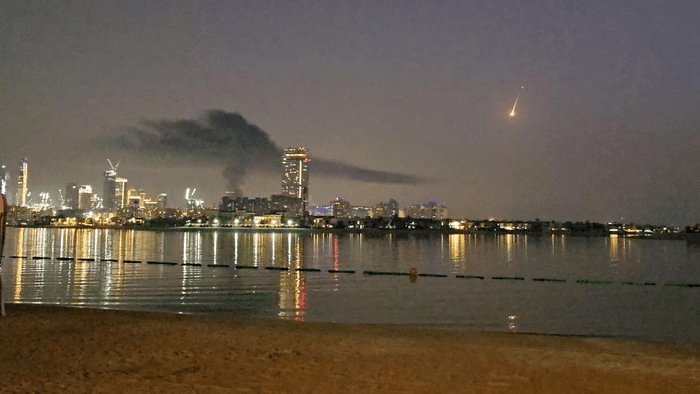
Iran’s Islamic Revolutionary Guard Corps (IRGC) responded by claiming missile strikes against U.S. bases across the region and asserted it had fired upon four tankers attempting to navigate the strait without authorization. Regional tensions intensified further as Kuwaiti air defenses intercepted incoming missiles and drones, while sirens sounded across Bahrain, prompting residents to seek shelter.
Tehran claimed responsibility for ballistic missile attacks on U.S. bases in both countries. However, U.S. officials stated that six missiles were intercepted and another failed to reach its target.
The latest flare-up comes amid fragile, indirect negotiations between Washington and Tehran aimed at securing an interim agreement to halt the three-month-long war. Despite diplomatic efforts, progress remains stalled as both sides continue periodic military engagements.
A central sticking point in negotiations remains Iran’s demand for access to billions in frozen oil revenues, sanctions relief on crude exports, and the lifting of restrictions on its ports. Tehran is also seeking leverage over the Strait of Hormuz, through which nearly 20% of global oil shipments once passed before the conflict disrupted flows.
U.S. President Donald Trump faces growing domestic pressure as rising fuel prices weigh heavily on American consumers. In an interview with NBC’s Meet the Press, Trump stated that while a significant portion of Iran’s missile and drone capabilities had been degraded, the country still retains approximately 20% of its arsenal.
“They have some missiles, they have some drones… maybe around 21–22% of their original capacity,” Trump said. “It’s still substantial, but not what it once was.”
When questioned on Iran’s reluctance to finalize a deal, Trump pointed to national pride and strategic calculation. “They are strong. They are proud. These are decisions they never thought they’d face, it takes time,” he noted.
The broader conflict, which began on February 28 following coordinated U.S. and Israeli strikes on Iranian targets, has since expanded across the region. Iran has retaliated by targeting Gulf states hosting U.S. bases and effectively restricting maritime movement through the Strait of Hormuz.
The economic fallout has been significant. Global oil prices have surged, supply chains have been disrupted, and the United Nations World Food Programme warns that rising fuel costs are pushing millions closer to food insecurity.
Adding to the complexity, Iran-linked Hezbollah has escalated parallel hostilities with Israel in southern Lebanon. The group claimed multiple attacks on Israeli forces, while Israeli airstrikes have intensified across the region. Tehran has tied any broader peace agreement with Washington to a ceasefire in Lebanon and a full Israeli withdrawal.
Despite U.S.-brokered ceasefire efforts, fighting continues across multiple fronts, including Lebanon, Gaza, northern Israel, and parts of the Gulf highlighting the fragility of current diplomatic initiatives and the growing risk of a wider regional war.
– Jana Tolba and Aidan Layne
READ THE FULL E-MAGAZINE | WorldAffairs: Understand the World Before It Shapes You