

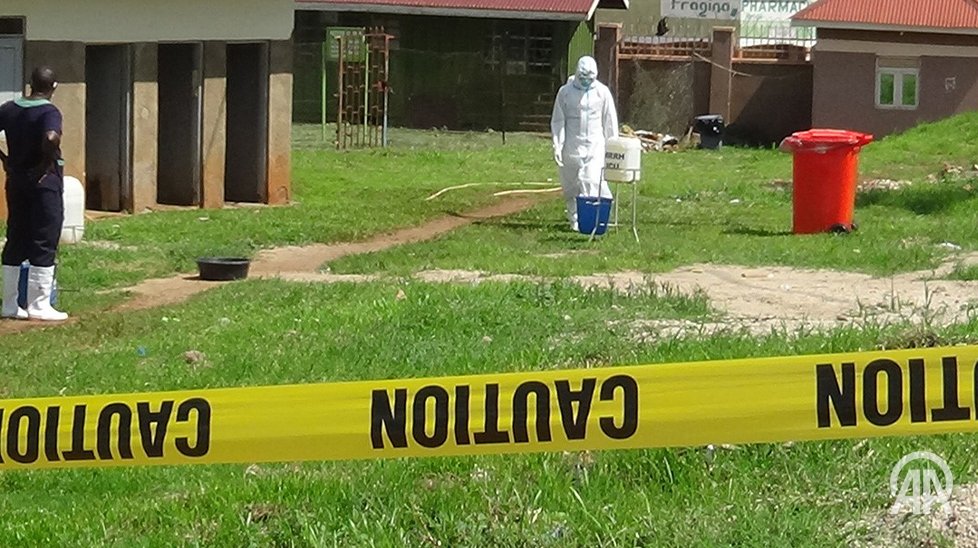
CONGO/WASHINGTON: The Ebola outbreak in Central Africa is deepening rapidly, with more than 900 suspected cases now identified in the Democratic Republic of the Congo, according to World Health Organization Director-General Tedros Adhanom Ghebreyesus.
Speaking on Sunday, Tedros said health authorities have identified 101 confirmed Ebola infections alongside hundreds of suspected cases linked to the rare Bundibugyo strain of the virus. The outbreak has raised fears of a wider regional epidemic as neighboring countries step up emergency surveillance and containment operations.
In Uganda, the health ministry confirmed three additional Ebola infections on Saturday, bringing the total number of confirmed cases in the current outbreak to five. Authorities have intensified contact tracing efforts and emergency health monitoring to prevent further transmission.
The WHO has declared the outbreak a public health emergency of international concern, warning that the risk of a national epidemic in the Democratic Republic of Congo remains “very high.” According to the organization, at least 82 confirmed cases and seven confirmed deaths have already been recorded, while 177 suspected deaths and nearly 750 suspected infections are being investigated in connection with the Bundibugyo strain.
The growing outbreak has triggered heightened international concern, particularly over the possibility of cross-border transmission. In response, the Centers for Disease Control and Prevention in the United States expanded enhanced Ebola screening procedures at Hartsfield-Jackson Atlanta International Airport, adding it as a second major entry point for Americans returning from the Democratic Republic of Congo, Uganda, and South Sudan.
U.S. authorities said the Atlanta airport already has operational Ebola screening procedures in place from previous outbreaks. Earlier this week, Washington Dulles International Airport was also designated as a screening hub for travelers arriving from affected regions.
The CDC stated that enhanced entry screening is part of a broader Ebola response strategy that includes overseas departure screening, airline illness reporting, and post-arrival public health monitoring.
Meanwhile, the administration of Donald Trump has imposed new travel restrictions, barring non-citizens who recently traveled to the Democratic Republic of Congo, Uganda, or South Sudan from entering the United States.
Health experts warn that the Bundibugyo strain, though less common than other forms of Ebola, still poses a serious threat due to weak healthcare infrastructure, porous regional borders, and limited medical resources in affected areas. International aid agencies are now accelerating emergency response operations amid fears the outbreak could spread further across Central and East Africa.
-Jack Williams
READ THE FULL E-MAGAZINE | WorldAffairs: For Decision-Makers Who Need More Than Headlines