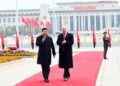



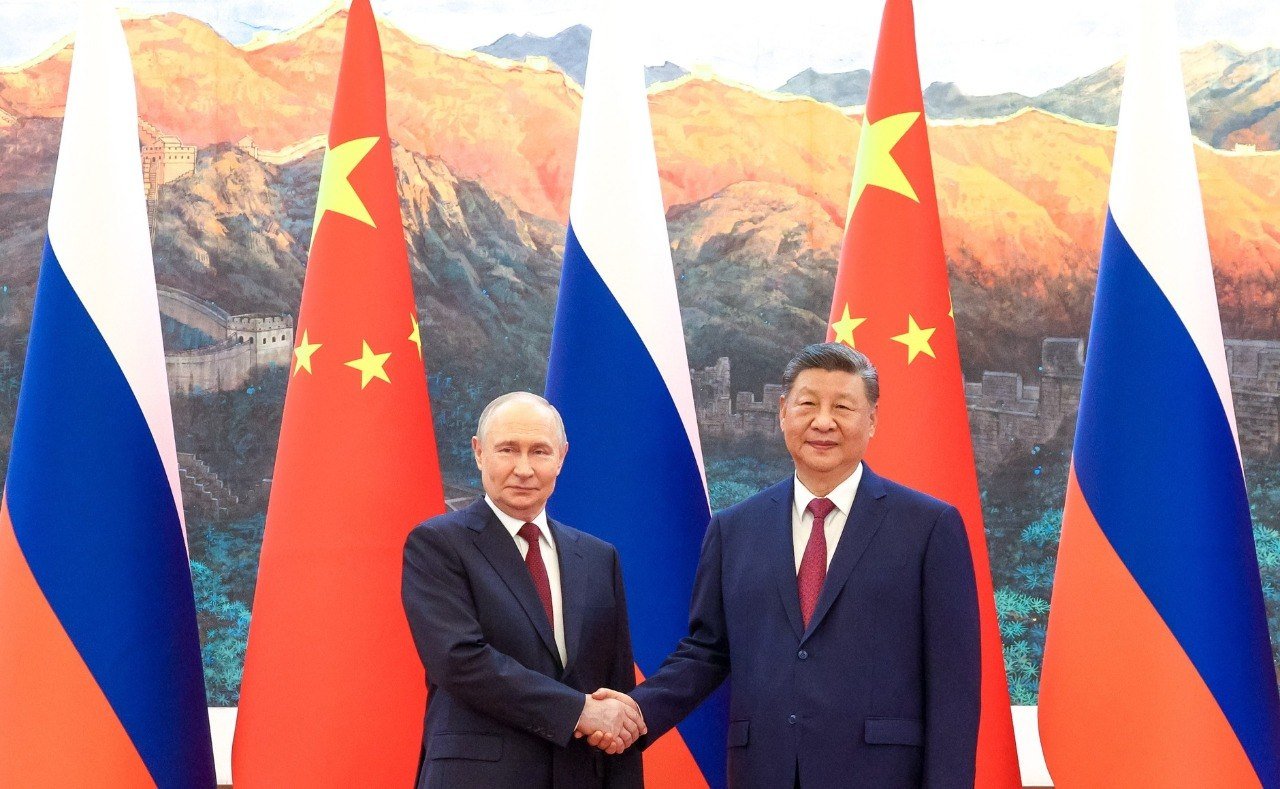
BEIJING: The carefully choreographed meeting between Xi Jinping and Vladimir Putin in Beijing this week was far more than a ceremonial display of friendship. It was a geopolitical message aimed squarely at Washington: despite mounting Western sanctions, strategic pressure, and escalating instability in the Middle East, China and Russia are consolidating a long-term partnership designed to reshape the global balance of power.
Coming just days after U.S. President Donald Trump visited China, the Putin-Xi summit served as a counterweight to American diplomacy and underscored Beijing’s determination to maintain strategic autonomy in an increasingly polarized world.
More than 40 agreements covering energy, technology, trade, and media cooperation were signed during the visit. But beneath the official statements and diplomatic symbolism lies a deeper transformation: the emergence of an Eurasian political and economic bloc increasingly resistant to Western influence.
Xi described bilateral ties as being at “the highest level in history,” while Putin called energy cooperation the “driving force” behind the relationship. Those remarks were not rhetorical flourishes. Russia’s economy, battered by years of Western sanctions following the Ukraine war, has become heavily dependent on Chinese markets, financing, and technology. China, meanwhile, views Russia as a strategic supplier of energy and a crucial geopolitical partner in its broader contest with the United States.
The timing of the summit was equally significant. As tensions intensify across West Asia following the U.S.-Israel conflict with Iran, both Moscow and Beijing are positioning themselves as advocates of stability while simultaneously benefiting from global uncertainty. Putin emphasized Russia’s reliability as an energy supplier during regional turmoil, while Xi called for an immediate cessation of hostilities to protect global supply chains and trade routes.
This convergence reflects a broader reality: China and Russia increasingly see global crises as opportunities to challenge what they perceive as American unilateralism.
For Beijing, maintaining strong ties with Moscow is no longer merely strategic, it is structural. Since Russia’s invasion of Ukraine in 2022, China has emerged as Russia’s largest trading partner and the leading buyer of Russian oil and gas. Bilateral trade reportedly reached nearly $228 billion in 2025, highlighting how sanctions have accelerated Moscow’s eastward economic pivot.
Yet the relationship is not without asymmetry. Russia, once seen as the senior geopolitical player, now finds itself increasingly dependent on China’s economic power. Beijing’s leverage over Moscow continues to expand, particularly in technology, finance, and industrial cooperation. The Kremlin may publicly celebrate the partnership as one of equals, but the balance of power is visibly shifting toward China.
Still, Xi has carefully avoided turning Russia into a subordinate ally. Instead, Beijing frames the partnership as part of a broader multipolar order meant to dilute Western dominance. Xi’s criticism of “hegemonism” and warnings about a return to the “law of the jungle” were unmistakable references to U.S. foreign policy and the current global order led by Washington.
For Putin, the optics of the visit were equally important. International isolation has made high-profile diplomatic engagements essential for the Kremlin’s image management. Standing beside Xi in Beijing allows Putin to project resilience and demonstrate that Russia retains the backing of one of the world’s most powerful economies despite Western attempts at containment.
At the same time, Xi also benefits politically. Hosting both Trump and Putin within days reinforces China’s image as an indispensable global power capable of engaging all major actors simultaneously. Beijing increasingly presents itself not only as an economic superpower, but also as a diplomatic center of gravity in global affairs.
The deeper concern for the West is not merely the symbolism of Xi and Putin calling each other “old friends.” It is the institutionalization of their strategic partnership. Joint military drills, technology transfers, expanded energy infrastructure, media coordination, and diplomatic alignment at international forums indicate that the relationship is evolving into something far more durable than tactical convenience.
While analysts continue debating whether the China-Russia relationship constitutes a formal alliance, the practical reality is already clear: both countries are coordinating to weaken Western leverage across multiple fronts.
The Beijing summit demonstrated that despite differences in economic size, political priorities, and long-term ambitions, Moscow and Beijing remain united by a common objective, resisting a U.S.-dominated international order.
As global conflicts multiply and geopolitical blocs harden, the Xi-Putin partnership may become one of the defining strategic alignments of the 21st century. The message from Beijing this week was unmistakable: the emerging Eurasian axis is no longer theoretical. It is operational, expanding, and increasingly confident.
–Xi and Putin Signal a New Eurasian Axis Against Western Pressure
BEIJING: The carefully choreographed meeting between Xi Jinping and Vladimir Putin in Beijing this week was far more than a ceremonial display of friendship. It was a geopolitical message aimed squarely at Washington: despite mounting Western sanctions, strategic pressure, and escalating instability in the Middle East, China and Russia are consolidating a long-term partnership designed to reshape the global balance of power.
Coming just days after U.S. President Donald Trump visited China, the Putin-Xi summit served as a counterweight to American diplomacy and underscored Beijing’s determination to maintain strategic autonomy in an increasingly polarized world.
More than 40 agreements covering energy, technology, trade, and media cooperation were signed during the visit. But beneath the official statements and diplomatic symbolism lies a deeper transformation: the emergence of a Eurasian political and economic bloc increasingly resistant to Western influence.
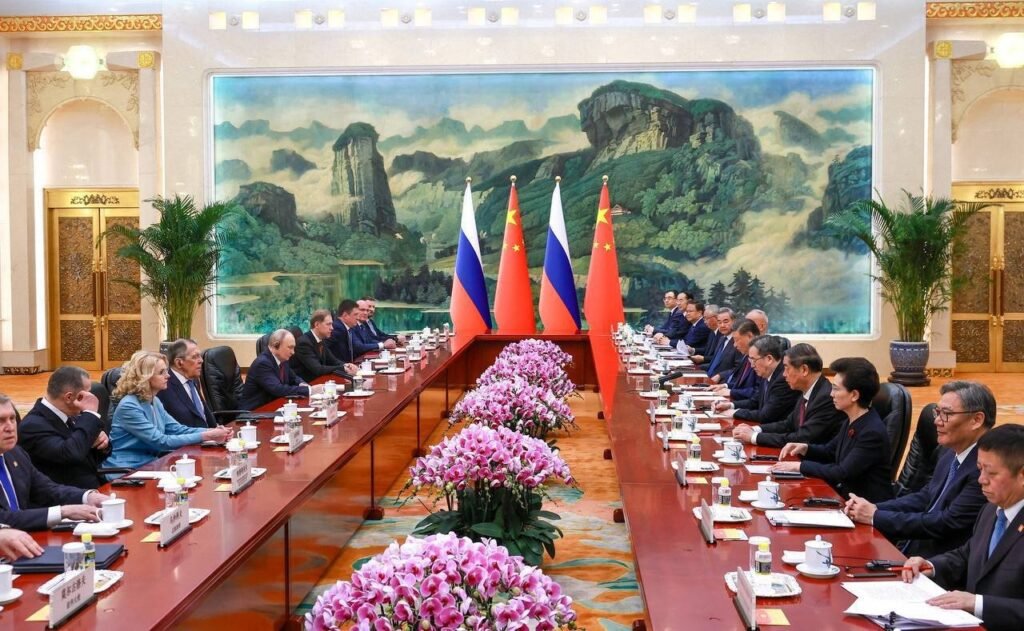
Xi described bilateral ties as being at “the highest level in history,” while Putin called energy cooperation the “driving force” behind the relationship. Those remarks were not rhetorical flourishes. Russia’s economy, battered by years of Western sanctions following the Ukraine war, has become heavily dependent on Chinese markets, financing, and technology. China, meanwhile, views Russia as a strategic supplier of energy and a crucial geopolitical partner in its broader contest with the United States.
The timing of the summit was equally significant. As tensions intensify across West Asia following the U.S.-Israel conflict with Iran, both Moscow and Beijing are positioning themselves as advocates of stability while simultaneously benefiting from global uncertainty. Putin emphasized Russia’s reliability as an energy supplier during regional turmoil, while Xi called for an immediate cessation of hostilities to protect global supply chains and trade routes.
This convergence reflects a broader reality: China and Russia increasingly see global crises as opportunities to challenge what they perceive as American unilateralism.
For Beijing, maintaining strong ties with Moscow is no longer merely strategic, it is structural. Since Russia’s invasion of Ukraine in 2022, China has emerged as Russia’s largest trading partner and the leading buyer of Russian oil and gas. Bilateral trade reportedly reached nearly $228 billion in 2025, highlighting how sanctions have accelerated Moscow’s eastward economic pivot.
Yet the relationship is not without asymmetry. Russia, once seen as the senior geopolitical player, now finds itself increasingly dependent on China’s economic power. Beijing’s leverage over Moscow continues to expand, particularly in technology, finance, and industrial cooperation. The Kremlin may publicly celebrate the partnership as one of equals, but the balance of power is visibly shifting toward China.
Still, Xi has carefully avoided turning Russia into a subordinate ally. Instead, Beijing frames the partnership as part of a broader multipolar order meant to dilute Western dominance. Xi’s criticism of “hegemonism” and warnings about a return to the “law of the jungle” were unmistakable references to U.S. foreign policy and the current global order led by Washington.
For Putin, the optics of the visit were equally important. International isolation has made high-profile diplomatic engagements essential for the Kremlin’s image management. Standing beside Xi in Beijing allows Putin to project resilience and demonstrate that Russia retains the backing of one of the world’s most powerful economies despite Western attempts at containment.
At the same time, Xi also benefits politically. Hosting both Trump and Putin within days reinforces China’s image as an indispensable global power capable of engaging all major actors simultaneously. Beijing increasingly presents itself not only as an economic superpower, but also as a diplomatic center of gravity in global affairs.
The deeper concern for the West is not merely the symbolism of Xi and Putin calling each other “old friends.” It is the institutionalization of their strategic partnership. Joint military drills, technology transfers, expanded energy infrastructure, media coordination, and diplomatic alignment at international forums indicate that the relationship is evolving into something far more durable than tactical convenience.
While analysts continue debating whether the China-Russia relationship constitutes a formal alliance, the practical reality is already clear: both countries are coordinating to weaken Western leverage across multiple fronts.
The Beijing summit demonstrated that despite differences in economic size, political priorities, and long-term ambitions, Moscow and Beijing remain united by a common objective, resisting a U.S.-dominated international order.
As global conflicts multiply and geopolitical blocs harden, the Xi-Putin partnership may become one of the defining strategic alignments of the 21st century. The message from Beijing this week was unmistakable: the emerging Eurasian axis is no longer theoretical. It is operational, expanding, and increasingly confident.
-Kanis Castillo